
Aeonium arboreum ‘Atropurpureum’
black tree aeonium
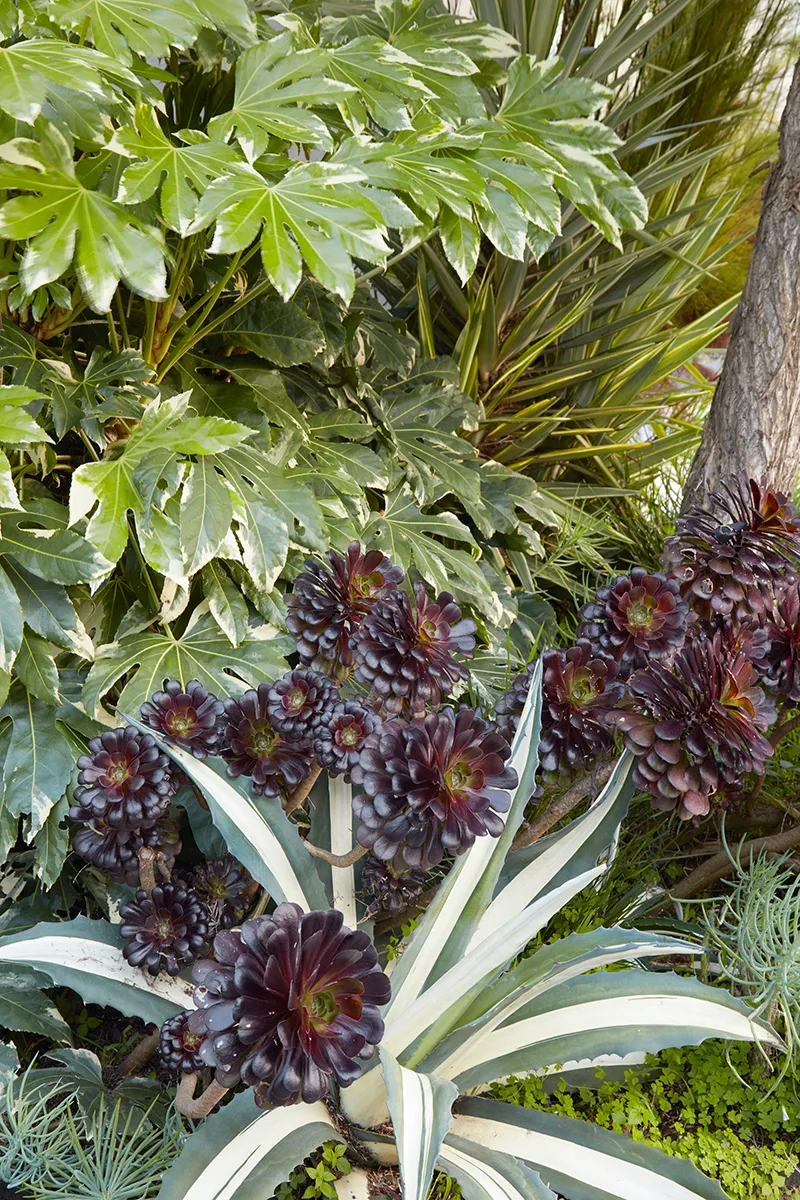
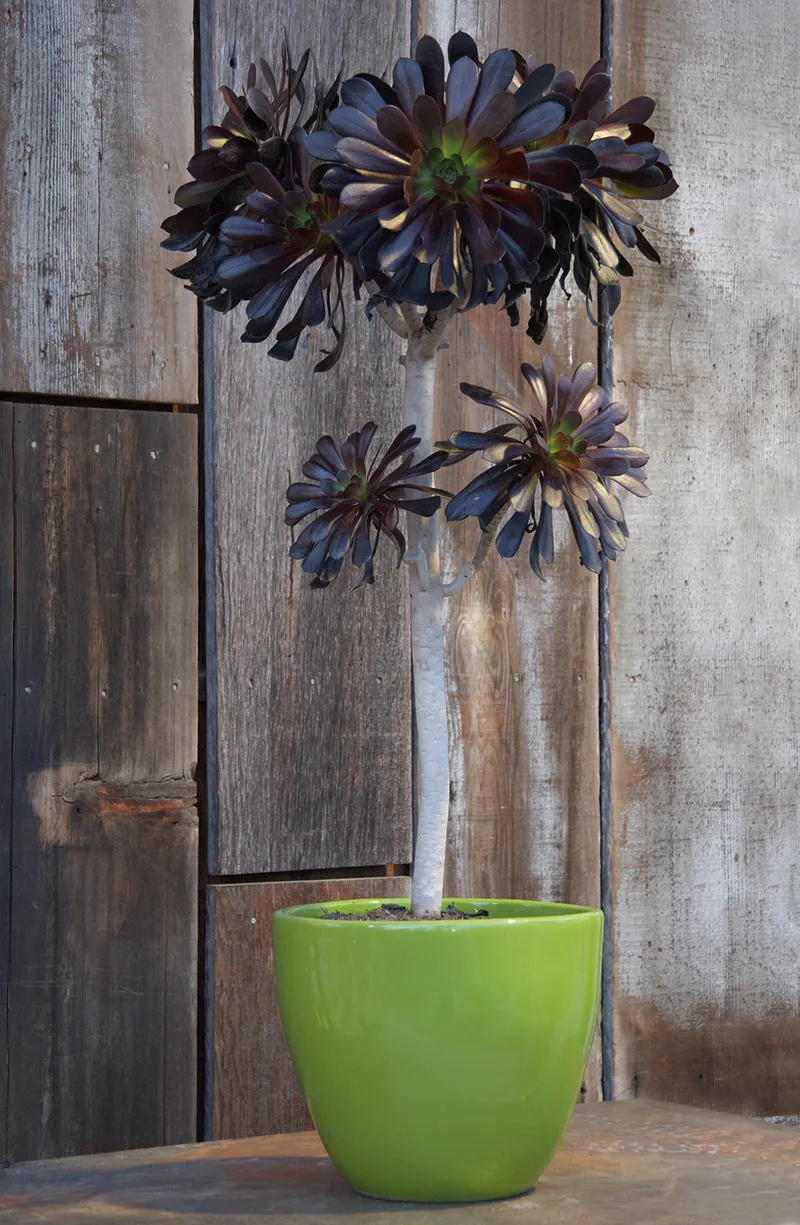
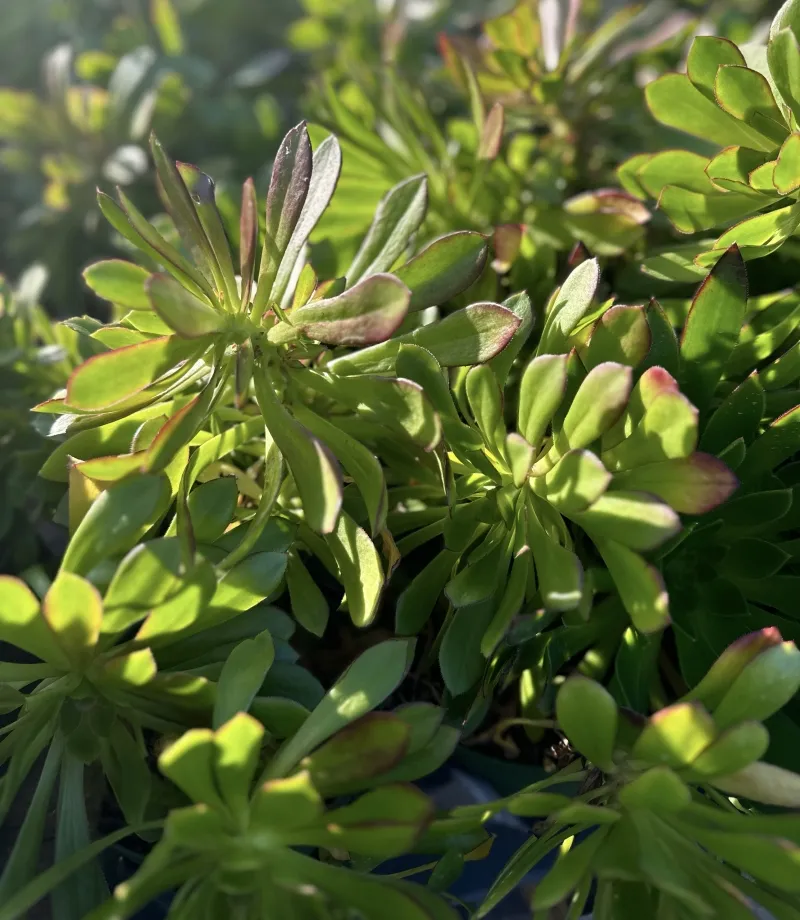
Winter growing succulent, perfect for the coast. Moody purple to green leaves. Bright yellow blooms late spring through summer. Plant in well-drained soil.
 Height | 2–3ft |
|---|---|
 Width | 1–2ft |
 Tolerates | Coast, Cool Summers, Drought, Deer, Fog, Pots, Neglect, Salt, Wind |
 Water needs | Low |
Aeoniums are from the Mediterranean, making them a care-free plant for Bay Area gardeners. It is natural for Aeonium heads to shed lower leaves during summer, becoming smaller and more compact. Once winter rains come the heads expand, adding many new leaves. This summer stress is a wonderful seasonal change in the Mediterranean garden. If given infrequent summer irrigation aeoniums will look more lush, retaining their winter leaves. However, over irrigation (or over fertilization) during summer months can lead to problems, such as root rot or aphids. | |
 Hardy to | 30°F |
 Exposure | Part Sun – Full Sun |
 Plant traits | Monocarpic, Sculptural, Succulent |
 Indoor / outdoor | Outdoor |
 Drainage | In Ground: Cactus Mix, In Pots: Cactus Mix, Tolerates Sandy Soil |
 Fertilizing | All Purpose, Low Needs |
 Origin | Canary Islands |
 California native | No |
 Sunset zones | 15–17, 20–24 |
Growing Notes
Most Aeonium are monocarpic, meaning that a head will die once it flowers, usually replaced by the lower suckers on clumping varieties. This can often be overcome by removing the flower (but leaving the stem that held it) once the flower is past peak bloom. It will take time, but with some luck you'll get new growth along that stem instead of having it die completely.
When over fertilized Aeonium grow lush and soft, attracting aphids.
Special Interest
Most Aeonium easily propagate from stem cuttings, just snap a stem halfway down in the fall and plant it half of the way into your soil. Wait a week to water.
Stories featuring this plant
Which store do you shop at?
The above information reflects the observations of Grubb and Nadler and our extended plant community. We always consider input from fellow horticulturists and welcome feedback from those with additional information on the culture of this plant.
© 2020–2026 Grubb and Nadler. All rights reserved.