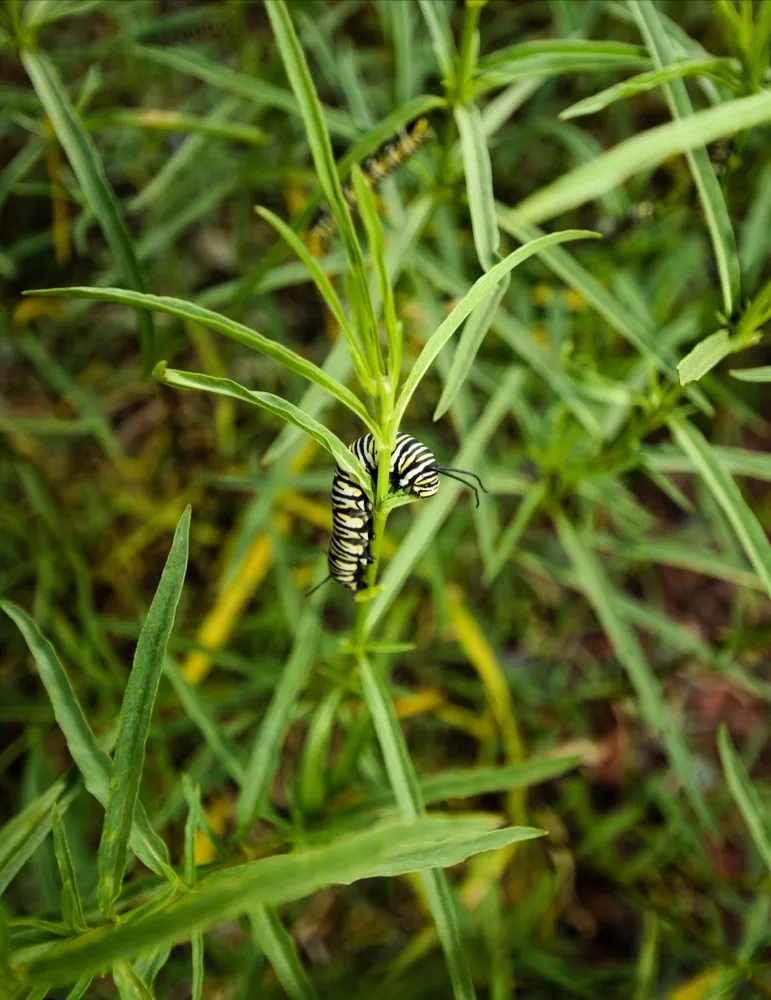
Asclepias fascicularis
narrowleaf milkweed
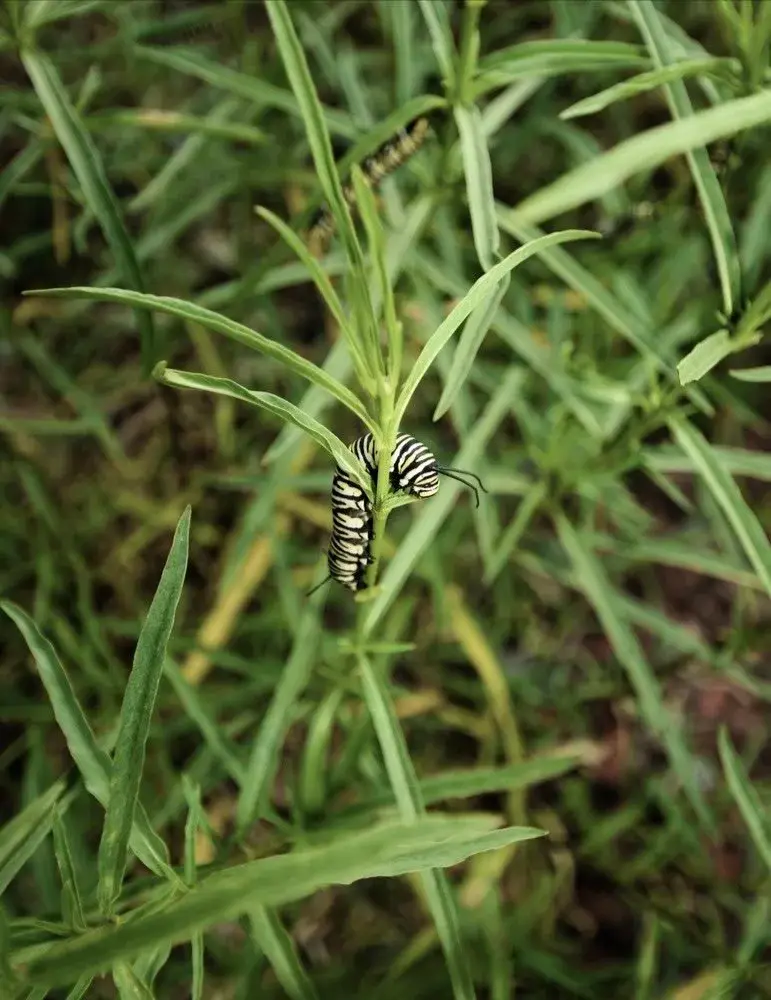
Monarch plant! Flowering perennial with thin, erect stems and distinctive long pointed narrow leaves. Grows fast to 3ft. Blooms in clusters of white to pale pink/lavender flowers.
 Synonyms | Asclepias macrophylla |
|---|---|
 Height | 1–3ft |
 Width | 1–3ft |
 Tolerates | Cold, Drought, Heat, Neglect |
 Water needs | Low – Moderate |
Deep and infrequent for the first season, then minimal watering once established. | |
 Hardy to | 0°F |
 Exposure | Part Shade – Full Sun |
 Plant traits | Butterflies, Clumping, Flowering, Rock Garden |
 Indoor / outdoor | Outdoor |
 Drainage | In Ground: Cactus Mix, In Pots: Cactus Mix, Tolerates Sandy Soil |
 Fertilizing | Low Needs |
 Origin | Western US |
 California native | Yes |
 Sunset zones | 3–11, 14–24, H1 |
Growing Notes
Thrives in full sun, tolerates most soils (including saline), and is best in well-drained settings. Fertilizing can produce overly-weak growth.
Special Interest
Narrowleaf milkweed is a perennial California native plant that is considered the single most important host plant for the monarch butterflies it will attract into your garden.
Stories featuring this plant
More Info
To support monarch butterflies their annual cycle of migration and reproduction, avoid planting milkweed within a mile of monarch overwintering areas in Southern California, and within five miles of them in coastal Central and Northern California. Overwintering areas are confined to coastal, bayside, and some coastal valley locations in California.
Asclepias fascicularis occurs in Northern California away from the immediate coast; in Central and Southern California it occurs on the coast, coastal valley, mountains, and Channel Islands but not in the low desert or most of the Mojave Desert. Its ranges from the inland Pacific Northwest to the Great Basin and northern Baja California, as well.
Links
In stock today in Los Angeles
| 1 gallon | 719 available | $14.95 |
The above information reflects the observations of Grubb and Nadler and our extended plant community. We always consider input from fellow horticulturists and welcome feedback from those with additional information on the culture of this plant.
© 2020–2026 Grubb and Nadler. All rights reserved.