
Beccariophoenix alfredii
high plateau coconut palm
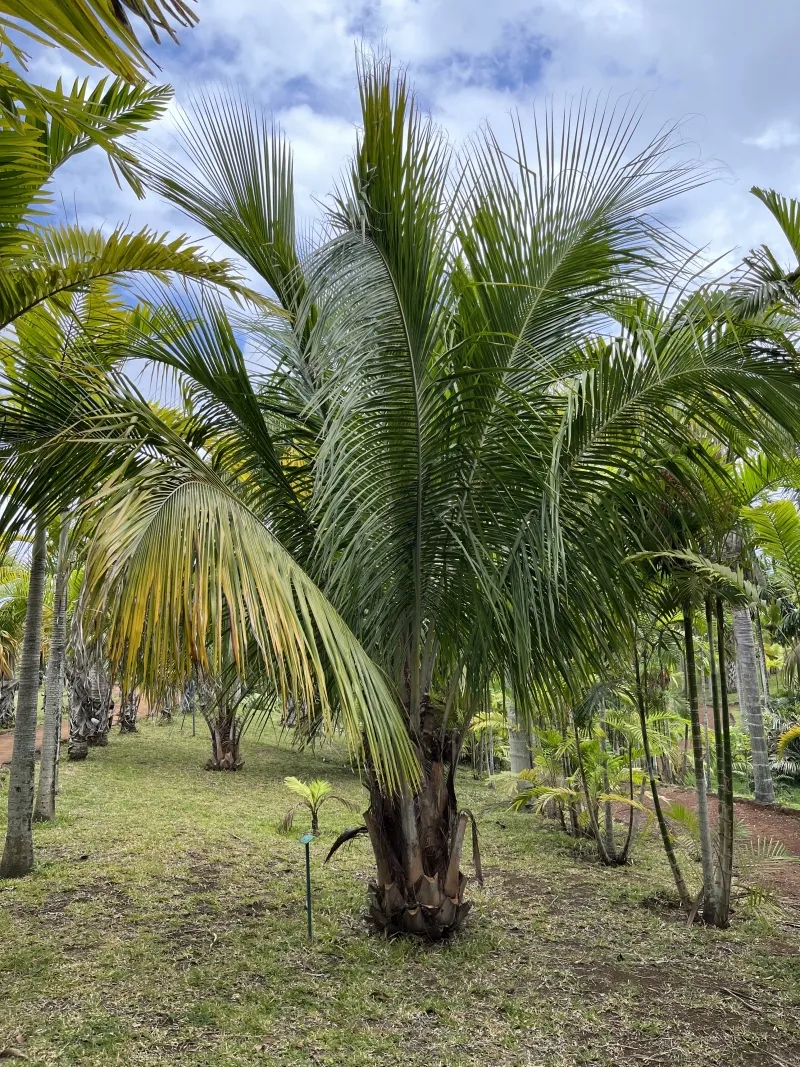
Beautiful coconut mimic tolerates California climates. Upright trunk develops after many years as swaying foliage feature.
 Height | 20–30ft |
|---|---|
 Width | 15–20ft |
 Tolerates | Cold, Drought, Heat, Wind |
 Water needs | Moderate |
Water this plant regularly, when the top inch or so of soil feels dry. If you establish this pattern over several years, then you can cut back to watering every week or two in dry weather. Use a slow stream of water so that it doesn't run off; allow the water to trickle all the way down through the deepest layers of soil. In a pot slowly water the entire surface until water comes out of the bottom of your pot. | |
 Hardy to | 25°F |
 Exposure | Part Shade – Full Sun |
 Plant traits | Foliage Feature, Palm, Rosette, Tropical, Trunking |
 Indoor / outdoor | Outdoor |
 Drainage | In Ground: Cactus Mix, In Pots: Cactus Mix, Tolerates Sandy Soil |
 Fertilizing | All Purpose, Palm Fertilizer |
 Origin | Madagascar |
 California native | No |
 Sunset zones | 13–17, 19–24, H1, H2 |
Growing Notes
Typically this palm grows straight, but if planted leaning in a 15g + size the palm will have the typical coconut style lean to it. The larger the can size the more pronounced the arch will be.
Palms are generally heavy feeders, so if you want them growing quickly and looking their best, they should be fertilized at least three times a year. Fertilizing at spring equinox, summer solstice and fall equinox will allow for a winter rest. Be sure to feed your palm with a fertilizer that contains micronutrients (especially including magnesium), especially if you see yellowing leaves or yellow spots on the leaves.
Special Interest
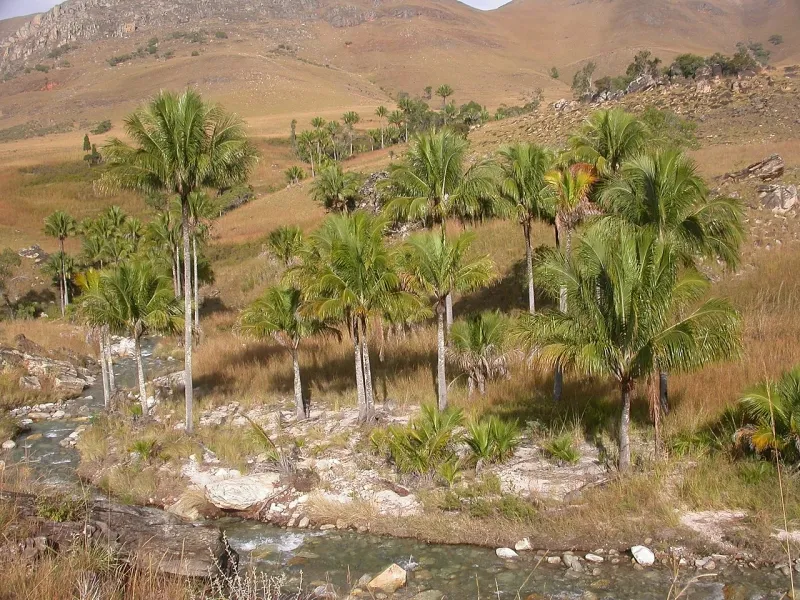
This palm grows at around 3,500 feet along grassy patches of sandy riverbeds in habitat. Given the locale and its frequent fires this palm is likely tolerant of some exposure to forest fire, drought, and cold.
One of our team planted this palm on a hot east facing slope with very gritty drainage and has watered it only every three or four weeks between May and September; the palm has been slow growing, but is still green and lush. He's also had it on weekly irrigation in heavy clay planted in winter shade and hot afternoon summer sun. Here it has grown faster, tolerating the clay without any sign of distress for several years.
Stories featuring this plant
More Info
Friends have grown this in surprisingly frosty valleys around the Bay Area with success.
Links
Which store do you shop at?
The above information reflects the observations of Grubb and Nadler and our extended plant community. We always consider input from fellow horticulturists and welcome feedback from those with additional information on the culture of this plant.
© 2020–2026 Grubb and Nadler. All rights reserved.