
Bougainvillea ‘Barbara Karst’
Vining shrub. Showy red-pink blooms in summer/fall once established. Be gentle when transplanting,disturbing roots as little as possible.
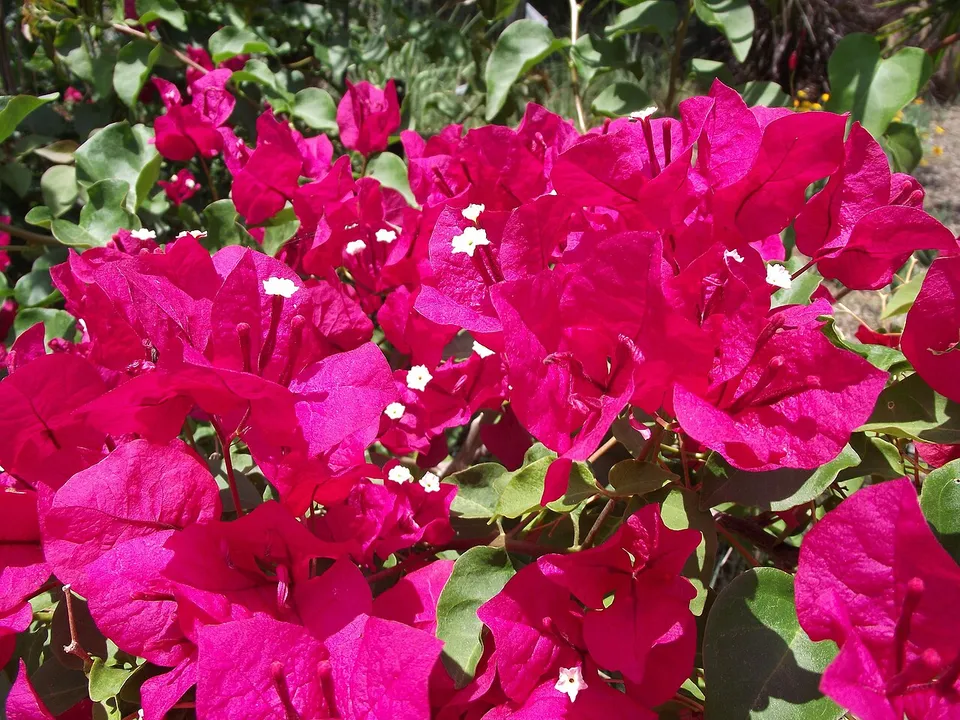
 Height | 20–30ft |
|---|---|
 Width | 3–6ft |
 Tolerates | Drought, Wind |
 Water needs | Low |
 Hardy to | 30°F |
 Exposure | Full Sun |
 Plant traits | Beneficial Insects, Butterflies, Flowering, Hedge, Vine - Rambling |
 Indoor / outdoor | Outdoor |
 Drainage | In Pots: Potting Soil, Tolerates Sandy Soil |
 Fertilizing | All Purpose |
 Origin | Hybrid, South America |
 California native | No |
 Sunset zones | 12–17, 19–24 |
Growing Notes
When planting a bougainvillea, be very delicate with the roots. Disturb them as little as possible during the transplanting process.
Bloomtime is generally spring to fall, peaking during summer, but can extend longer with good weather. Generally fertilizer isn't necessary to get abundant blooms; infact high fertilizers will REDUCE your bougainvillea's blooms. If your plant is potted or struggling in the ground you can apply a low all purpose fertilizer such as 5-5-5.
Bougainvillea comes in many shapes and sizes, from giant fast-growing thirty-foot vines to dense three-foot-tall bushes. Be sure to read the label description and size for more information about your specific plant's habits. Vining varieties will need a trellis or other structure to grow on and won't self-attach, although their thorns do help them catch on trees or other support.
Bougainvillea will tolerate heavy pruning. It can be trained into a hedge with some support. Over time it grows a sturdy trunk and becomes self-supporting. Prune your bougainvillea to shape it in late winter or early spring. Take care, as most varieties have aggressive hooked thorns.
Leaves tend to defoliate during cold winter weather especially if it gets a bit shady. Established plants can grow back from moderate frost damage.
Which store do you shop at?
The above information reflects the observations of Grubb and Nadler and our extended plant community. We always consider input from fellow horticulturists and welcome feedback from those with additional information on the culture of this plant.
© 2020–2026 Grubb and Nadler. All rights reserved.