
Hibiscus rosa-sinensis ‘White Wings’
hibiscus
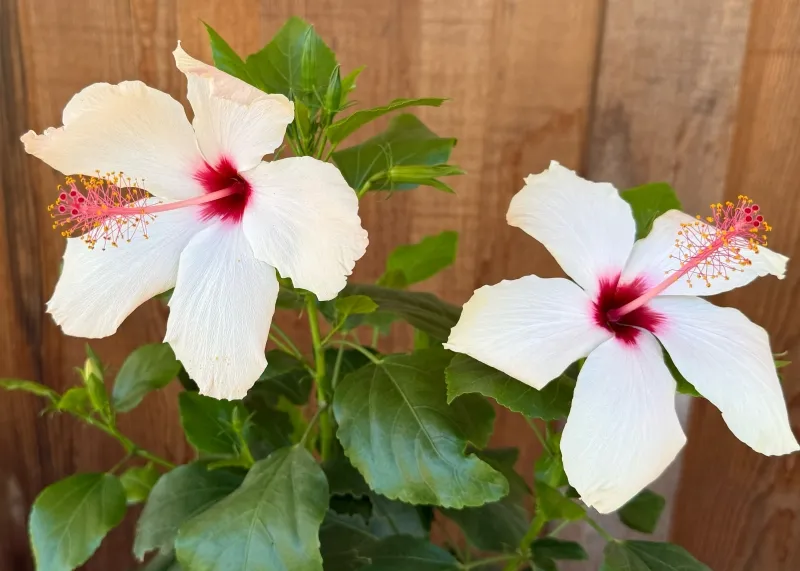
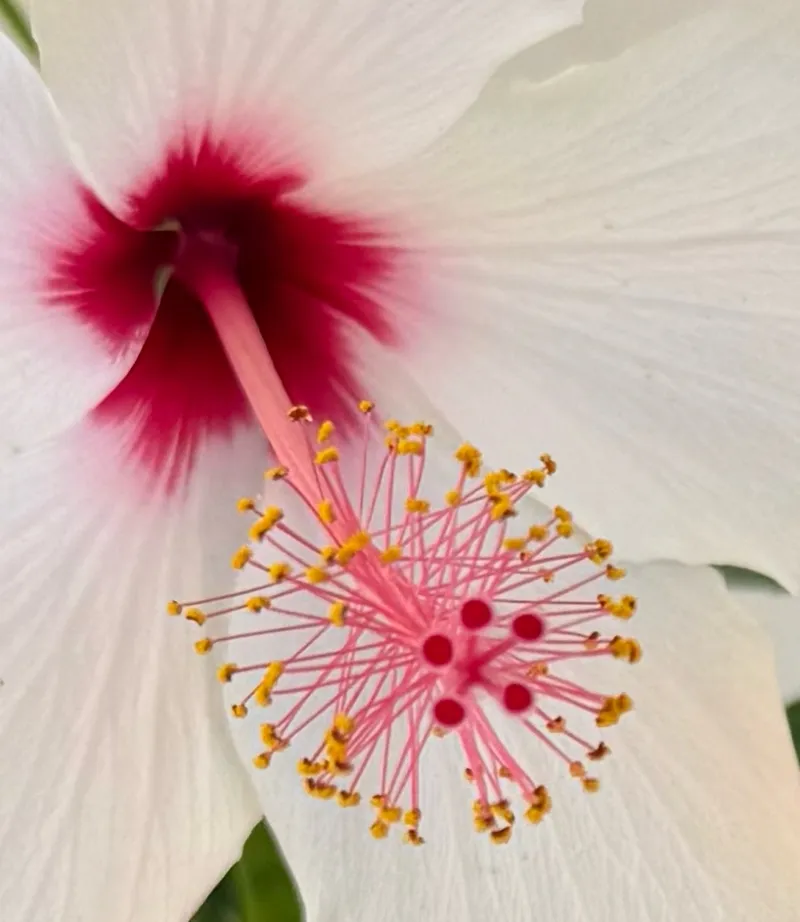
The iconic tropical flower brightens areas with abundant blooms during summer months or longer with mild weather. Prune to shape in spring. Pure white flowers with red centers. In colder-winter zones, place in a warm spot.
Seen in New for 2027! Rosalie from Fermob. →
 Height | 5–15ft |
|---|---|
 Width | 5–8ft |
 Tolerates | Coast, Cool Summers, Fog, Heat, Pots, Salt |
 Water needs | Moderate – High |
Water this plant regularly, when the surface of the soil feels dry. Usually this will mean once or twice a week in warm dry weather. Use drippers, emitters, or a slow stream of water so that it does not run off; allow the water to trickle all the way down through to the deepest layers of soil. In a pot slowly water the entire surface until water comes out of the bottom of your pot. | |
 Hardy to | 30°F |
 Exposure | Part Shade – Full Sun |
 Plant traits | Flowering, Hedge, Screen, Shrub, Tropical |
 Indoor / outdoor | Outdoor |
 Drainage | In Ground: Planting Mix, In Pots: Potting Soil, Tolerates Heavy Soil, Tolerates Sandy Soil |
 Fertilizing | Bloom |
 Origin | Tropical Asia |
 California native | No |
 Sunset zones | 9, 12–24, H1, H2 |
Growing Notes
Good hibiscus for cool-summer fog belt gardens, where it can bloom from summer until early winter.
Responds very well to pruning to keep a dense plant and can even be hedged. Truly one of the most impressive, flamboyant, flowering shrubs in tropical to temperate gardens. While each blossom lasts only a day, they come with rapid abundance through the blooming season. This does create a bit of shedding to be swept up but wow, so worth it!
In tropical climates this shrub can get much larger, unto thirty feet.
Can be espaliered and trained along a flat wall or fence.
Special Interest
Edible flowers have a zesty flavor, they are also used to make tangy teas, though if you are purchasing hibiscus tea it is usually made from Hibiscus sabdariffa.
Stories featuring this plant

Links
Which store do you shop at?
The above information reflects the observations of Grubb and Nadler and our extended plant community. We always consider input from fellow horticulturists and welcome feedback from those with additional information on the culture of this plant.
© 2020–2026 Grubb and Nadler. All rights reserved.