
Brachychiton rupestris
Queensland bottle tree
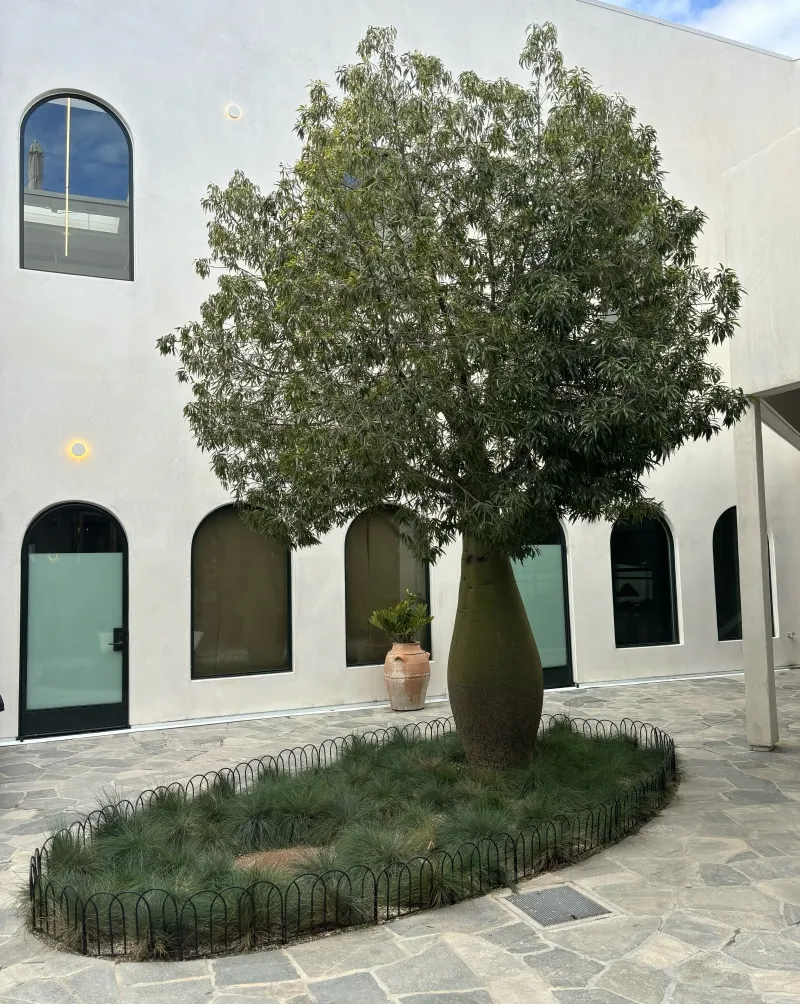
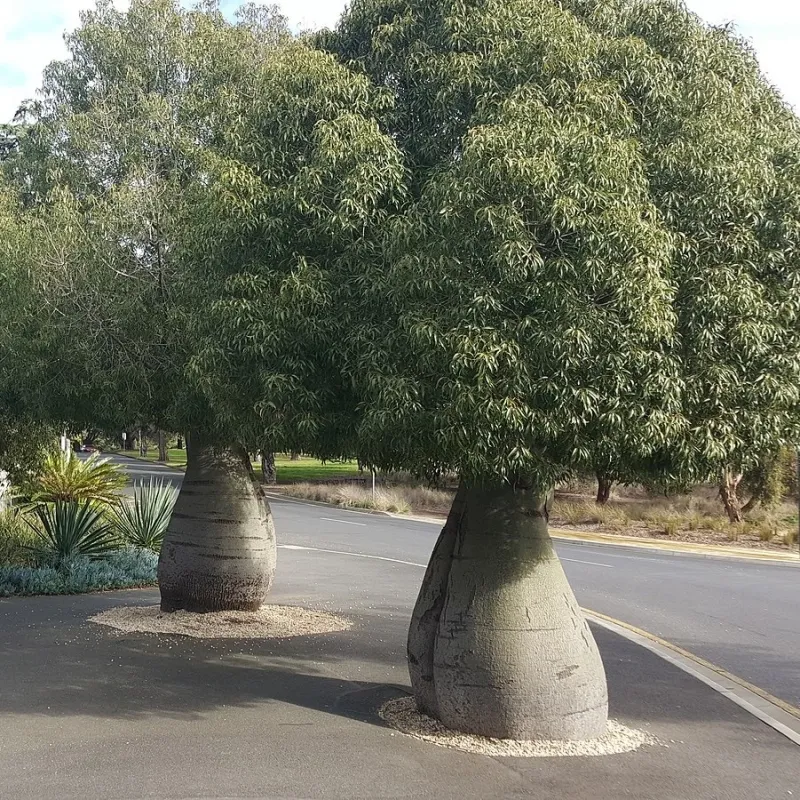
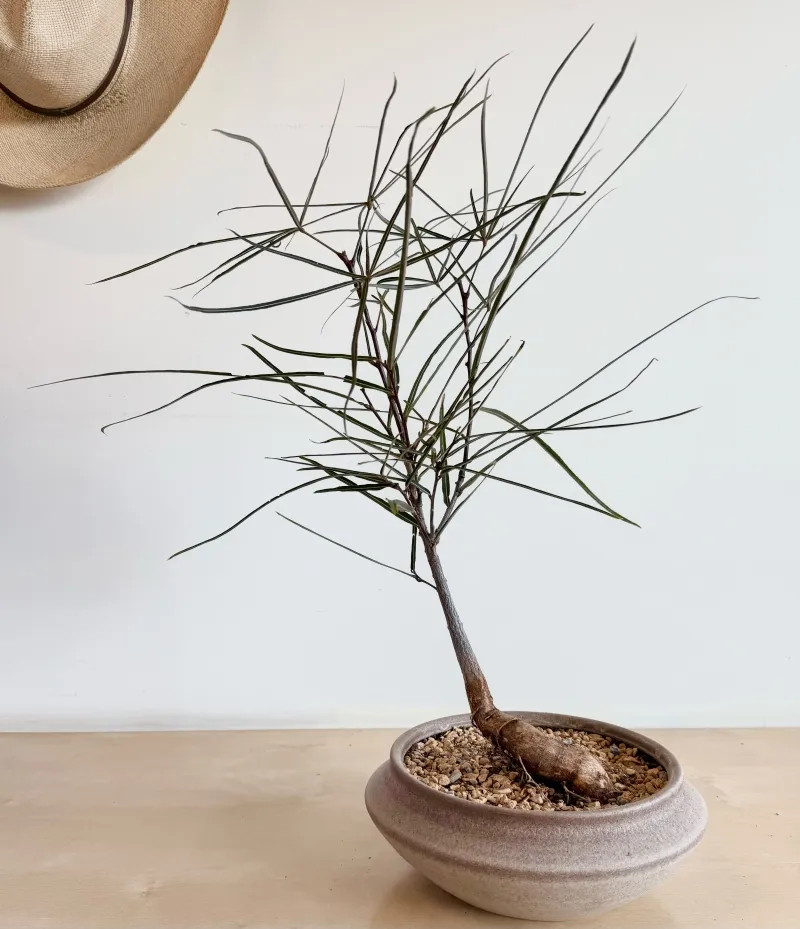
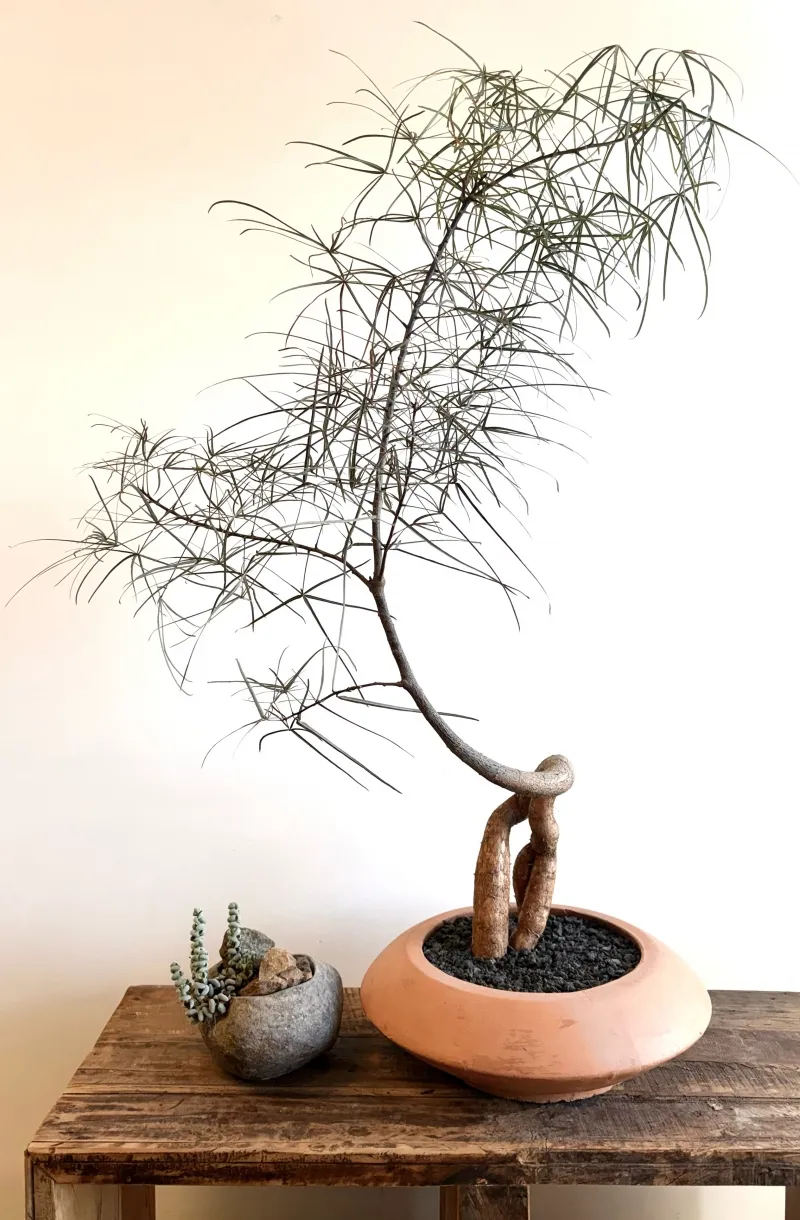
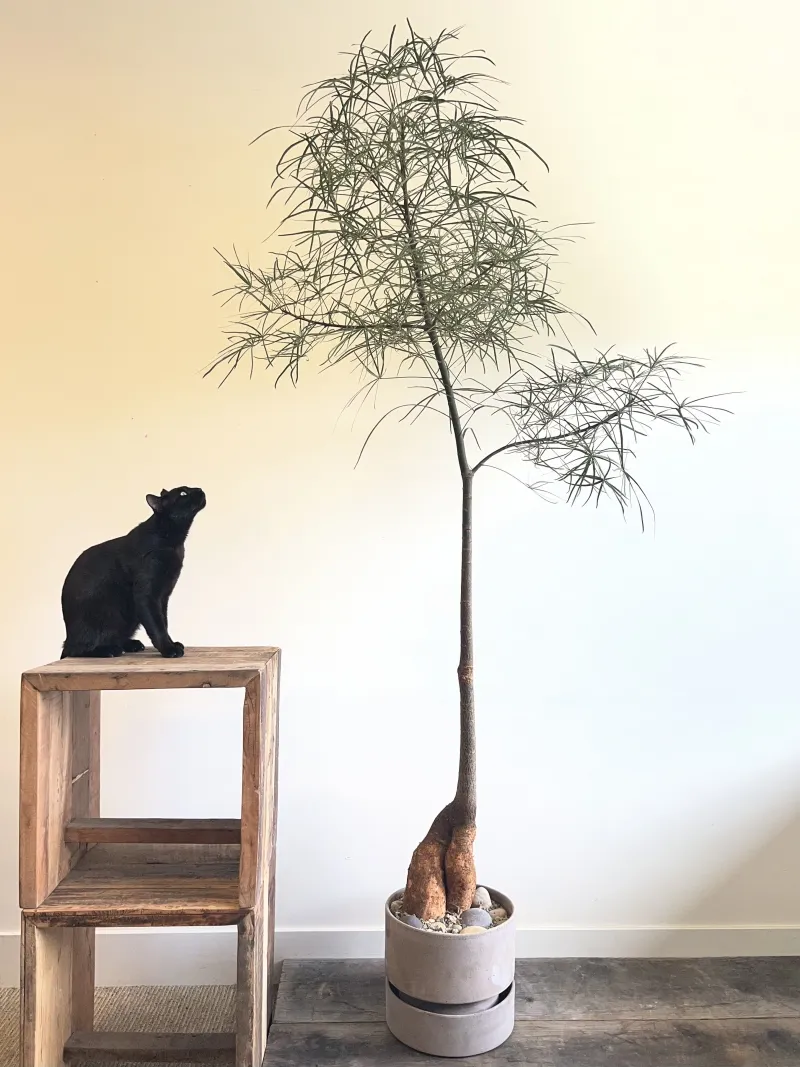
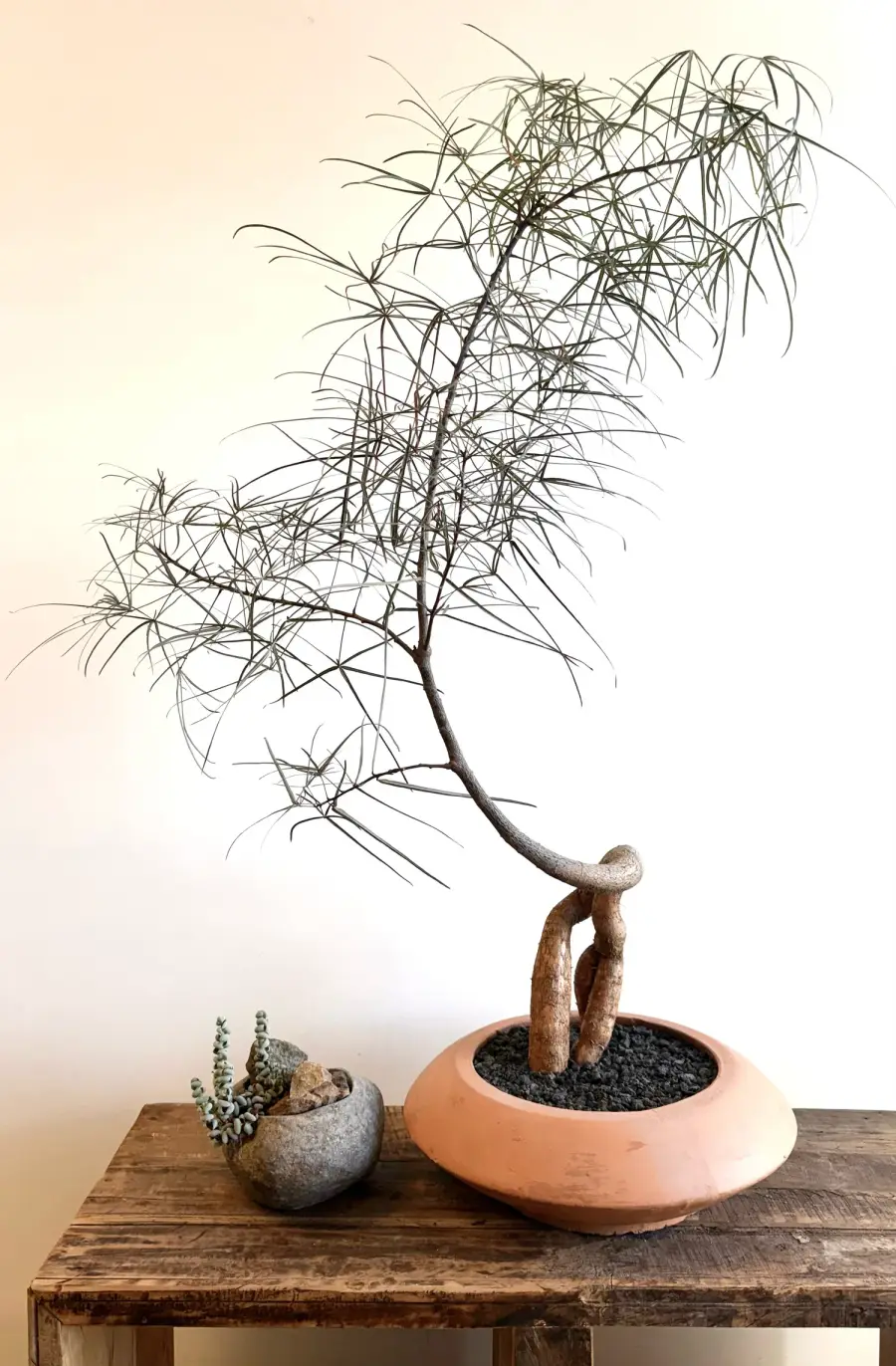
Small tree valued for its large, bulbous trunk and fine, spidery foliage. Makes an excellent landscape specimen or bonsai when grown in a pot—try raising it to expose the roots for effect.
 Height | 10–25ft |
|---|---|
 Width | 15–30ft |
 Tolerates | Cold, Drought, Heat, Pots, Wind |
 Water needs | Low |
For the first three years after it's planted, this tree should be watered deeply but infrequently (when the top three inches of soil or so have dried). After that, the tree won't need supplemental water except in hot and dry environments. Use drippers, emitters or a slow stream of water so that it doesn't run off; allow the water to trickle all the way down through the deepest layers of soil. A great trick for watering street trees is to drill a one-eighth inch hole on the bottom edge of a five-gallon bucket, then set the bucket with the hole aligned next to the tree and fill the bucket with water. Fill once for a one or five gallon plant, fill twice for a seven or 15 gallon plant, three times for 25g or larger plants. Propping the bucket up on bricks will help it drain faster, if needed. | |
 Hardy to | 18°F |
 Exposure | Part Sun – Full Sun |
 Plant traits | Caudiciform, Ornamental Fruit, Sculptural, Tree |
 Indoor / outdoor | Indoor or Outdoor |
 Drainage | In Ground: Cactus Mix, In Pots: Cactus Mix, Tolerates Sandy Soil |
 Fertilizing | All Purpose |
 Origin | E Australia |
 California native | No |
 Sunset zones | 8, 9, 11–24, H1, H2 |
Growing Notes
Excellent choice for pots, even very small ones. Will root through a pot if left on the soil.
This tree can be hard-pruned to develop a specimen with a large swollen base and small crown. Leaf shapes vary over the growth cycle and from youth to age.
The gnarled roots of this plant make an artistic display. Expose them by cutting the bottom off your nursery can and placing it on the soil or on the surface of another pot of soil. Once your plant is well rooted cut off the original nursery can and wash away the soil. If you'd like to create an even more dramatic 'root sculpture' do this several times using nursery cans (or even a plastic garbage can that can be removed later).
Best to cage this plant if you have gophers in your area as we have reports of gophers killing off trees before they can establish.
Briefly deciduous: It can shed leaves before flushing new growth.
One of our staff grows this tree in full bright shade in a redwood forest. He notes that the plant survives and looks good, but growth is severely limited.
Special Interest
Has been grown successfully for decades as an indoor bonsai.
Stories featuring this plant
Links
Which store do you shop at?
The above information reflects the observations of Grubb and Nadler and our extended plant community. We always consider input from fellow horticulturists and welcome feedback from those with additional information on the culture of this plant.
© 2020–2026 Grubb and Nadler. All rights reserved.