
Brahea edulis
Guadalupe palm
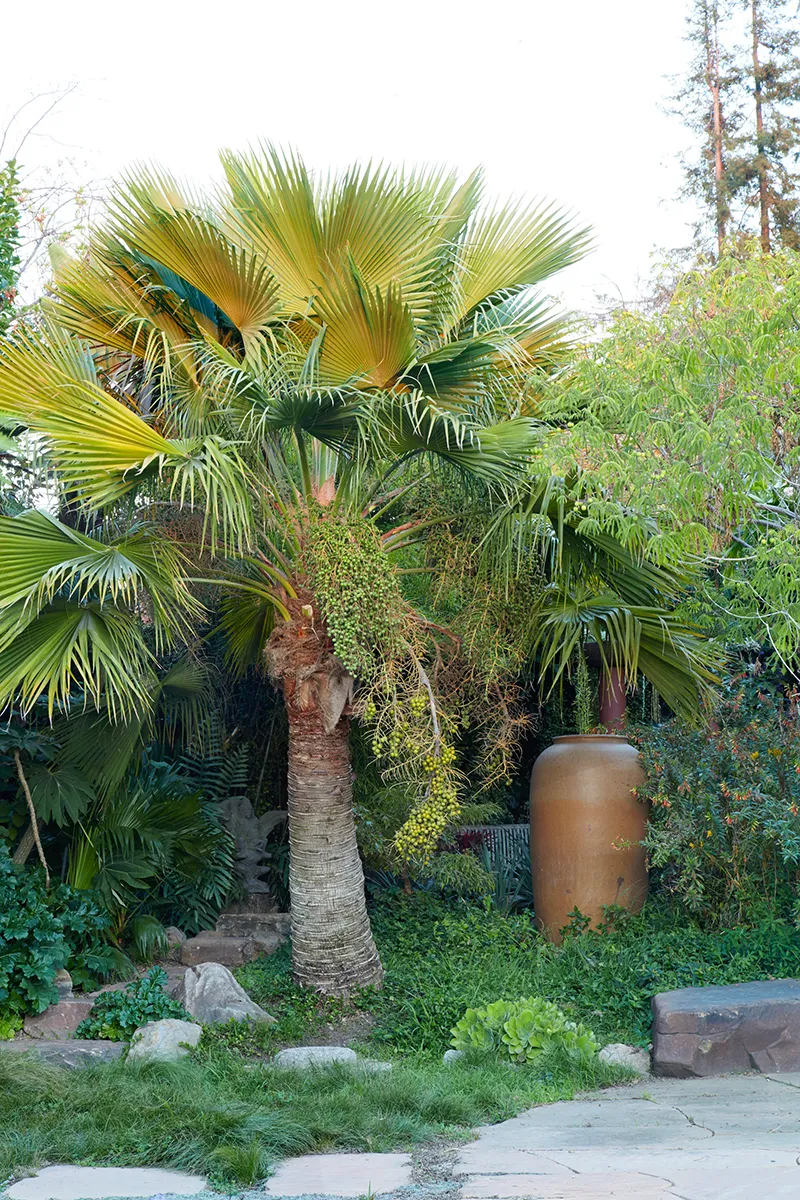
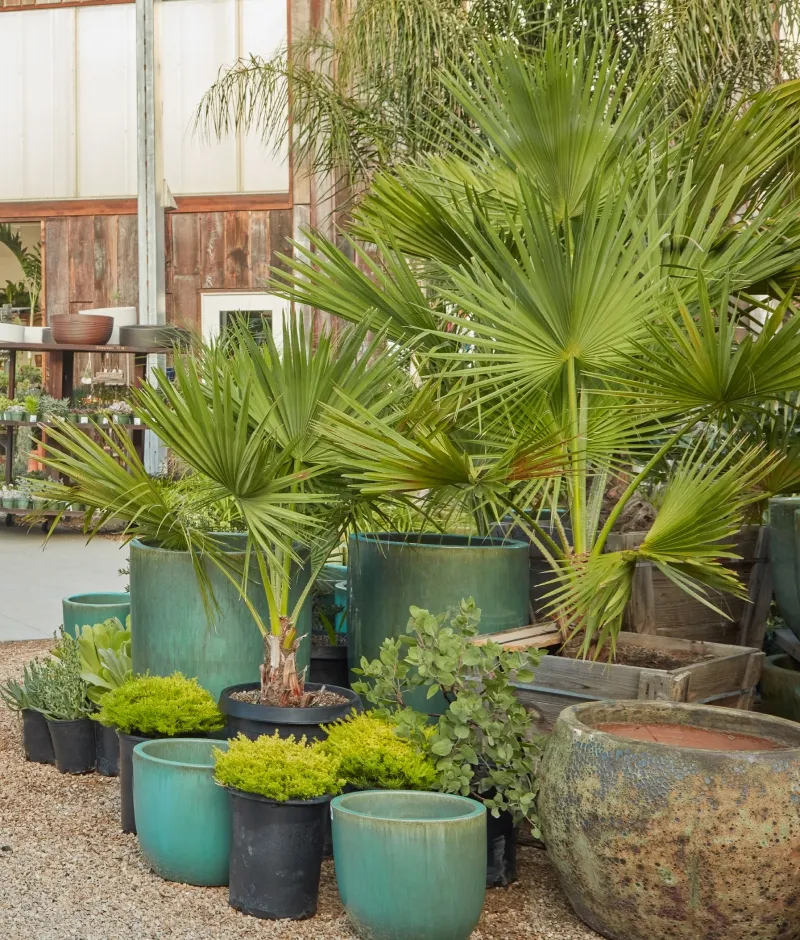
Best-adapted to California climate conditions. Beautiful in shade or sun. Great in pots. Top choice near the coast; good inland, too.

 Height Height | 12–20ft |
|---|---|
 Width Width | 10–15ft |
 Tolerates Tolerates | Coast, Cool Summers, Drought, Fog, Pots, Neglect, Salt, Wind |
 Water needs Water needs | Lowest |
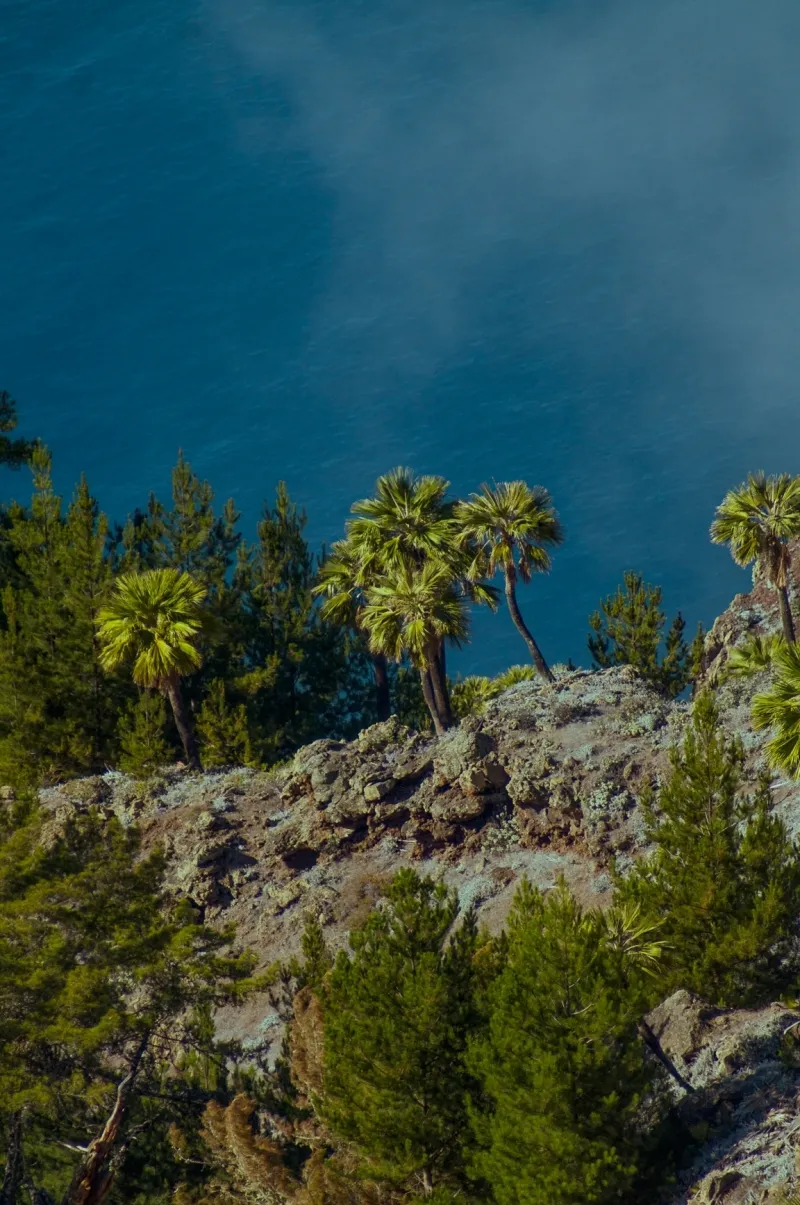
Native to an island in our California Floristic Province where rain falls sporadically in winter and fog drip supplies water during the rest of the year. Not all palms love water! This one is actually drought-tolerant and can live quite happily on little or no water once it's established, especially near the coast, though it'll grow more slowly and may not look as lush. To keep your palm looking its best, be sure to water it consistently and deeply while it's getting established, then after a few years give it a good deep soaking every couple of weeks. It will also be happy to have more water, provided the soil drainage is adequate. Avoid spray irrigation and lawn planting. | |
 Hardy to Hardy to | 18°F |
 Exposure Exposure | Full Shade – Full Sun |
 Plant traits Plant traits | Palm, Solitary, Tropical, Trunking |
 Indoor / outdoor Indoor / outdoor | Outdoor |
 Drainage Drainage | In Ground: Cactus Mix, In Pots: Cactus Mix, Tolerates Sandy Soil |
 Fertilizing Fertilizing | Palm Fertilizer |
 Origin Origin | Guadalupe Island, Mexico |
 California native California native | Yes |
 Sunset zones Sunset zones | 8, 9, 12–23 |
Growing Notes
Equally at home in full sun or bright shade, this solitary palm will grow only one trunk during its lifetime, and can lean gracefully toward brighter light. In desert areas this palm appreciates some sun protection.
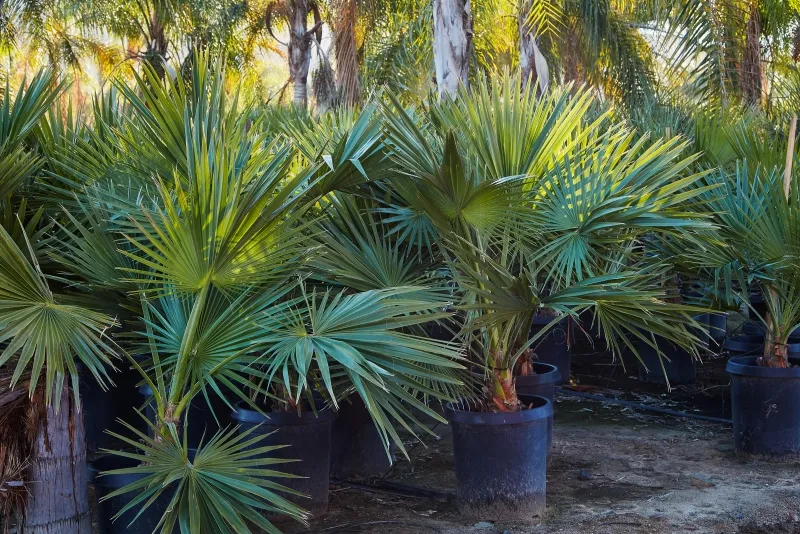
If you have a pot with multiple stems in it, that's because multiple seeds were germinated in the pot. The good news is that you won't need to thin out suckers over time to maintain the number of trunks you started out with. Over time, these clustered plants will form a group of trunks that lean gently away from each other to maximize their light exposure.
Once it's mature, this palm will naturally shed its leaves, leaving the trunk below the palm's crown exposed. A great choice if you're looking for a palm with a clean trunk but don't want to deal with manually removing the leaves.
Clouds of greenish-cream flowers fill the crown in spring-summer. To minimize fruit cleanup, cut flowerstalks before fruit ripens.
Fan palms have leaflets spreading from the tip of the petiole, giving the crown of the palm a rounded full look. They tend to rustle in the breeze, adding a soothing note to the garden.
Palms are generally heavy feeders, so if you want them growing quickly and looking their best, they should be fertilized at least three times a year. Fertilizing at spring equinox, summer solstice and fall equinox will allow for a winter rest. Be sure to feed your palm with a fertilizer that contains micronutrients, especially if you see yellowing leaves or yellow spots on the leaves.
Special Interest
This palm combines beautifully with native California plants like buckwheats, sages, ceanothus, Monterey pine, and live oak. It contributes to the oasis-style garden, especially when it's mixed with cactus and other drought-tolerant plants like euphorbias. It also makes an unusual and compelling addition to the Mediterranean garden when mixed with lavender, rosemary, and olives. As a rich-green plant with huge leaves, it serves up a tropical feeling without guzzling water.
Links
The above information reflects the observations of Grubb and Nadler and our extended plant community. We always consider input from fellow horticulturists and welcome feedback from those with additional information on the culture of this plant.
© 2020–2026 Grubb and Nadler. All rights reserved.