
Butia x Syagrus
mule palm
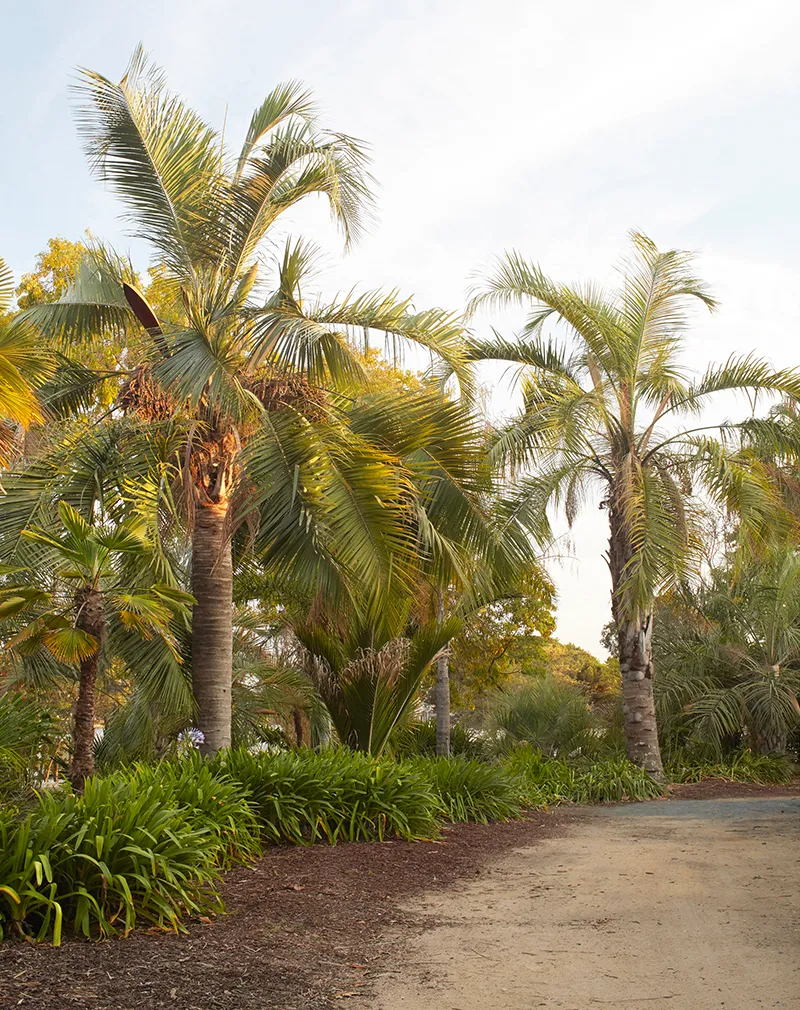
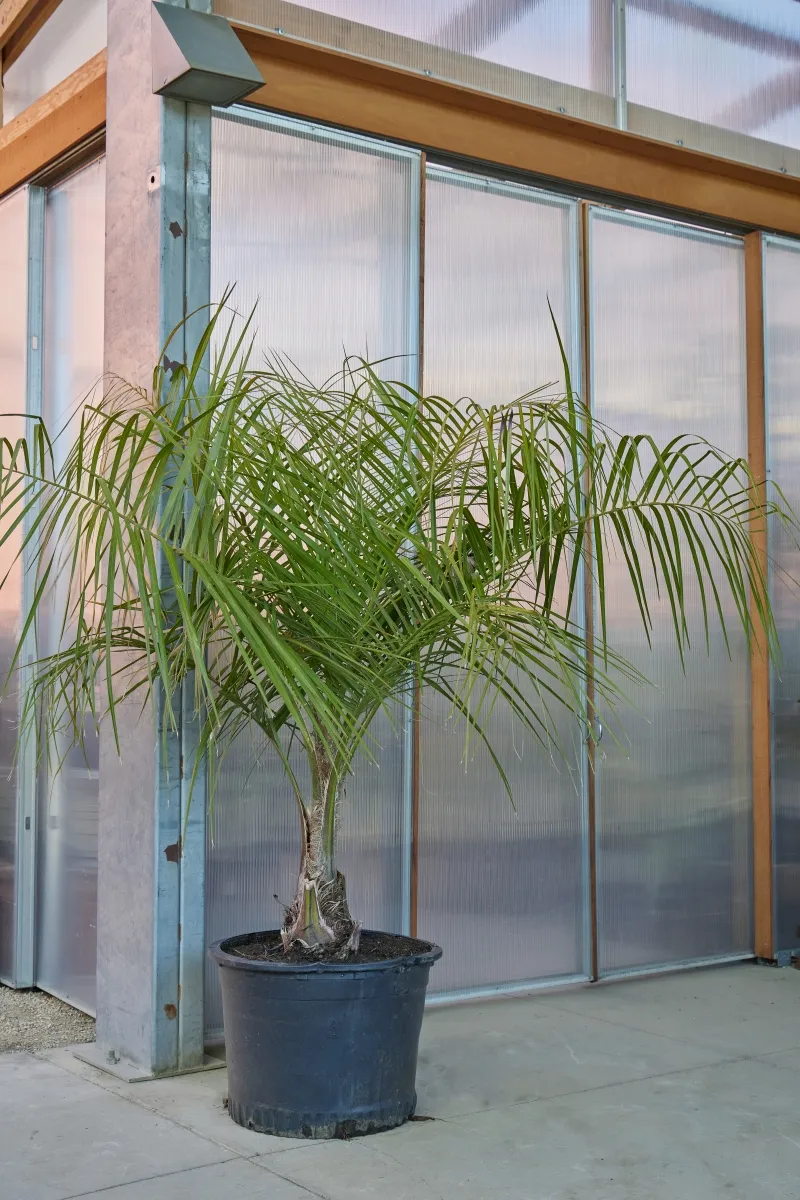
Shows hybrid vigor: speedier than both parents; tolerates varied climates. Long bouncy leaves have recurved tips.
 Height | 20–30ft |
|---|---|
 Width | 15–20ft |
 Tolerates | Drought, Salt, Wind |
 Water needs | Low – Moderate |
Not all palms love water! This one is actually drought-tolerant and can live quite happily on little or no water once it's established, though it'll grow more slowly and may not look as lush. To keep your palm looking its best, be sure to water it consistently and deeply while it's getting established, then after a few years give it a good deep soaking every couple of weeks. It will also be happy to have more water, provided the soil drainage is adequate. | |
 Hardy to | 18°F |
 Exposure | Part Shade – Full Sun |
 Plant traits | Palm, Tropical, Trunking |
 Indoor / outdoor | Outdoor |
 Drainage | In Ground: Cactus Mix, In Pots: Cactus Mix, Tolerates Sandy Soil |
 Fertilizing | Palm Fertilizer |
 Origin | Hybrid, South America |
 California native | No |
 Sunset zones | 8–24, H2 |
Growing Notes
This solitary palm will grow only one trunk during its lifetime. If you have a pot with multiple trunks in it, that's because multiple separate palm trees were germinated in the pot. The good news is that you won't need to thin out suckers over time to maintain the number of trunks you started out with.
With leaves growing in a single plane along most of the rachis, the feather palm has an elegant look to it.
Palms are generally heavy feeders, so if you want them growing quickly and looking their best, they should be fertilized at least three times a year. Fertilizing at spring equinox, summer solstice and fall equinox will allow for a winter rest. Be sure to feed your palm with a fertilizer that contains micronutrients, especially if you see yellowing leaves or yellow spots on the leaves.
This palm contributes to the oasis-style garden, especially when it's mixed with cactus and other drought-tolerant plants like euphorbias. It also makes an unusual and yet compelling addition to the Mediterranean garden when mixed with lavender, rosemary, and olives.
Stories featuring this plant
Which store do you shop at?
The above information reflects the observations of Grubb and Nadler and our extended plant community. We always consider input from fellow horticulturists and welcome feedback from those with additional information on the culture of this plant.
© 2020–2026 Grubb and Nadler. All rights reserved.