
Caryota maxima ‘Himalayan’
Himalayan fishtail palm
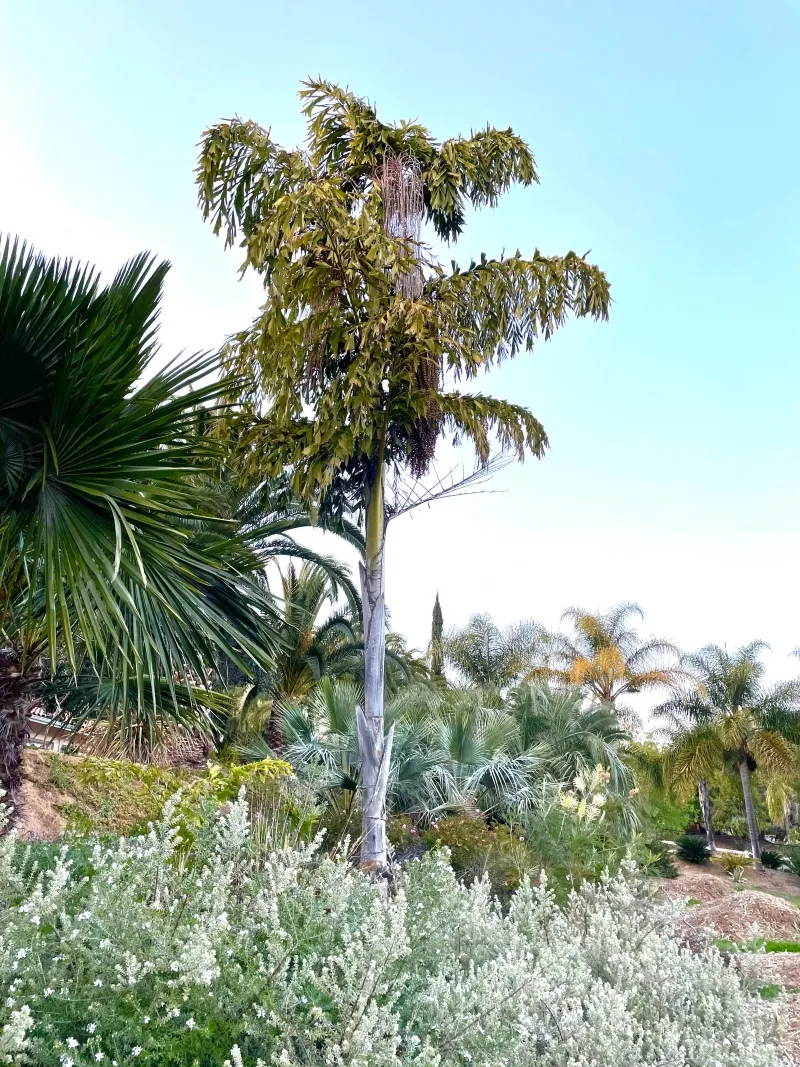
Fast-growing, tropical-looking, becomes a pagoda-form palm tree. 30-year lifespan. Ample water. Tolerates cool summers.
 Height | 20–30ft |
|---|---|
 Width | 8–12ft |
 Tolerates | Cool Summers, Moist Soil |
 Water needs | High |
This palm appreciates consistent water, but doesn't want soggy feet. Once it's established, be sure to water it when the top inch or two of the soil is dry. Usually this will mean watering deeply every five to seven days during the dry season. Planting this palm with good drainage will help to make sure it doesn't accidentally get overwatered. | |
 Hardy to | 26°F |
 Exposure | Part Shade – Full Sun |
 Plant traits | Monocarpic, Palm, Tropical, Trunking |
 Indoor / outdoor | Outdoor |
 Drainage | In Ground: Cactus Mix, In Pots: Cactus Mix |
 Fertilizing | Palm Fertilizer |
 Origin | E Asia |
 California native | No |
 Sunset zones | 16, 17, 19–24 |
Growing Notes
This solitary palm will grow only one trunk during its lifetime.
Its narrow, upright form makes it useful for getting lush greenery into tight spaces and adding privacy.
Once it's mature, this palm can naturally shed its leaves, leaving the trunk below the palm's crown exposed. However, it may be required to manual remove the leaves after they've faded.
Palms are generally heavy feeders, so if you want them growing quickly and looking their best, they should be fertilized at least three times a year. Fertilizing at spring equinox, summer solstice and fall equinox will allow for a winter rest. Be sure to feed your palm with a fertilizer that contains micronutrients, especially if you see yellowing leaves or yellow spots on the leaves.
This palm jumps up quickly, being very fast growing but also relatively short lived, lasting only a few decades before it blooms and dies. They are technically "hapaxanthic" meaning that individual stems bloom at nodes almost all the way down the trunk before dying. Do not handle the fruits without gloves as they will irritate the skin.
Avoid particularly windy locations, as the leaves are unsightly with consistent wind.
Special Interest
This palm's juicy lush look is an absolute must-have when creating a tropical garden in a temperate climate. Mix it with other broad-leafed plants like cannas, hedychiums, philodendrons, or monsteras.
Stories featuring this plant
Which store do you shop at?
The above information reflects the observations of Grubb and Nadler and our extended plant community. We always consider input from fellow horticulturists and welcome feedback from those with additional information on the culture of this plant.
© 2020–2026 Grubb and Nadler. All rights reserved.