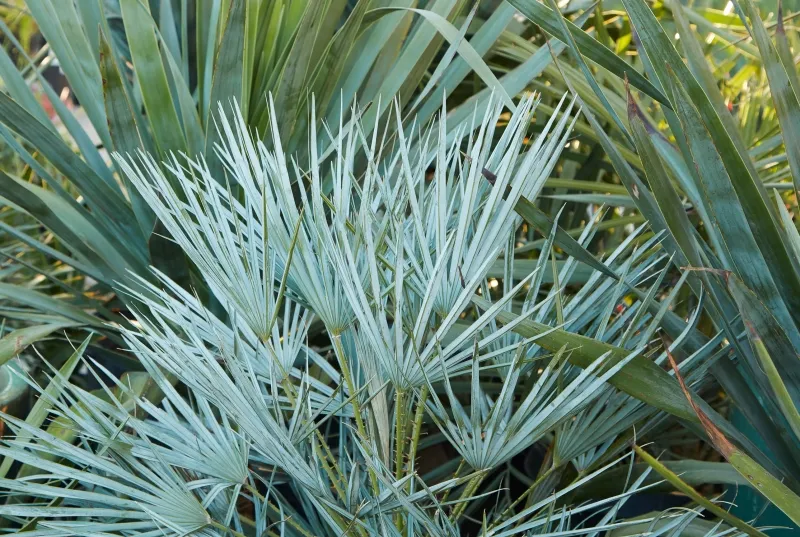
Chamaerops humilis ‘Cerifera’
silver Mediterranean fan palm, blue Atlas fan palm, Moroccan silver palm
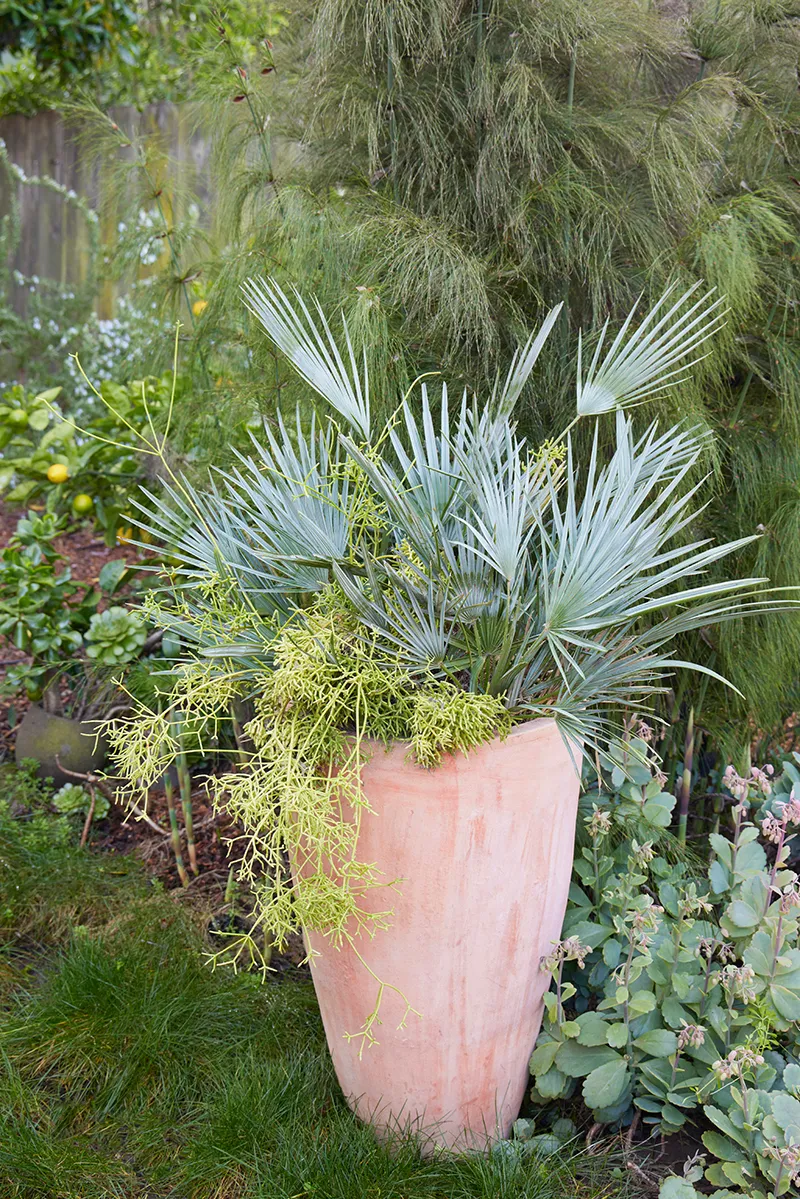
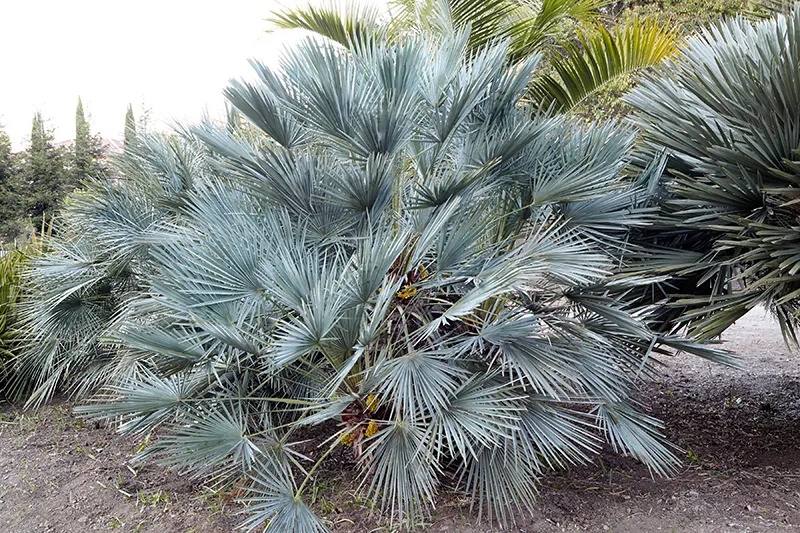
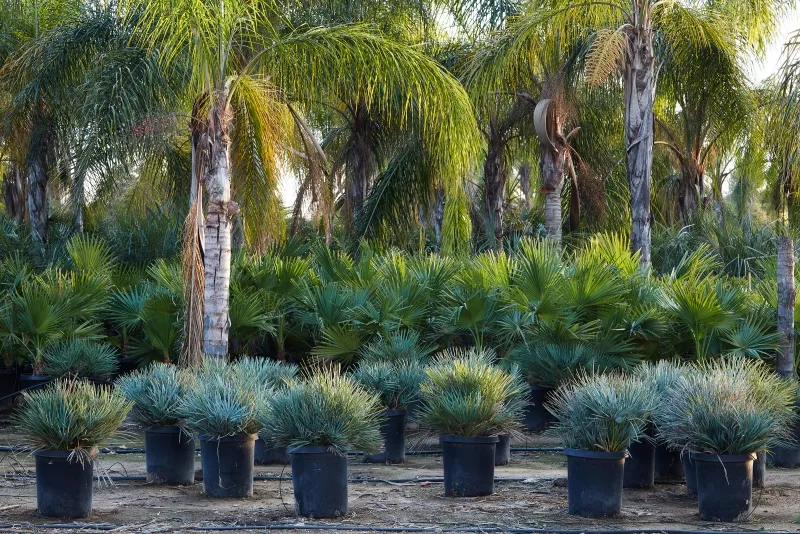
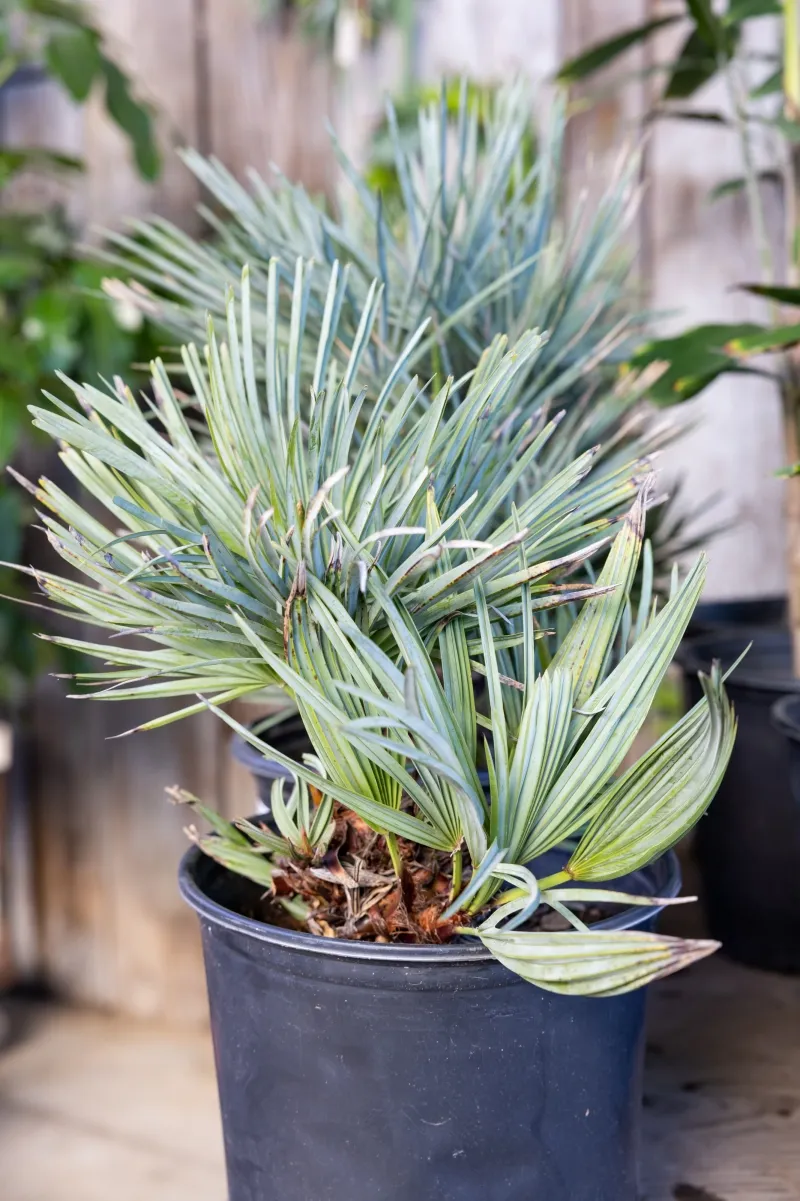
Rare, elegant, and tough. Slow-growing suckering shrub thrives in pots or ground. Attractive powder blue leaves. Very hardy.
Seen in Palms for the Dry Garden →
 Synonyms | Chamaerops humilis var. argentea |
|---|---|
 Height | 5–12 |
 Width | 10–15ft |
 Tolerates | Cold, Drought, Deer, Heat, Pots, Rooftops, Neglect, Salt, Wind |
 Water needs | Low |
Not all palms love water! This one is actually drought-tolerant and can live quite happily on little or no water once it's established, though it'll grow more slowly and may not look as lush. To keep your palm looking its best, be sure to water it consistently and deeply while it's getting established, then after a few years give it a good deep soaking every couple of weeks. It will also be happy to have more water, provided the soil drainage is adequate. | |
 Hardy to | 5°F |
 Exposure | Part Sun – Full Sun |
 Plant traits | Armed, Foliage Feature, Palm, Screen, Suckering, Tropical |
 Indoor / outdoor | Outdoor |
 Drainage | In Ground: Cactus Mix, In Pots: Cactus Mix, Tolerates Sandy Soil |
 Fertilizing | Palm Fertilizer |
 Origin | Morocco, Algeria |
 California native | No |
 Sunset zones | 4–24 |
Growing Notes
We adore this palm, and grow it from seed on our farms. It is tough as nails and so elegant. If you want it to grow quickly, fertilize at least three times a year. Be sure to feed your palm with a fertilizer that contains micronutrients, especially if you see yellowing leaves or yellow spots on the leaves.
Suckering palms like this one send out additional palm trunks from the base of the palm over time, so that you'll end up with multiple trunks on one palm. If you want a more open form or fewer trunks, go ahead and thin out the suckers.
This palm holds its leaves creating a beard or skirt on the trunk. If you want, you can always prune off the beard for a cleaner look. Generally this palm looks much better with the inner old leaves thinned out to look less cluttered. If fire retardance is a consideration the beard should be removed annually. Take care when pruning as the rachis (leaf stem) are thorned along their entire length. The leaves are easier to prune before they are fully dried when they become tough at a steep angle to the trunk.
Special Interest
Our favorite go-to for difficult environments, this tough palm barely notices harsh wind, or inconsistent water. It is physically tough and impervious to getting knocked around. We use this palm for situations where other plants might be destroyed intentionally or unintentionally by late night marauders (its thorned leaves also help deter them), car doors, or general neglect.
Wonderful in a pot when it is small, and will live for many, many years even in a small pot. Great as a hedge when it gets bigger. Unlike the typical green med fan the blue selection of Chamaerops humilis stays shrubby, never growing into a medium sized fully trunked garden tree. It is slower than the typical green form. This palm is also a bit hardier than the green form.
This is the most northerly growing palm on earth.
Stories featuring this plant
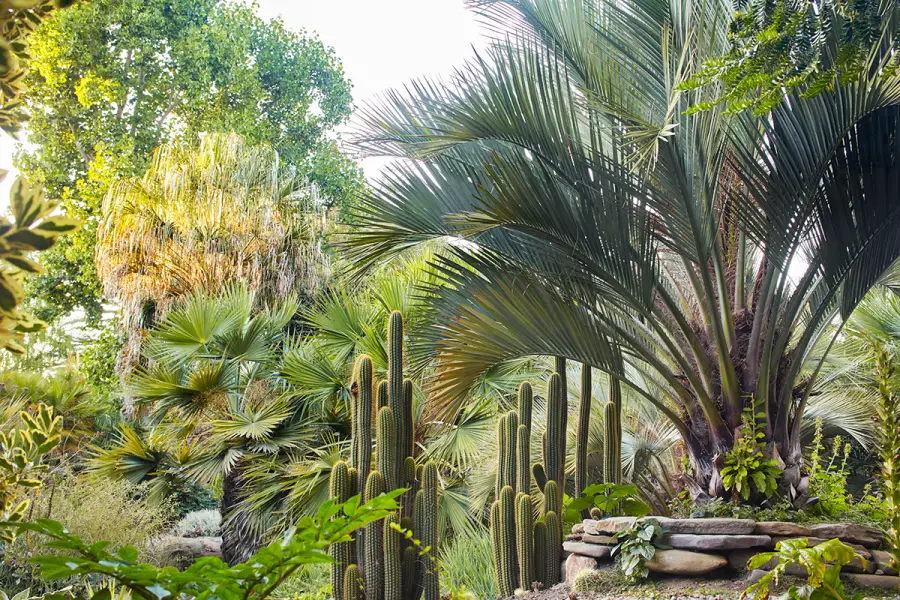 Garden storyPalms for the Dry GardenThe dry garden is a place we cultivate for harvest and beauty and life outdoors without overdoing the water in our summer-dry climate. With all their beauty and versatility, palms can play an important in the dry garden.
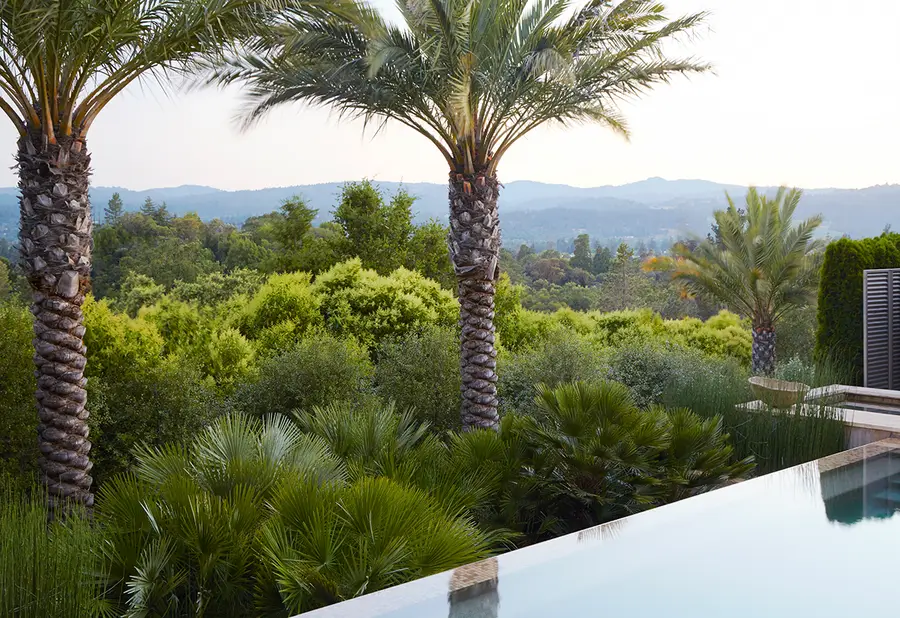 Garden storyThe Ultimate Guide to Growing Palm Trees in Coastal CaliforniaWe can grow many kinds of palms in our coastal California gardens — palm trees, shrubby palms, bamboo palms, little foliage palms — lucky us! Our guide to everything palm has all the info you need to make the best selections for your garden.
Which store do you shop at?
The above information reflects the observations of Grubb and Nadler and our extended plant community. We always consider input from fellow horticulturists and welcome feedback from those with additional information on the culture of this plant.
© 2020–2026 Grubb and Nadler. All rights reserved.