
Euphorbia evansii
laeveldnaboom
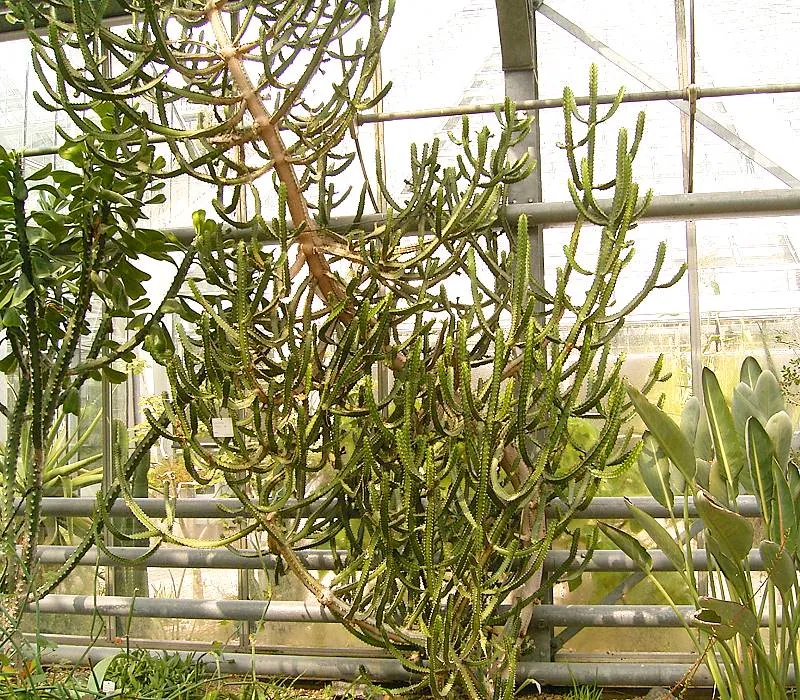
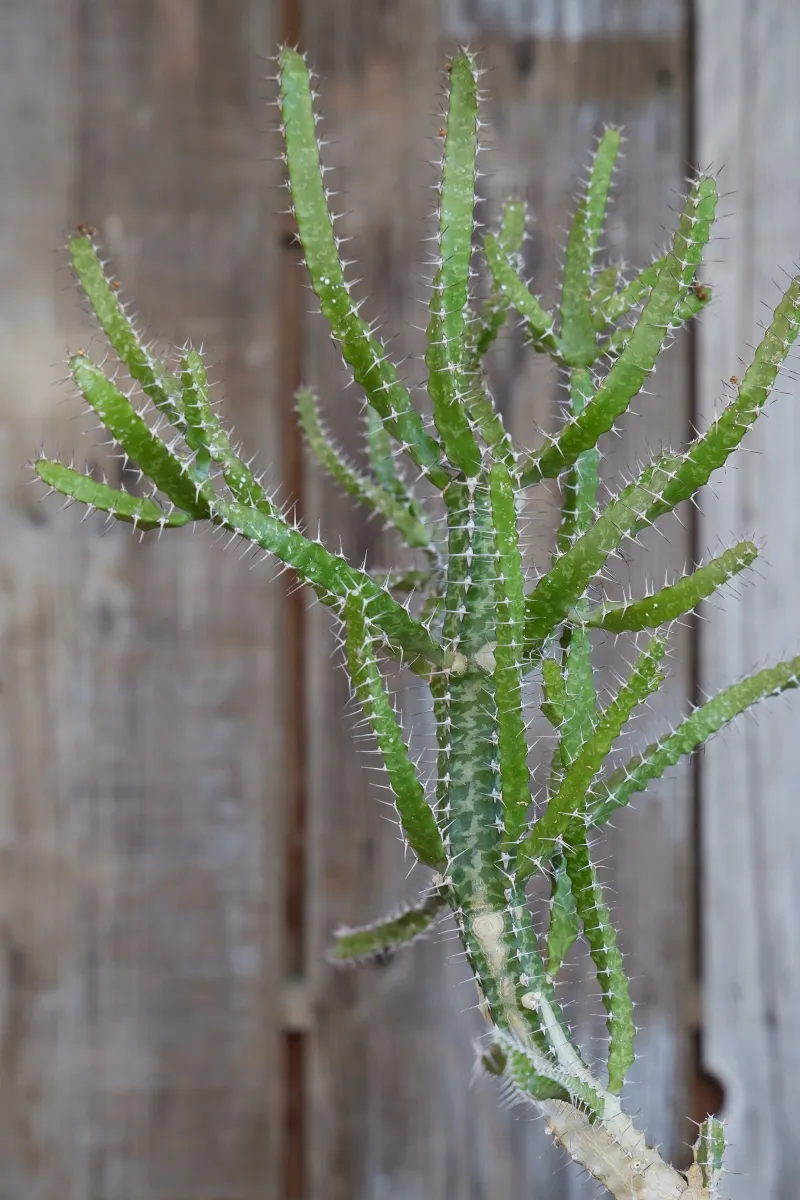
Scruffy and shrublike when young. Mature specimens are more treelike, with a central trunk and primary branches.
 Mature size | 10–15ft tall 6–10ft wide |
|---|---|
 Exposure | Part Shade – Full Sun |
 Hardy to | 25°F |
 Sunset zones | 13, 15–17, 19–24 |
 Water needs | Low These euphorbias are very drought tolerant but will grow faster if they receive some summer water, usually every couple weeks to a month once established (let the plant dry out between waterings). If you aren't getting summer growth you may be underwatering. These plants prefer a dry winter; outdoors in central California, they won't need supplemental winter water once established. |
 Tolerates | Drought, Deer, Gophers, Heat, Pots, Rooftops, Wind |
 Plant traits | Armed, Sculptural, Shrub, Solitary, Succulent, Toxic Sap, Trunking |
 Drainage | In Ground: Cactus Mix, In Pots: Cactus Mix, Tolerates Sandy Soil |
 Fertilizing | All Purpose |
 Origin | E South Africa |
 Synonyms | Euphorbia triangularis |
Growing Notes
They respond well to pruning. They will look scarred for a while, but then will push new growth wherever they are pruned, often giving you several new growth points. Take care when pruning, as euphorbias have toxic sap that can cause a skin rash or damage to the eyes (make sure to rinse repeatedly with water if sap gets anywhere near your eyes).
They like a warm sunny exposure but do surprisingly well in shady areas as long as they aren't given extra water during winter.
As columnar euphorbias grow they will transition from colorful and smooth new growth to dull, brown and rough older growth. This is called corking, and it is totally natural. Think of this like an oak tree where the new shoots are shiny and green, but then eventually you get a trunk covered in rough dull bark.
Soft dark brown spots on Euphorbia are usually a sign of rot. Carve these spots out with a sterile knife immediately (carve all the way back to healthy-looking tissue). Rot usually results from overwatering, but it can also be caused by drastic under-watering. Occasionally this will start at the base of the plant, which means the roots have rotted. If you'd like to save the plant you'll need to remove the top above the rotten base, let the top sit for two weeks in a shady spot, and then replant in very sharp-draining soil. Place the cutting in a warm spot to re-root, preferably not in harsh sun.
More Info
Photo of this plant in a plant conservatory is by Frank Vincentz. Plants grown in conservatories like this are naturally more open and less stout and dense. See the photo link below for how this plant grows outdoors in full sun.
Links
Which store do you shop at?
What we've learned from growing this plant ourselves and in our customers' gardens. We always love to hear more. Tell us
© 2020–2026 Grubb and Nadler. All rights reserved.