
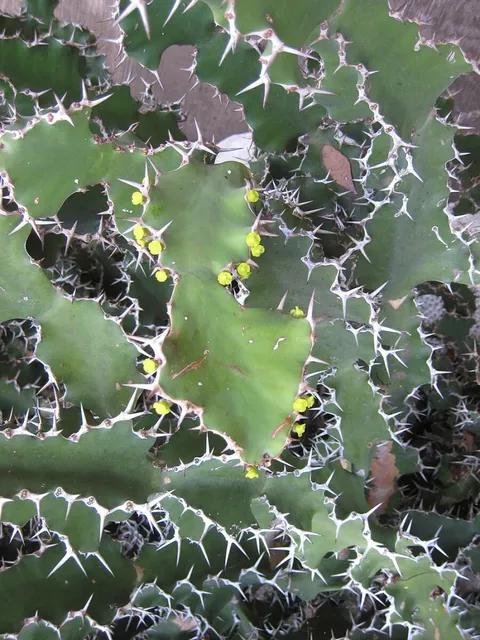
Euphorbia stenoclada x tirucalli ‘Briar Patch’
briar patch
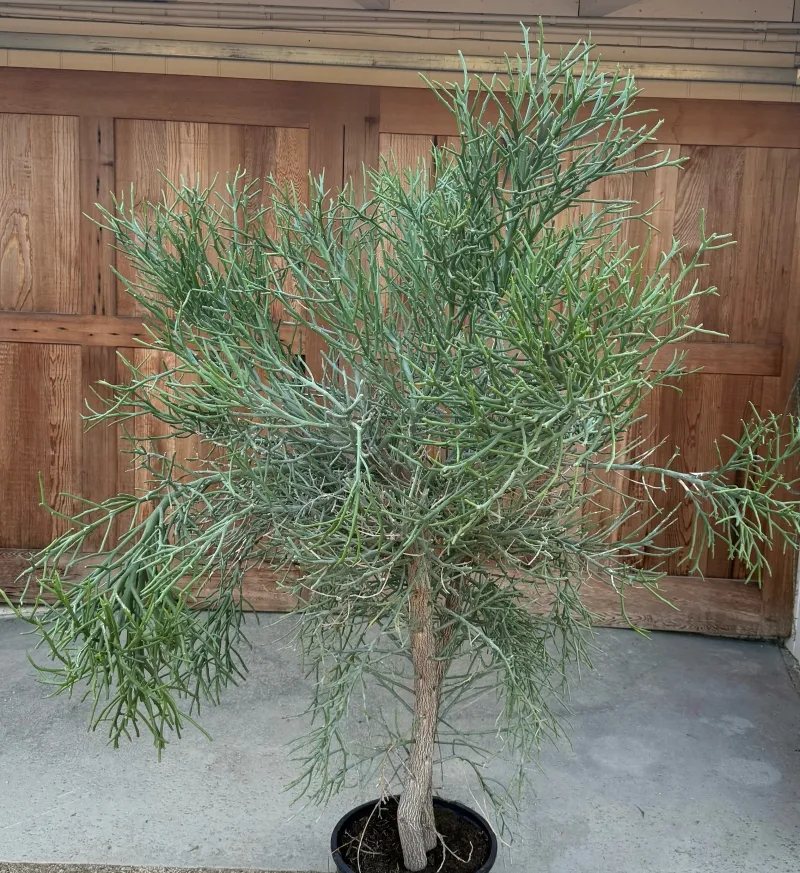
Shrubby when young, treelike with age. Unusual, sculptural branching. Appreciates dry winters, but water when almost dry in warm months. Appreciates heat. Good drainage a must.
In stock in San Francisco and Los Angeles
from $99
Growing it outdoors
 Mature size | 7–10ft tall 5–8ft wide |
|---|---|
 Exposure | Full Sun |
 Hardy to | 29°F |
 Sunset zones | 13, 21–24 |
 Water needs | Low – Moderate This plant will need to be protected from getting both cold and wet. Do not add additional water during periods of winter rain. During winter it should be kept extra dry and will be intolerant of overwatering. In the San Francisco Bay Area and Central and Northern California, protect this plant from getting too much water by putting it in a small pot. When the plant it actively growing, it will like water. If you see your euphorbia begin to shrivel or lose firmness, your plant is likely totally dry and should be watered. For good healthy growth, your plant doesn't want to sit around totally dried out during its growing season. Once it is dry, water it. |
 Tolerates | Deer, Gophers, Heat, Pots, Wind |
 Plant traits | Foliage Feature, Hedge, Shrub, Succulent, Toxic Sap, Tree, Trunking |
 Drainage | In Ground: Cactus Mix, In Pots: Cactus Mix |
 Fertilizing | Low Needs |
 Origin | Hybrid |
Growing Notes
Shrubby when young, with great age this plant is treelike.
Gophers and deer avoid this plant due to the toxic latex sap. It also irritates people, so avoid it and wash off skin quickly if exposed. Take extra precaution to keep the sap out of your eyes.
Prune lower branches to create a more treelike form, but avoid sap.
You may find your euphorbia develops hard brown scabs that eventually cover the trunk, especially on older growth. This is called corking, and is the natural process of the 'branch' becoming a cactus 'stump' and getting bark, just like trees do. Corking is totally natural and adds to the beauty of your plant over time.
This plant tolerates a light frost, but tends to get blackened stems that will die back and need to be pruned off. Place in a protected microclimate if frost is expected.
Growing it indoors
| Exposure | Partial Direct – Direct Sun |
|---|---|
| Water needs | When soil is completely dry. Very low water indoors will keep this plant happy. |
| Plant traits | Foliage Feature, Hedge, Shrub, Succulent, Toxic Sap, Tree, Trunking |
| Drainage | In Pots: Cactus Mix |
| Fertilizing | Low Needs |
| Origin | Hybrid |
Similar plants
Special Interest
Reliably a good indoor plant as well, and this plant easily transitions from outdoors into a warm sunny room inside. This is a great choice for a very hot indoor spot and will tolerate direct indoor sunlight.
What we've learned from growing this plant ourselves and in our customers' gardens. We always love to hear more. Tell us
© 2020–2026 Grubb and Nadler. All rights reserved.