
Grevillea ‘Superb’
Low shrub with feathery, evergreen leaves makes dense clusters of orange-pink flowers most months. Avoid phosphorus.
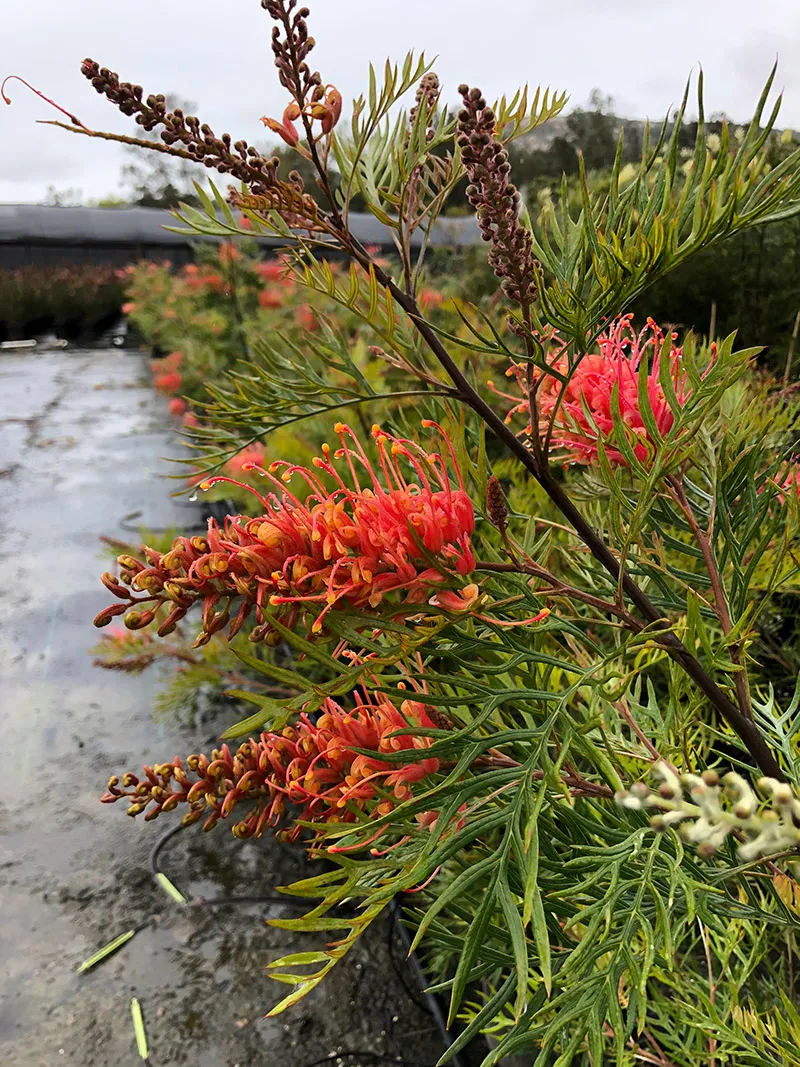
Seen in In stock now: Grevillea →
 Height | 5–6ft |
|---|---|
 Width | 3–4ft |
 Tolerates | Drought, Fog, Pots, Wind |
 Water needs | Low – Moderate |
Grevilleas are drought tolerant, but they'll want infrequent additional summer water at least every couple of weeks once established. They prefer well-drained soil, but they're less picky than some of the other proteaceous plants. | |
 Hardy to | 25°F |
 Exposure | Part Shade – Full Sun |
 Plant traits | Florist Plant, Flowering, Humming Birds, Shrub |
 Indoor / outdoor | Outdoor |
 Drainage | In Ground: Cactus Mix, In Pots: Cactus Mix, Tolerates Sandy Soil |
 Fertilizing | Bloodmeal, Fish Emulsion, Low Needs, No Phosphorus |
 Origin | Australia |
 California native | No |
 Sunset zones | 15–17, 19–24 |
Growing Notes
This grevillea is a moderate sized full shrub. Sheer it to make the plant extra dense or prune selectively to open it up and make an open airy form. You can also prune off lower branches to expose the trunk in a standard form.
Stories featuring this plant
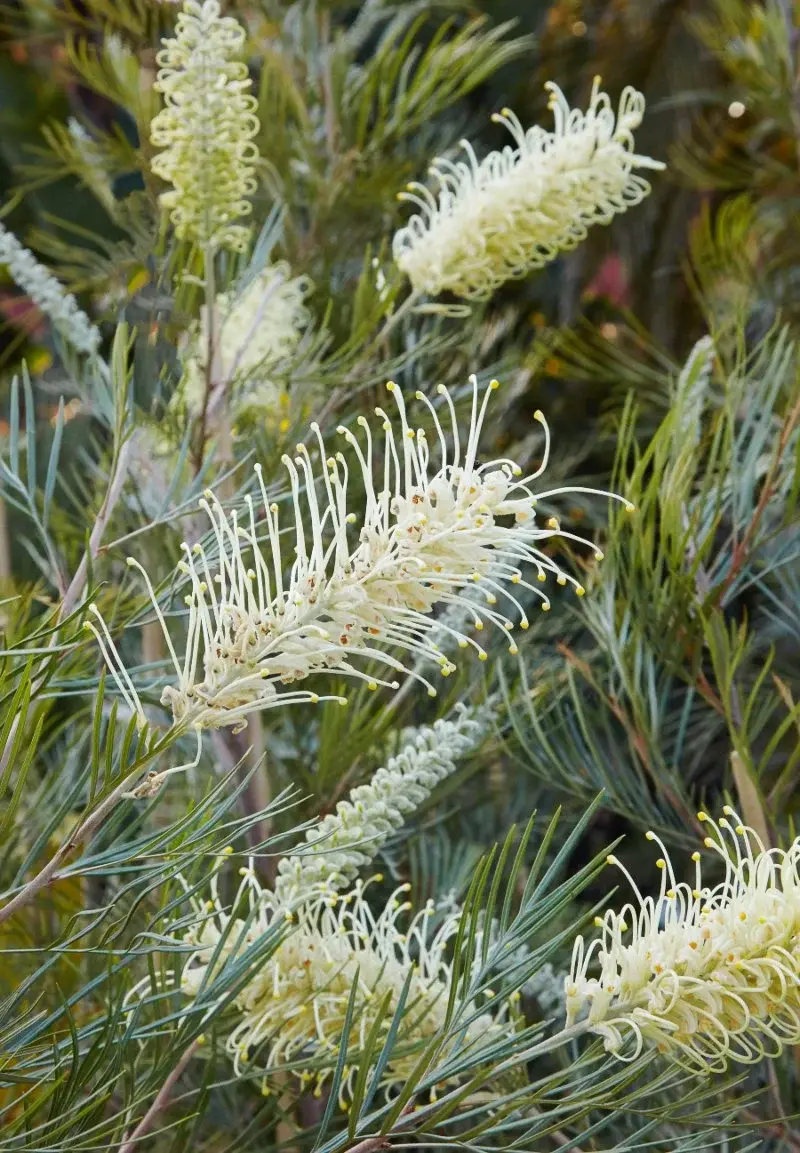 Garden storyIn stock now: GrevilleaGrevillea are incredibly useful shrubs in the landscape. These low-maintenance shrubs offer soft, airy texture and nearly year-round blooms. Their unique flowers are hummingbird magnets!
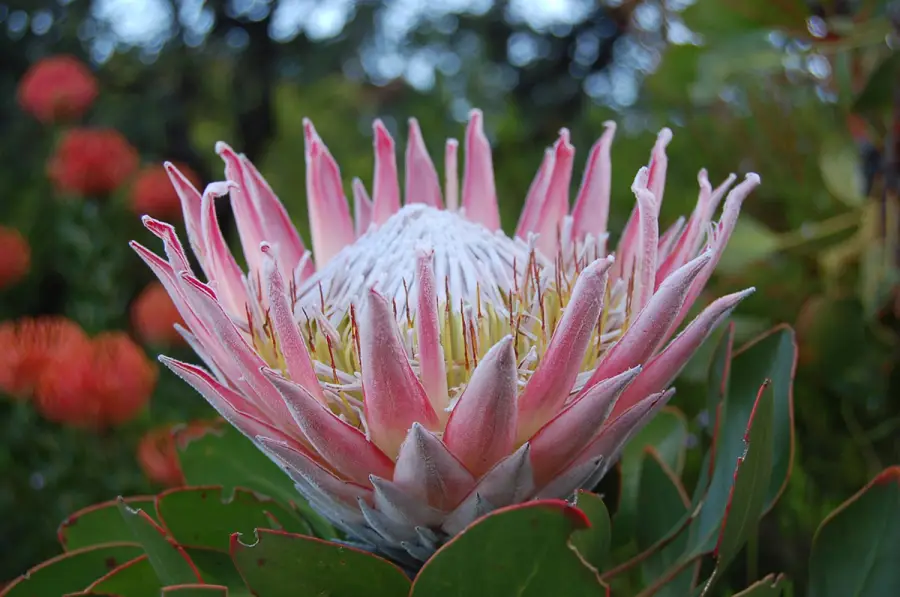 Garden storyThe Beautiful and Varied Blooms of the Protea FamilyAmong the proteaceae there is a vast variety of exotic flowers, and many of these plants have a long blooming season, especially here in coastal California, where the weather mimics their native South African and Australian coastal landscapes.
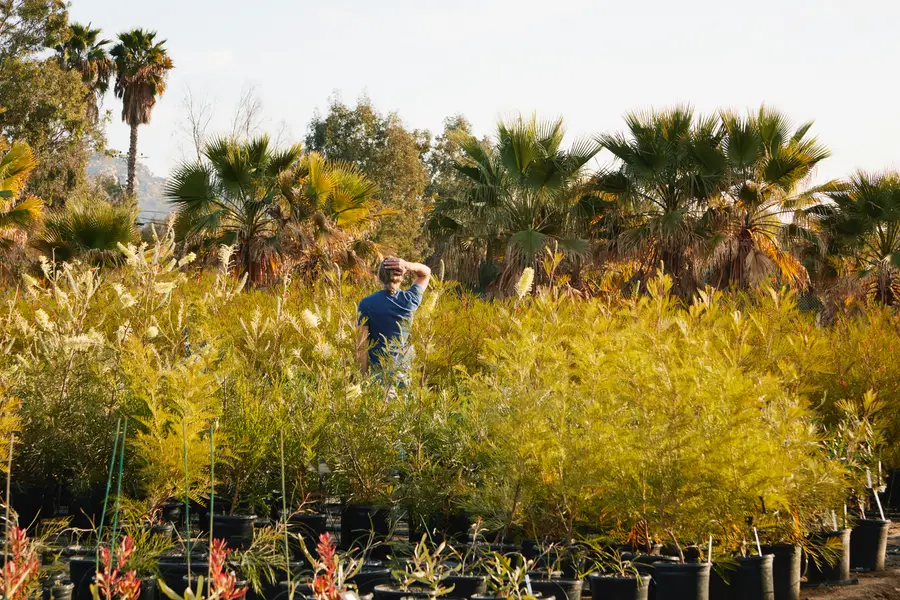 Garden storyBright, Beautiful Autumn Blooms: Grevilleas for Your GardenAutumn is grevillea bloom time! We love these plants for their exotic, shimmery flowers that attract bees and birds over a long blooming season. Among low-water plants, grevilleas can't be beat for their big bright flowers.
Links
In stock today in San Francisco
| 5 gallon | 4 available | $49 |
The above information reflects the observations of Grubb and Nadler and our extended plant community. We always consider input from fellow horticulturists and welcome feedback from those with additional information on the culture of this plant.
© 2020–2026 Grubb and Nadler. All rights reserved.