
Leucadendron ‘Red Eye’
cone bush
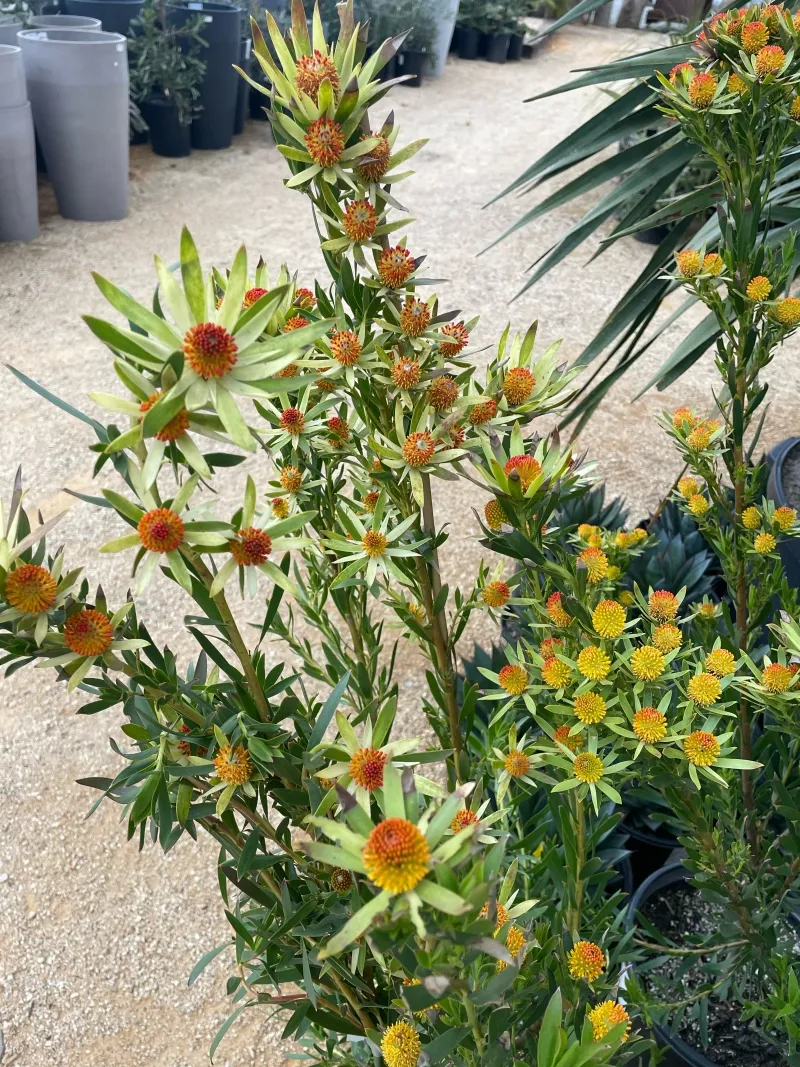
Upright South African shrub has creamy bracts around red cones in winter and spring. Excellent low maintenance screening plant. Gritty soil, no phosphorus.
Seen in Leucadendrons at Their Loveliest →
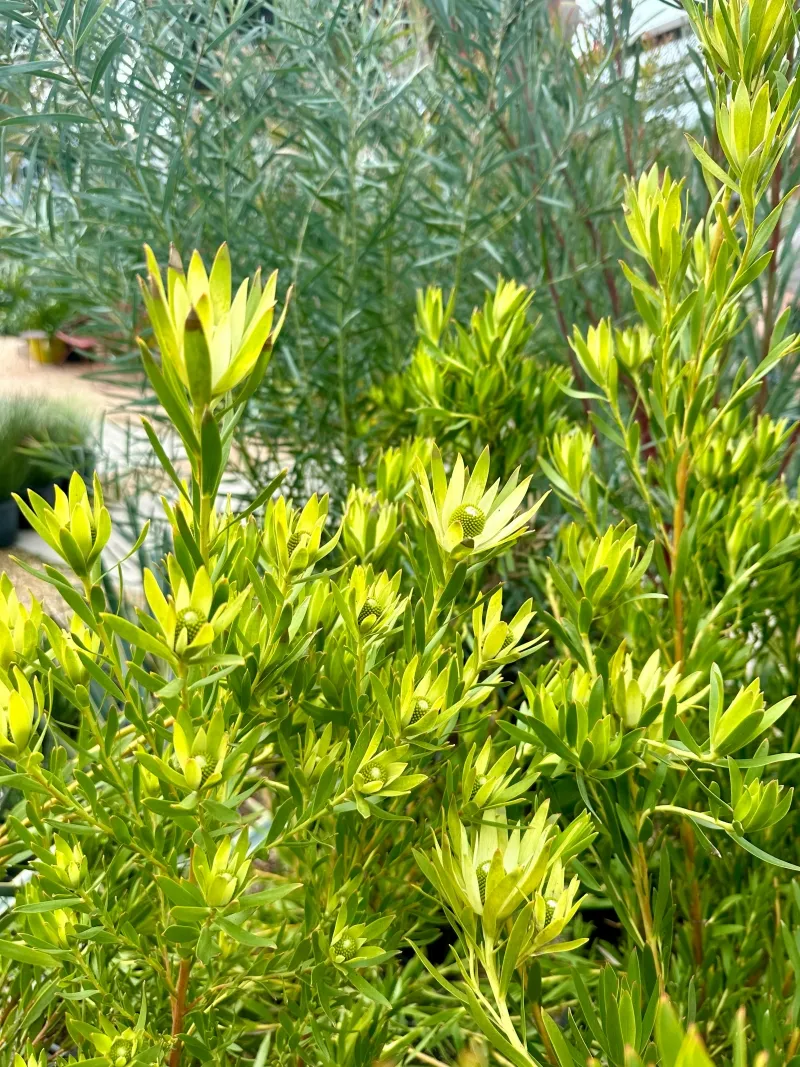
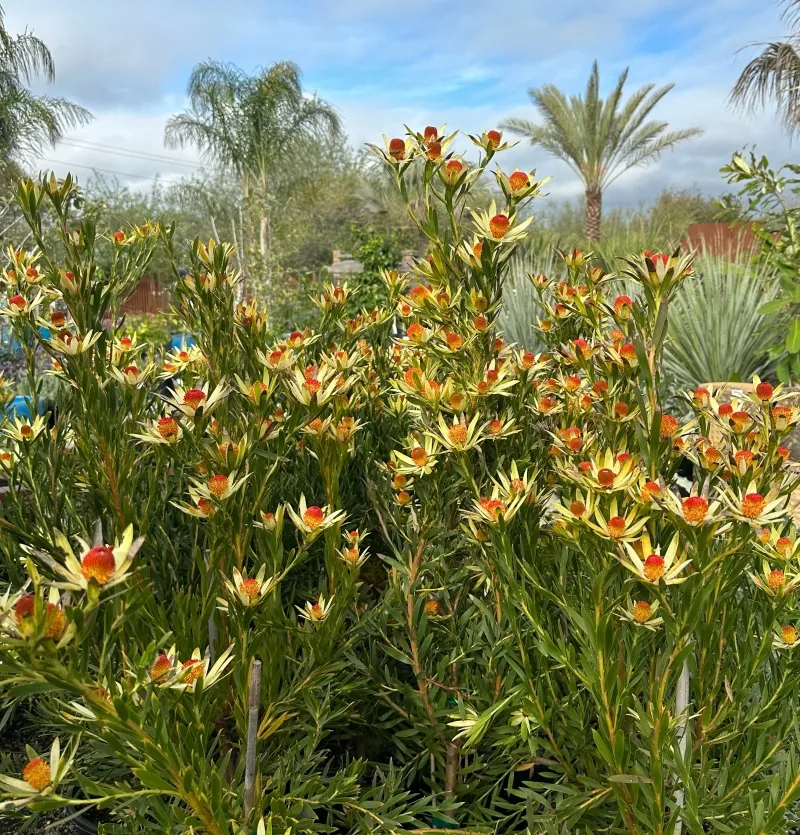
 Mature size | 5–20ft tall 5–10ft wide |
|---|---|
 Exposure | Part Shade – Full Sun |
 Hardy to | 25°F |
 Sunset zones | 14–17, 20–24 |
 Water needs | Low Leucadendrons are from Mediterranean-climate areas of South Africa, so they're right at home in coastal California. Once established they are quite drought tolerant, but they will grow and look their best with deep watering every two or three weeks during summer. These plants prefer well-drained soil, but most leucadendrons are fairly adaptable. If you have heavier soil be careful not to oversaturate your plant, and water very infrequently during summer, once established. |
 Tolerates | Coast, Cool Summers, Drought, Deer, Pots, Rooftops, Neglect, Wind |
 Plant traits | Flowering, Screen, Shrub |
 Drainage | In Ground: Cactus Mix, In Pots: Cactus Mix, Tolerates Sandy Soil |
 Fertilizing | Bloodmeal, Fish Emulsion, Low Needs, No Phosphorus |
Growing Notes
Leucadendrons, even bushy ones like this one, have a clean upright form. They can be pruned to either be bushier, by trimming back the crown, or more upright, by pruning on the sides. It is best not to prune on growth that is more than two years old (where the branches become woody and leafless), or you risk your leucadendron not bushing back from that area. Prune up lower branches to make a tree-like form or hedge them to make a dense privacy screen.
All purpose fertilizer will kill this plant! Fertilizer is generally not necessary, though Leucadendrons prefer slightly acidic soil. Treat with cottonseed meal, iron, or other mild (low in phosphorus and potassium) acidifying fertilizer if you have basic soil. They also respond well to nitrogen, either in the form of fish emulsion or blood meal. Never give your leucadendron phosphorus, which will poison the plant and avoid potassium.
We've listed the height we typically see this plant in gardens around California, though this plant likely grows significantly larger given time and neglected pruning. Eventually we suppose this plant could reach 15 to 20 feet tall and 8 to 12 feet wide. That said, it responds VERY well to pruning and is easily maintained at as a dense shrub at about any height.
Special Interest
Leucadendrons don't have typical flowers, but instead they have brightly colored cones held at the branch tips. Leaves holding these cones also brighten when cones are present. These plants are dioecious, meaning that some plants are male and others female, and the cones vary slightly by sex.
Stories featuring this plant
Links
What we've learned from growing this plant ourselves and in our customers' gardens. We always love to hear more. Tell us
© 2020–2026 Grubb and Nadler. All rights reserved.