
Leucospermum gueinzii
pincushion protea
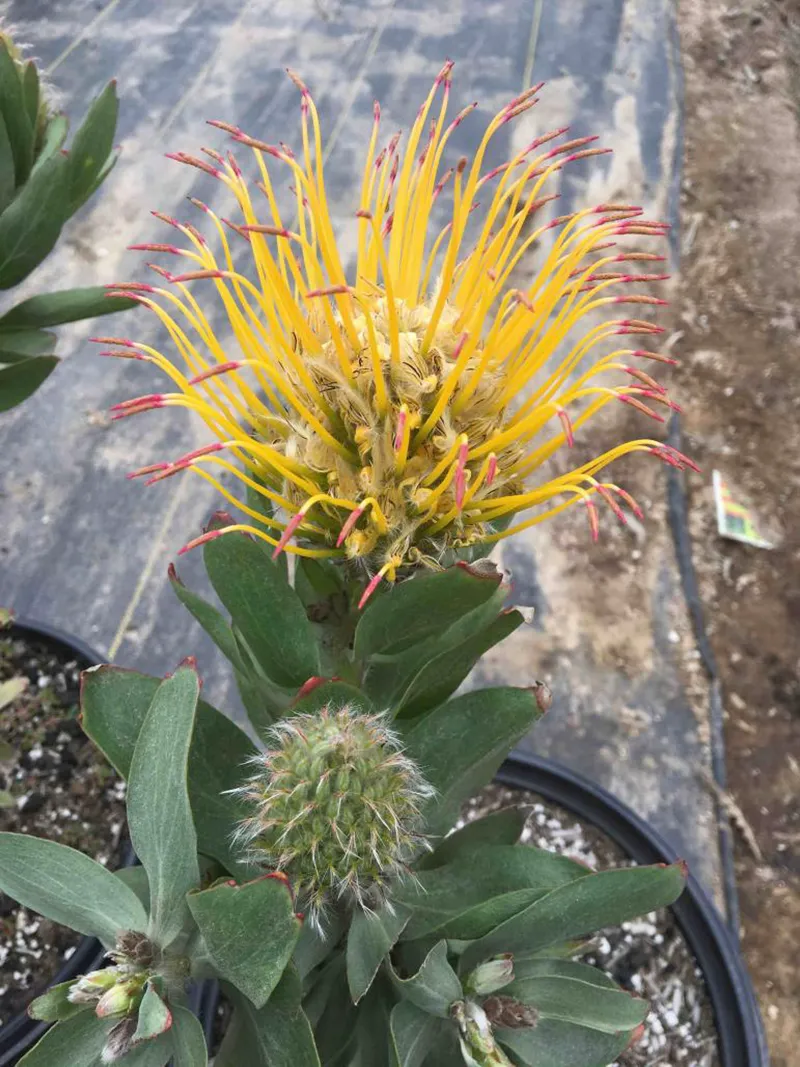
Yellow spring flowers with tilted pink tips on evergreen shrub. Can take more water than other pincushions. No phosphorus.
Seen in Protea and Leucospermum →
 Height | 6–10ft |
|---|---|
 Width | 6–10ft |
 Tolerates | Coast, Cool Summers, Drought, Fog, Gophers, Wind |
 Water needs | Low – Moderate |
Many leucospermums are from Mediterranean climates of South Africa, so they adapt well to California, particularly along the coast. They appreciate good drainage, but they're somewhat adaptable to heavier soil as long as they're in a sunny spot and watering is infrequent (once established). Leucospermums will grow and look their best when watered deeply every other week to once a month during summer. With sharp drainage, they will tolerate even more water. | |
 Hardy to | 27°F |
 Exposure | Part Shade – Full Sun |
 Plant traits | Bees, Flowering, Hedge, Humming Birds, Screen, Shrub |
 Indoor / outdoor | Outdoor |
 Drainage | In Ground: Cactus Mix, In Pots: Cactus Mix, Tolerates Sandy Soil |
 Fertilizing | Bloodmeal, Fish Emulsion, Low Needs, No Phosphorus |
 Origin | Hybrid, South Africa |
 California native | No |
 Sunset zones | 16, 17, 21–24 |
Growing Notes
Giving this plant all purpose fertilizer will kill it immediately!
Leucospermums have showy pincushion flowers at the branch tips in late spring through early summer.
Naturally pincushion proteas have a thick bushy form, but they can be kept smaller and made even bushier by pruning. Don't prune more than two years of growth (where the old woody leafless stems start), or you risk the plant not budding back. They can even be groomed into modest-sized formal hedges.
Generally fertilizer is not necessary. Leucospermums do prefer mildly acidic soil, and if your PH is on the high side, (one cause of yellowing leaves) you can add cottonseed meal, iron, or other mild (low in phosphorus and potassium) acidifying fertilizer to adjust it. They appreciate nitrogen in the form of fish emulsion or blood meal, but never give them any significant phosphorus and avoid potassium.
Once flowers are mature they naturally shed cleanly from the plant.
Special Interest
Long-lasting cut flowers on long straight stems, perfect for display.
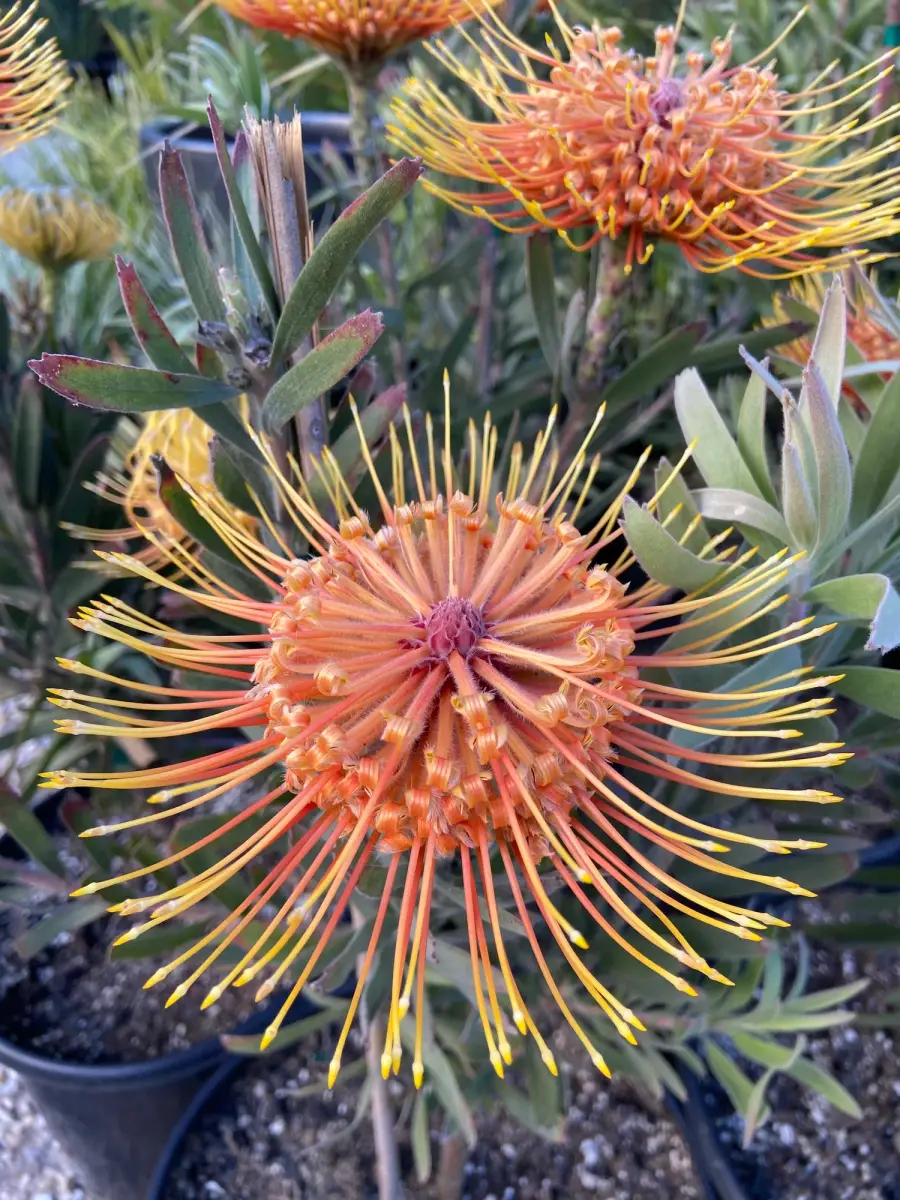
Flowers transition through various shades of colors as they mature and are loved by hummingbirds.
Long lasting cut flowers on tall stems are perfect for floral displays.
Stories featuring this plant
Links
The above information reflects the observations of Grubb and Nadler and our extended plant community. We always consider input from fellow horticulturists and welcome feedback from those with additional information on the culture of this plant.
© 2020–2026 Grubb and Nadler. All rights reserved.