
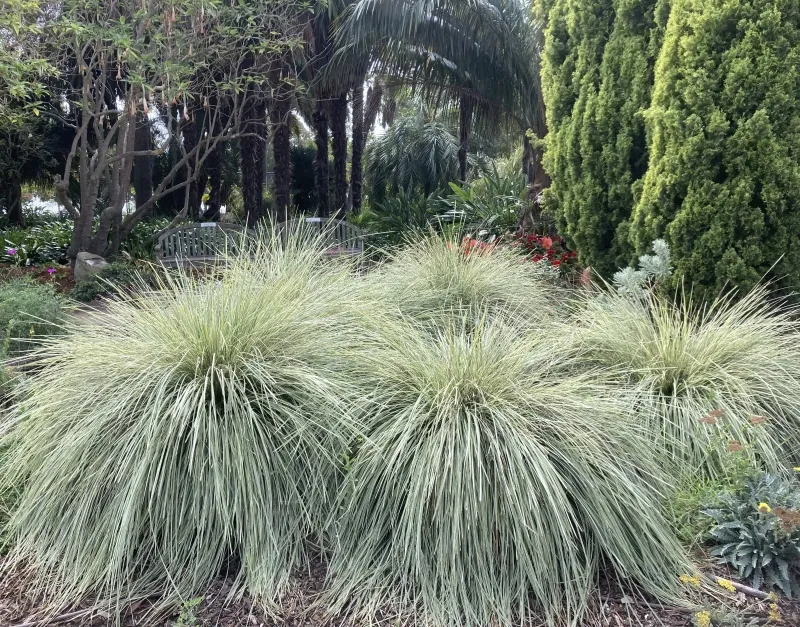
Lomandra longifolia ‘Arctic Frost’
mat rush
Luminous low-water grass-like plant. Tidier than true grasses. Nice in pots. Tolerates wet soil, too.
Seen in Rooftop Inspiration From Oliver Gardens →
 Height | 2–3ft |
|---|---|
 Width | 2–3ft |
 Tolerates | Coast, Cold, Cool Summers, Drought, Deer, Fog, Moist Soil, Pots, Salt, Wind |
 Water needs | Low – Moderate |
Water this plant regularly, when the top inch or so of soil feels dry. If you establish this pattern over several years, then you can cut back to watering every week or two in dry weather. Use drippers, emitters, or a slow stream of water so that it doesn't run off; allow the water to trickle all the way down through the deepest layers of soil. In a pot slowly water the entire surface until water comes out of the bottom of your pot. | |
 Hardy to | 18°F |
 Exposure | Part Sun – Full Sun |
 Plant traits | Clumping, Fragrant Flower, Grassy, Vertical Gardening |
 Indoor / outdoor | Outdoor |
 Drainage | In Ground: Planting Mix, In Pots: Potting Soil, Tolerates Heavy Soil, Tolerates Sandy Soil |
 Fertilizing | All Purpose |
 Origin | Australia |
 California native | No |
 Sunset zones | 8, 9, 14–24, H2 |
Growing Notes
Being evergreen, this grassy plant doesn't need the annual hard pruning of many grasses. It'll look just fine year round with little work. After many years, when the plants older leaves are being smothered by new ones, a hard pruning in late spring will refresh the clump or you can rake out the older dead leaves.
Maintain the size of lomandra by pulling up the leaves as you would a pony-tail and then cutting them at the desired length. Cutting smaller clumps at various lengths gives a more subtle haircut. This trimming has little aesthetic affect on the plant, as the leaf tips naturally present with ragged tips.
After blooming, selectively pruning out old flower stalks keeps the clump looking tidy.
Spills handsomely out of pottery, over walls, or down vertical gardens.
More upright and bushy in sun, lower, wider and flatter in shade.
Special Interest
Lomandra was used traditionally by the Aboriginal people of Australia to make nets and mats, thus leading to the common name mat rush.
Stories featuring this plant

Which store do you shop at?
The above information reflects the observations of Grubb and Nadler and our extended plant community. We always consider input from fellow horticulturists and welcome feedback from those with additional information on the culture of this plant.
© 2020–2026 Grubb and Nadler. All rights reserved.