
Opuntia gomei ‘Old Mexico’
prickly pear cactus
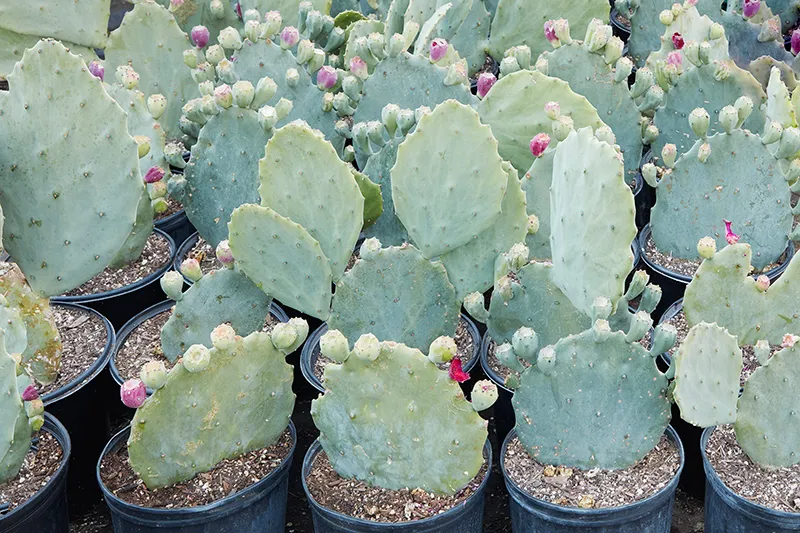
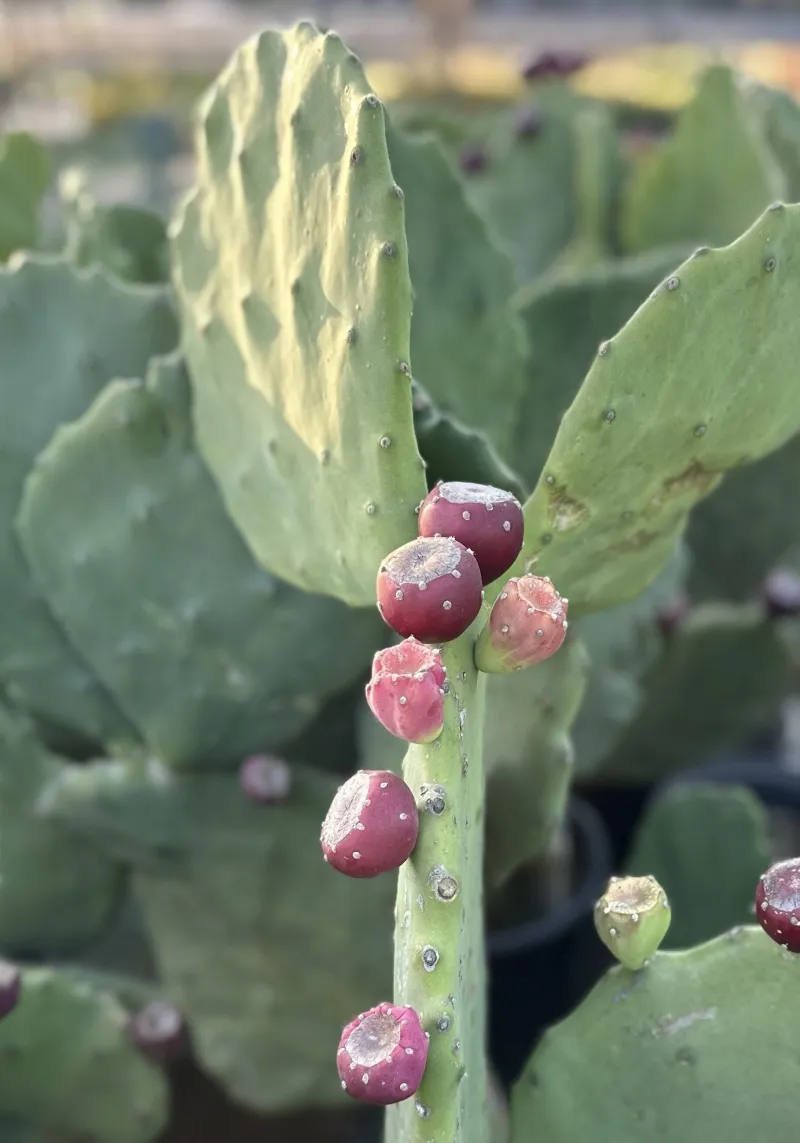
Extra large spineless pads make yellow flowers in spring/summer followed by edible red fruit. Tolerates light shade.
 Height | 3–5ft |
|---|---|
 Width | 6–10ft |
 Tolerates | Cold, Drought, Heat, Pots, Wind |
 Water needs | Low |
Opuntia are extremely drought-tolerant, which means that no additional water should be needed once the plant is established. Newer plants might show that they are thirsty when their leaves begin to shrivel. If this happens, give them a bit of water; otherwise they might start to drop their paddles. Often these shed paddles will root and grow once rain comes. To keep your opuntia plump and lush-looking, water it every two or three weeks during the summer. Opuntias prefer good drainage, but they are tolerant of a wide range of soils. | |
 Hardy to | 10°F |
 Exposure | Part Shade – Full Sun |
 Plant traits | Bees, Cactus, Edible, Flowering, Sculptural |
 Indoor / outdoor | Outdoor |
 Drainage | In Ground: Cactus Mix, In Pots: Cactus Mix, Tolerates Sandy Soil |
 Fertilizing | All Purpose, Low Needs |
 Origin | N America |
 California native | No |
 Sunset zones | 8–24 |
Growing Notes
Opuntias (prickly pear or paddle cactus) are iconic and have a myriad of uses. This one has edible fruit called tunas, though they are small and not the best opuntia to eat. These cactus can be pruned by selectively removing paddles to accentuate a more upright, open, or bushy form. Opuntias are delicate, and arms snap off easily, so be sure to keep them away from high traffic areas. These arms can easily be propagated, by laying them on their sides on cactus mix.
You will find your cactus develops hard brown scabs that eventually cover the cactus, especially on older growth. This is called corking, and is the natural process of the cactus 'branch' becoming a cactus 'stump' and getting bark, just like trees do. Corking is totally natural and adds to the beauty of your cactus as it becomes more treelike.
These larger, more upright Opuntias will develop a meandering trunk over time as their paddles gradually cork and are covered with rough bark. By pruning the paddles over time, you can sculpt your trunk(s) and primary branches into the desired form.
Hardiness numbers are based on a dry winter.
In stock today in San Francisco
| 7 gallon | 5 available | $139 |
The above information reflects the observations of Grubb and Nadler and our extended plant community. We always consider input from fellow horticulturists and welcome feedback from those with additional information on the culture of this plant.
© 2020–2026 Grubb and Nadler. All rights reserved.