
Aloe speciosa
tilt head aloe
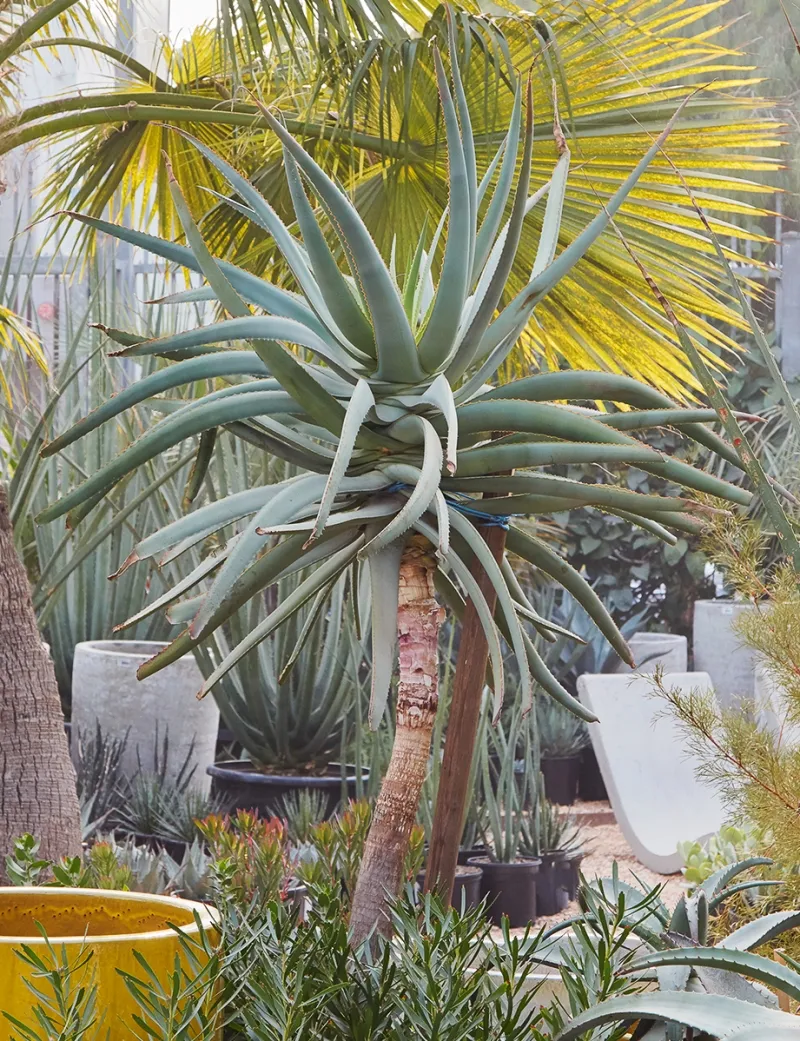
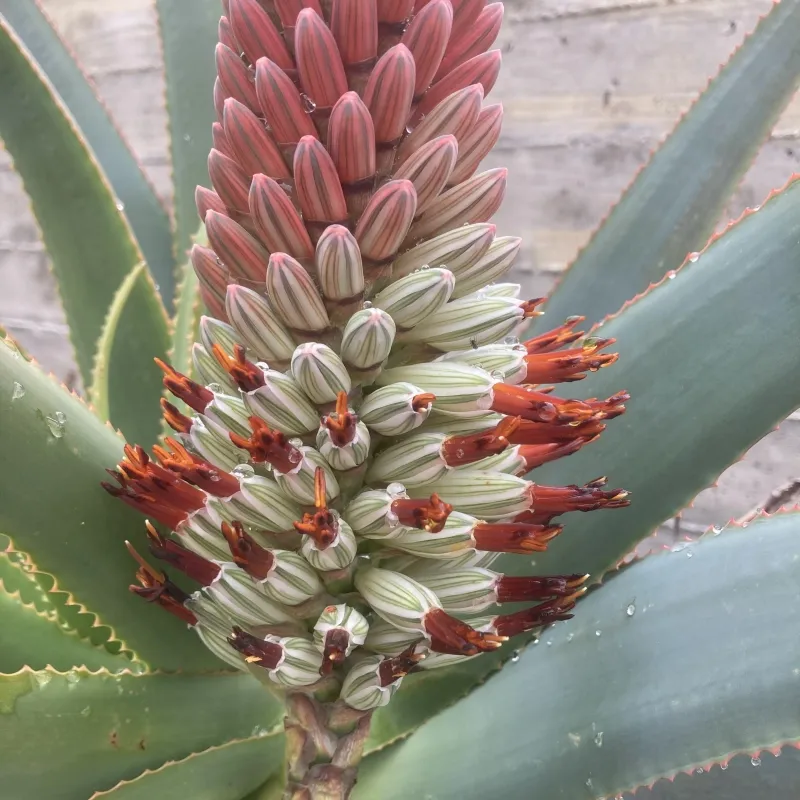
Tricolor cone of flowers emerges in winter from a tilted rosette of blue-pink leaves atop a single trunk to 8ft tall. Cold-hardy.
 Height | 6–10ft |
|---|---|
 Width | 3–6ft |
 Tolerates | Cold, Drought, Heat, Pots, Rooftops, Neglect, Wind |
 Water needs | Low |
Aloes thrive on neglect, making them one of the easiest garden plants for California. They are drought-tolerant, and this one will not need additional water once established in the coastal garden. Most aloes will be plump with many bright vibrant blue or green leaves during their growth season. It's natural for these same plants to show stress during their dry season, often turning shades of red, orange or brown, giving added seasonal interest to the succulent garden. During this time the leaves will curl in on themselves, and often shrivel up and shed from the base. If you prefer a lush look, watering once dry will keep them plump. Avoid overhead watering in the crown; when water collects there, it may lead to crown rot. | |
 Hardy to | 20°F |
 Exposure | Part Shade – Full Sun |
 Plant traits | Flowering, Humming Birds, Rosette, Sculptural, Solitary, Succulent, Trunking |
 Indoor / outdoor | Outdoor |
 Drainage | In Ground: Cactus Mix, In Pots: Cactus Mix, Tolerates Sandy Soil |
 Fertilizing | All Purpose 1/2 Strength, Low Needs |
 Origin | South Africa |
 California native | No |
 Sunset zones | 9, 12–24 |
Growing Notes
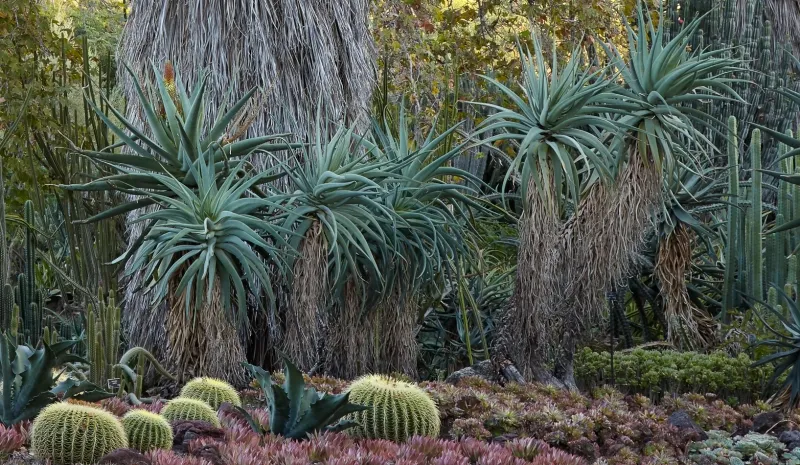
Aloe speciosa will retain the dried lower leaves to create an armed 'beard' or 'skirt' that helps defend the plant from predation. If you prefer, this beard may be removed by briskly rubbing off the old leaves. The beard of this aloe sheds very easily. This is an aesthetic consideration that won't affect the plant either way. Leaving the dead lower leaves from the beginning can create a picturesque natural look.
Once the flower stalks are completely bloomed out and dry, they will come out with a light tug, or can be pruned off low in the crown.
Special Interest
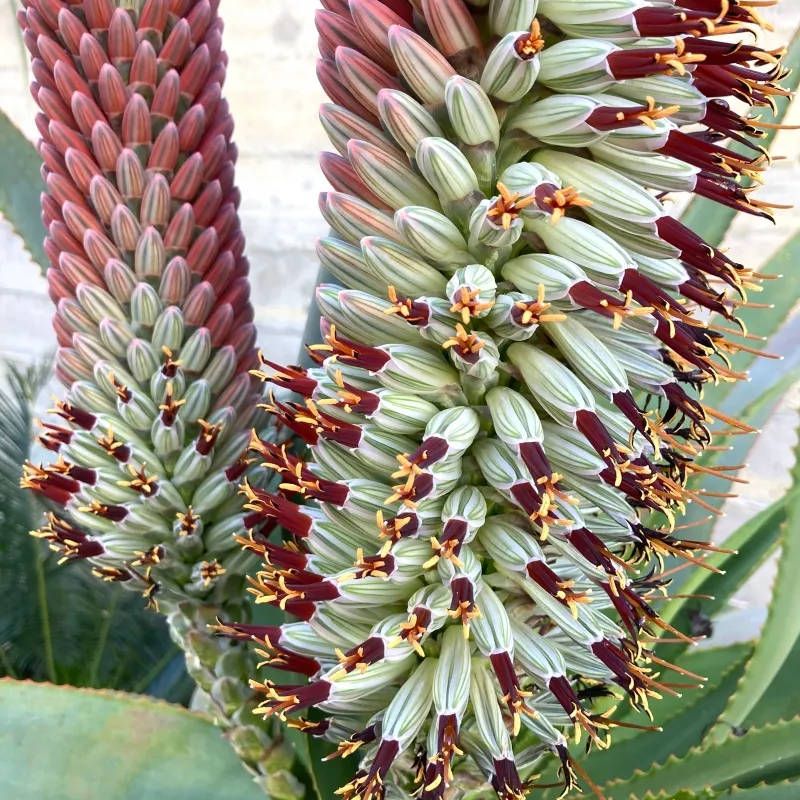
One of the most beautiful aloe flowers is upright and starts off hot pink, fades to green and white, and then opens into brilliant red and orange.
Links
In stock today in Los Angeles
| 7 gallon | 2 available | $169 |
| 15 gallon | 1 available | $169 |
The above information reflects the observations of Grubb and Nadler and our extended plant community. We always consider input from fellow horticulturists and welcome feedback from those with additional information on the culture of this plant.
© 2020–2026 Grubb and Nadler. All rights reserved.