
Aloe barberae
tree aloe
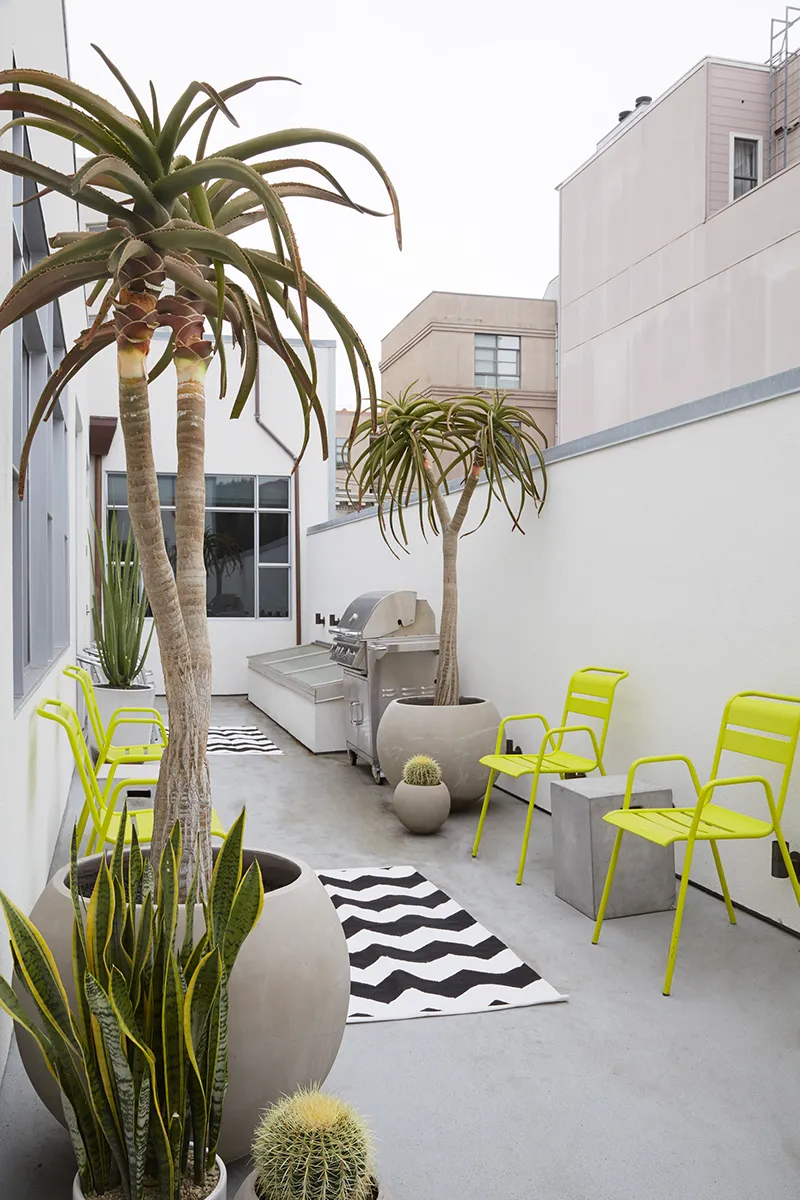
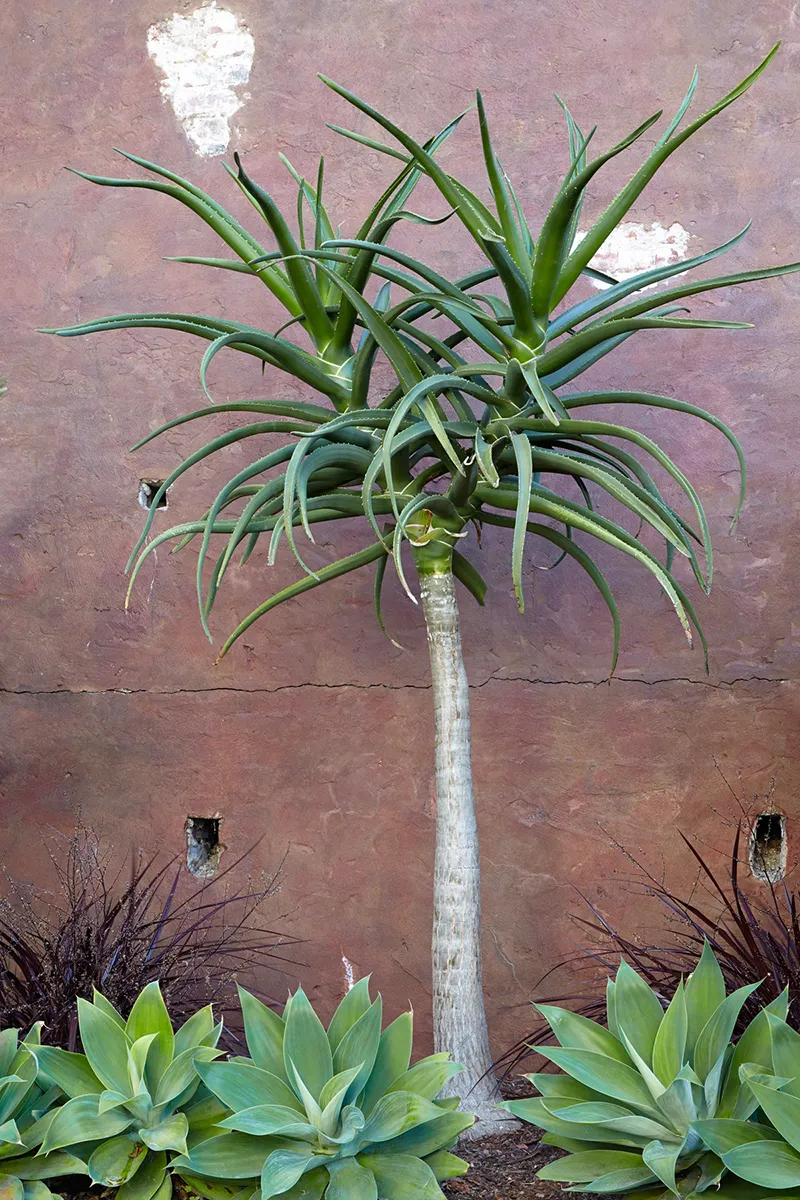
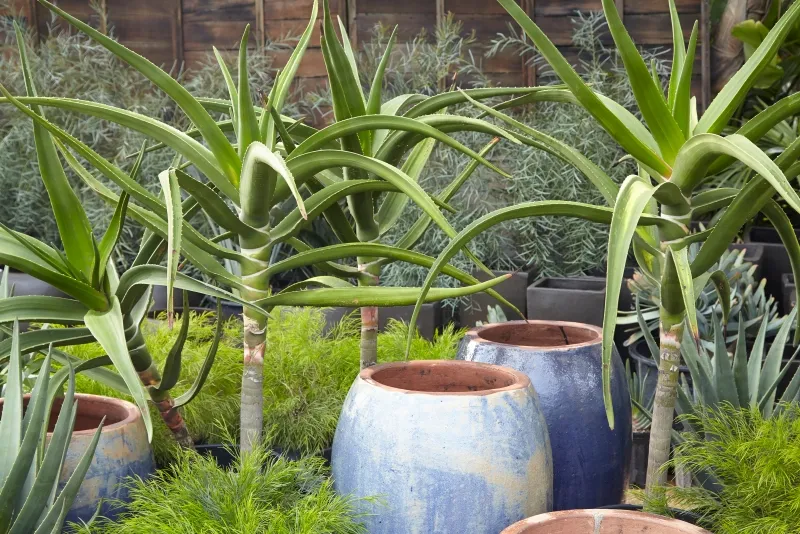
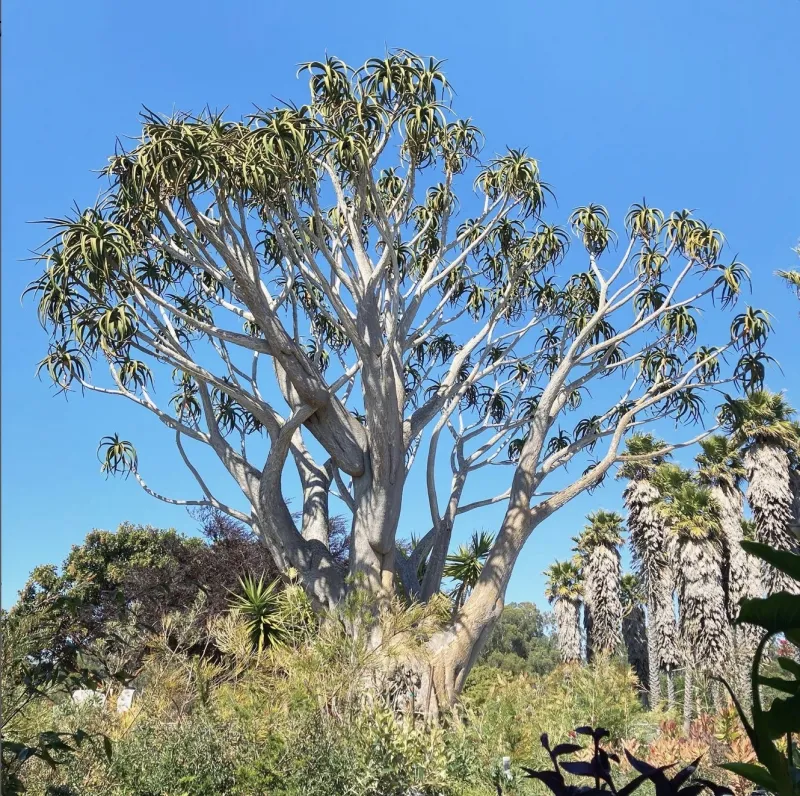
Dr. Seuss tree. Grows into massive tree with thick trunk and many symmetrical branches. Small cones of pale salmon flowers in winter/spring. Regular water in summer for best results.
 Synonyms | Aloidendron barberae Aloe bainesii |
|---|---|
 Height | 12–25ft |
 Width | 10–15ft |
 Tolerates | Coast, Heat, Pots, Salt, Wind |
 Water needs | Moderate |
This aloe needs additional summer water and often won't thrive without it, especially away from the coast in full sun. At best the plant will look stressed and have few leaves. When given regular summer water, warmth, fertilizer and good drainage, this plant grows rapidly. | |
 Hardy to | 25°F |
 Exposure | Part Sun – Full Sun |
 Plant traits | Flowering, Humming Birds, Sculptural, Solitary, Succulent, Tree, Trunking |
 Indoor / outdoor | Outdoor |
 Drainage | In Ground: Cactus Mix, In Pots: Cactus Mix, Tolerates Sandy Soil |
 Fertilizing | All Purpose |
 Origin | NE South Africa |
 California native | No |
 Sunset zones | 16, 17, 21–24 |
Growing Notes
This aloe cleanly sheds its lower leaves when they are fully dried. You can cut off old half dead leaves and later remove the leaf base when totally dry, but don't tear at leaves that aren't ready to come off.
New growth has a smooth trunk that textures over time.
Shy to bloom until mature and even then flowers are infrequent. Flowers are light salmon colored.
When this aloe 'branches' early you will actually end up with a double trunked tree in time.
Pruning Aloe barberae will expose the punky inner structure and wounds are slow to heal.
Difficult, but not impossible to root. Let a cutting sit for three weeks to a month in a bright but indirect sun area. Plant in pure pumice or other drainage and water every two weeks until the cutting is well rooted. Then plant in cactus mix.
A common problem with this aloe is black spotting, on the tops of leaves. This is caused when the sun hits morning dew, burning the leaves and is something that is hard to prevent in coastal marine layer areas.
Another frequent problem is yellowing leaves, which indicates poor drainage.
This aloe responds well to fertilizer.
Special Interest
The photo of a fully mature Aloe barberae displayed here is located at Los Osos Valley Nursery and was planted in the 1970s, making it around fifty years old at the time the photo was taken. It is currently registered as the largest Aloe barberae (by crown diameter) in California and shows the true potential of this plant, when grown in just the right location.
Links
In stock today in San Francisco
| 15 gallon | 1 available | $1,200 |
The above information reflects the observations of Grubb and Nadler and our extended plant community. We always consider input from fellow horticulturists and welcome feedback from those with additional information on the culture of this plant.
© 2020–2026 Grubb and Nadler. All rights reserved.