
Pachycereus pringlei
cardon
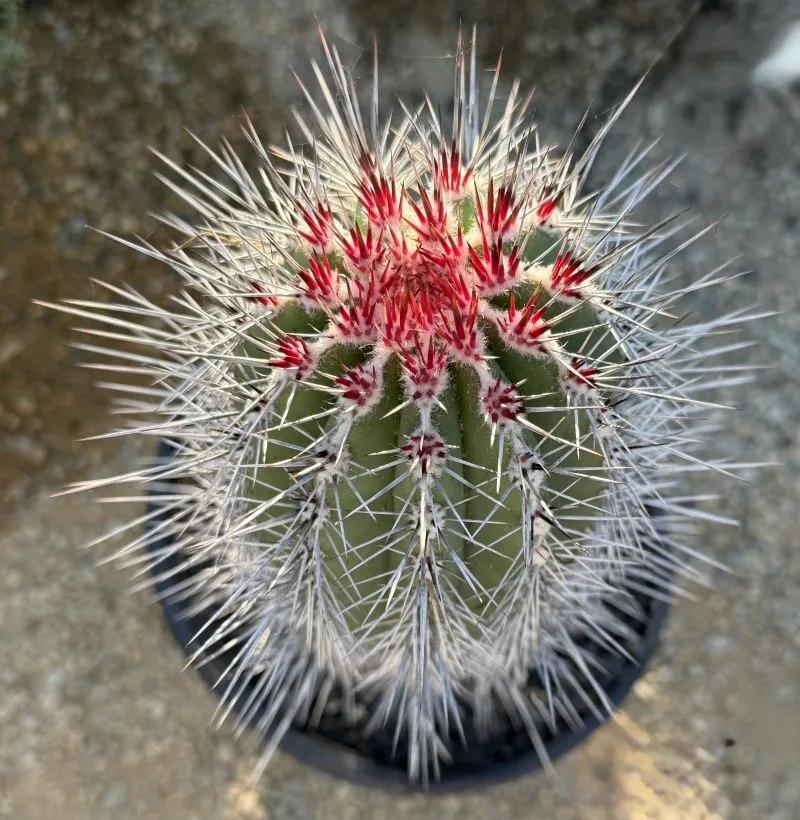
Blue grey, swollen, columnar cactus gets 'saguaro shape' with great age. Stunning landscape plant. Grows faster with inland heat. Undersized white flowers.
 Height | 5–12ft |
|---|---|
 Width | 3–6ft |
 Tolerates | Coast, Drought, Heat, Narrow Planting, Pots, Wind |
 Water needs | Lowest |
This cactus likes to be fully saturated and then go totally dry before the next watering; you risk rotting the roots if you water while there is significant moisture in the soil. Remember your watering schedule will depend on the size of the pot (smaller pots needing more frequent watering) and environmental factors such as the season, weather, humidity and exposure. Don't leave cactus in standing water, such as a saucer, for more than a day. If you are growing this cactus in northern California with prevalent winter rains it is recommended to grow it in a mix of 50% pumice to 50% cactus mix to prevent winter rotting. | |
 Hardy to | 20°F |
 Exposure | Full Sun |
 Plant traits | Cactus, Columnar |
 Indoor / outdoor | Outdoor |
 Drainage | In Ground: Cactus Mix, In Pots: Cactus Mix, Tolerates Sandy Soil |
 Fertilizing | All Purpose, Low Needs |
 Origin | Baja, MX |
 California native | No |
 Sunset zones | 13–24 |
Growing Notes
When planting cactus it's often best to avoid the spines entirely. This can be done by cutting down each side of the nursery can and then peeling it open to expose the roots. This way you can hold the root ball while planting and you never need to touch the cactus. If the plant is tall and top-heavy, this often isn't an option. Wrapping such cactus in cardboard makes them more manageable.
While your cactus is out of the nursery can, but before it is planted, is the easiest time to weed right up near the lowest spines. Be sure to pull weeds early with heavily spined cactus, as once they are established they can be difficult to remove. Forceps can be helpful for this task.
You may find your cactus develops hard brown scabs that eventually cover the cactus, especially on older growth. This is called corking, and is the natural process of the cactus 'branch' becoming a cactus 'stump' and getting bark, just like trees do. Corking is totally natural and adds to the beauty of your cactus over time.
Special Interest
Columnar cactus are among the best tall plants for narrow spaces. If they get too tall at any point, they can be topped during their growing season which will encourage them to send out new branches, both at the pruning point and also lower down.
Columnar cactus look best in tall, upright pots or paired with other vertical architecture.
Which store do you shop at?
The above information reflects the observations of Grubb and Nadler and our extended plant community. We always consider input from fellow horticulturists and welcome feedback from those with additional information on the culture of this plant.
© 2020–2026 Grubb and Nadler. All rights reserved.