
Pachypodium saundersii
Rare
kudu lily
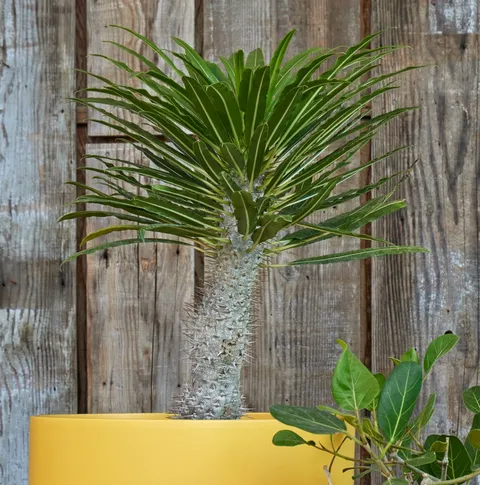
A living sculpture. Naturally forms a round form with wandering thorny branches. Grows well in pots, indoors or patios protected from winter rains, cold. Winter deciduous.
In stock in San Francisco
from $129
 Mature size | 1–3 tall 1–3 wide |
|---|---|
 Exposure | Part Shade – Full Sun |
 Hardy to | 30°F |
 Sunset zones | 17, 20–24 |
 Water needs | Low Pachypodiums are summer growers that want to go mostly dry between waterings without going completely dry when actively growing. If they are allowed to go completely dry, they're inclined to drop their leaves. Pachypodium trunks will get a little squishy (careful getting your fingers between those spines!) when they're ready for water. Once they've been watered, the trunk will firm up again. |
 Tolerates | Drought, Deer, Heat |
 Plant traits | Armed, Deciduous, Sculptural |
 Drainage | In Ground: Cactus Mix, In Pots: Cactus Mix, Requires Perfect Drainage |
 Fertilizing | All Purpose 1/2 Strength |
 Origin | Namibia |
Similar plants
Growing Notes
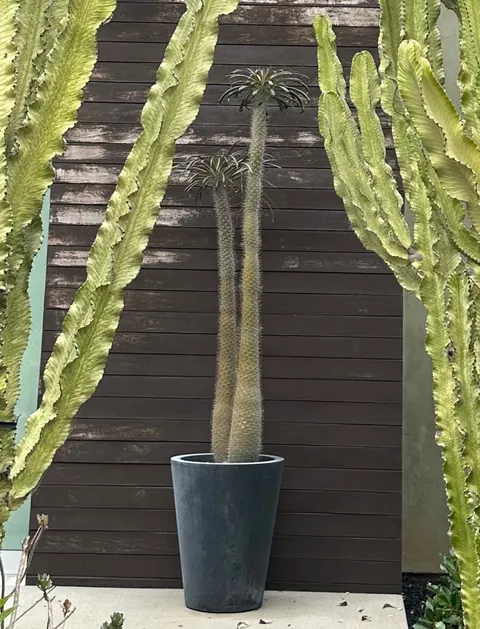
Pruning the main growth point early (when the plant is four to six inches tall) will force this pachypodium to have a lower center of gravity and branch out early. If left unpruned this pachypodium develops a round caudex with many long, thin, tapered, occasionally forked branches. Alternatively, pruned back branches each spring when new growth buds to keep a more compact, branched form.
Pachypodiums naturally lose their leaves during the winter, so don't be surprised if your plant looks like a palm in the summer and a cactus in the winter (we love that about these plants!). When you see your pachypodium beginning to drop leaves in the fall, it might be time to cut back on the watering for the winter; if it starts to drop leaves in the summer, it's possible that you've greatly underwatered and the plant would appreciate a drink.
Pachypodiums thrive indoors in a warm sunny room. If the room is sunny during the winter, your pachypodium may skip its dormancy period entirely and keeps its leaves all year round.
This plant can grow outdoors in a sheltered spot in the Bay Area, especially in pots where the drainage can be controlled. Add 50% pumice to 50% cactus mix to make growing this plant more forgiving.
What we've learned from growing this plant ourselves and in our customers' gardens. We always love to hear more. Tell us
© 2020–2026 Grubb and Nadler. All rights reserved.