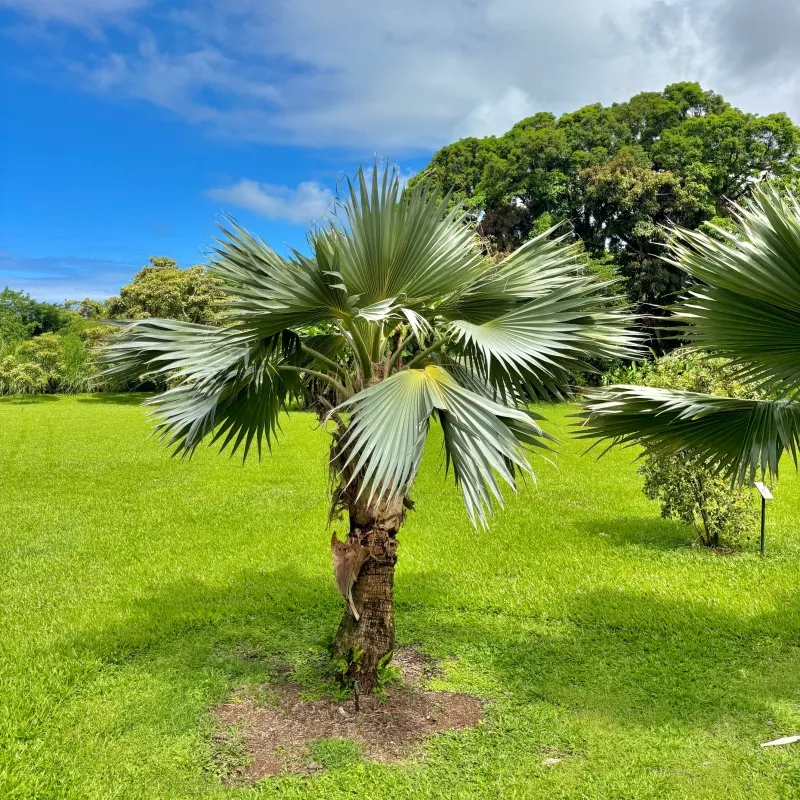
Pritchardia hillebrandii
huelo loulu palm
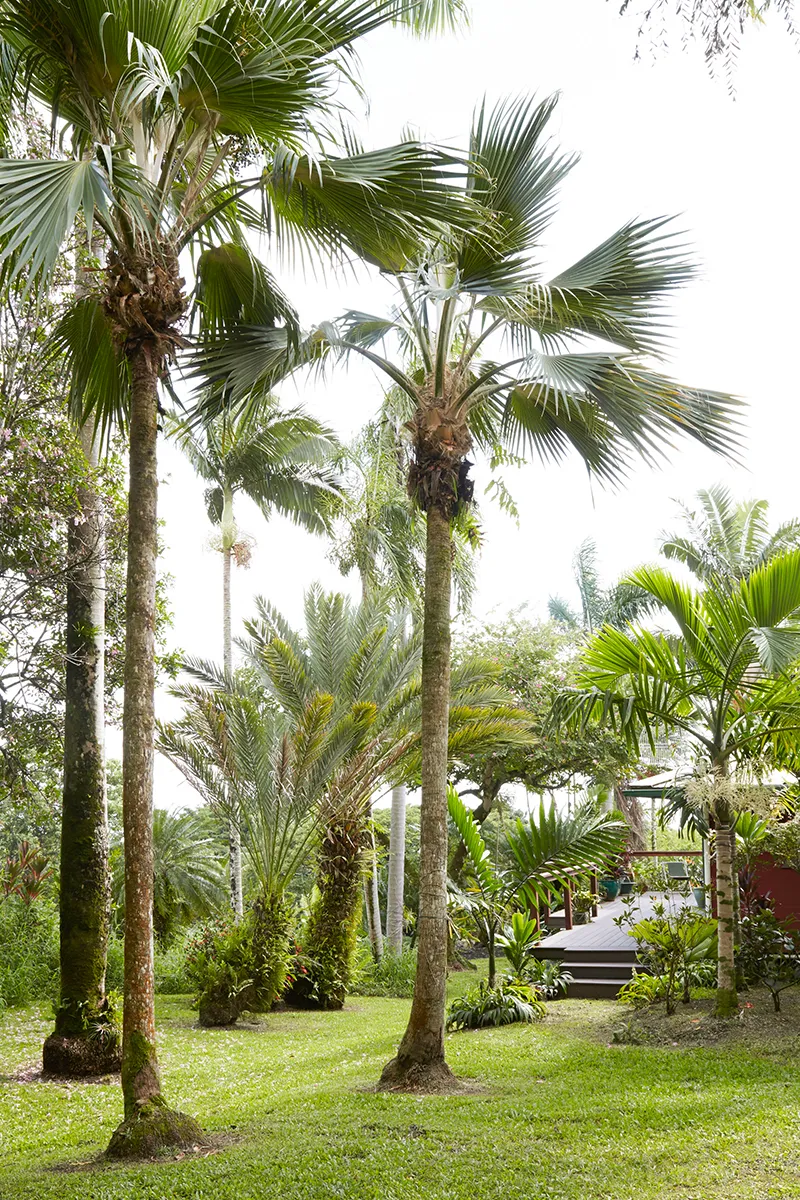
Charismatic, modest-size fan palm from Molokai. Pleated leaves have petioles dusted in a light creamy fuzz. Protect from frost. Good in pots, especially where winters are longer and wetter.
 Synonyms | Pritchardia insignis |
|---|---|
 Height | 5–18ft |
 Width | 6–10ft |
 Tolerates | Coast, Cool Summers, Wind |
 Water needs | Moderate |
This palm should be watered deeply every week or two once it's established. It doesn't want to dry out completely. | |
 Hardy to | 32°F |
 Exposure | Part Sun – Full Sun |
 Plant traits | Foliage Feature, Palm, Solitary, Tropical, Trunking |
 Indoor / outdoor | Outdoor |
 Drainage | In Ground: Cactus Mix, In Pots: Cactus Mix, Tolerates Heavy Soil, Tolerates Sandy Soil |
 Fertilizing | Palm Fertilizer |
 Origin | Hawaii, USA |
 California native | No |
 Sunset zones | 16, 17, 21, 23, 24, H2 |
Growing Notes
Best grown along the coast of California in warmer, frost-free areas. This palm suffers in hot, dry offshore winds even in frost-free areas. In California it is the most widely grown of Hawaiian native palms and possibly of all Hawaiian endemic plants.
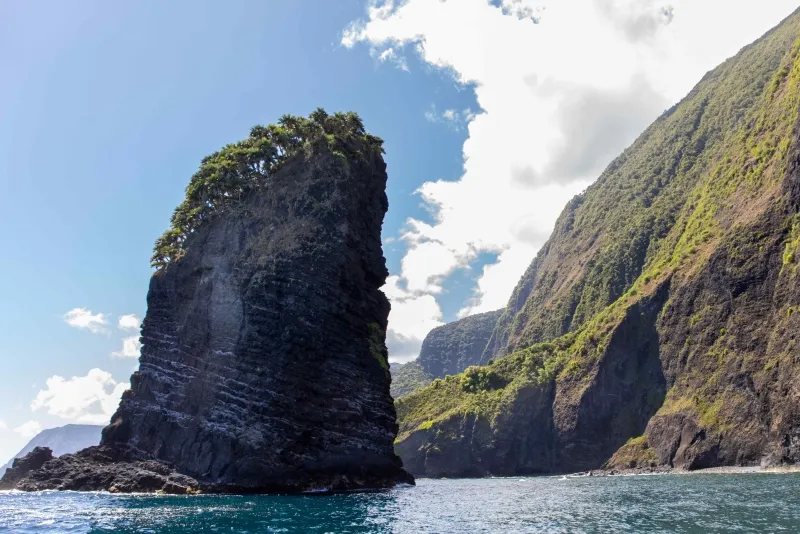
Native to coastal Moloka`i, this species is tolerant of windy coastal locales, more so than other types of pritchardia.
Palms are generally heavy feeders, so if you want them growing quickly and looking their best, they should be fertilized at least three times a year. Fertilizing at spring equinox, summer solstice and fall equinox will allow for a winter rest. Be sure to feed your palm with a fertilizer that contains micronutrients (especially including magnesium), especially if you see yellowing leaves or yellow spots on the leaves.
This palm prefers well drained soil, but is adaptable to most soil types, including clay.
Special Interest
The habitat of this threatened species has shrunk from a stretch of the coastline to rat-free islets off the north coast of Moloka`i, a spectacular location in sight of some of the world's tallest sea cliffs and within Kalaupapa National Historical Park. This pristine habitat receives a high input of nutrients in the form of seabird guano.
Fan palms have leaflets spreading from the tip of the petiole, giving the crown of the palm a full, rounded, ultra-tropical look. They tend to rustle in the breeze, adding a soothing note to the garden.
Stories featuring this plant
More Info
Along the coast north of Santa Barbara, this palm will appreciate excellent drainage (as in a pot) and winter sunshine to maximize its survival through longer, chillier winters. A more reliable choice in the ground for Central Coast and Bay Area gardens is Pritchardia minor, a cloud forest species from the highlands of Kaua`i.
Hawai`i is home to around 25 endemic species of Pritchardia, almost all of which are endangered or threatened by habitat loss, introduced pests, and invasive species. Growing these palms in gardens increases the chance of their survival into the future.
Study of prehistoric pollen deposits has shown that vast forests of loulu palms like this one occupied the lowlands of the Hawaiian Islands before the arrival of rats (which devour the seeds) and habitat alteration.
Links
Which store do you shop at?
The above information reflects the observations of Grubb and Nadler and our extended plant community. We always consider input from fellow horticulturists and welcome feedback from those with additional information on the culture of this plant.
© 2020–2026 Grubb and Nadler. All rights reserved.