
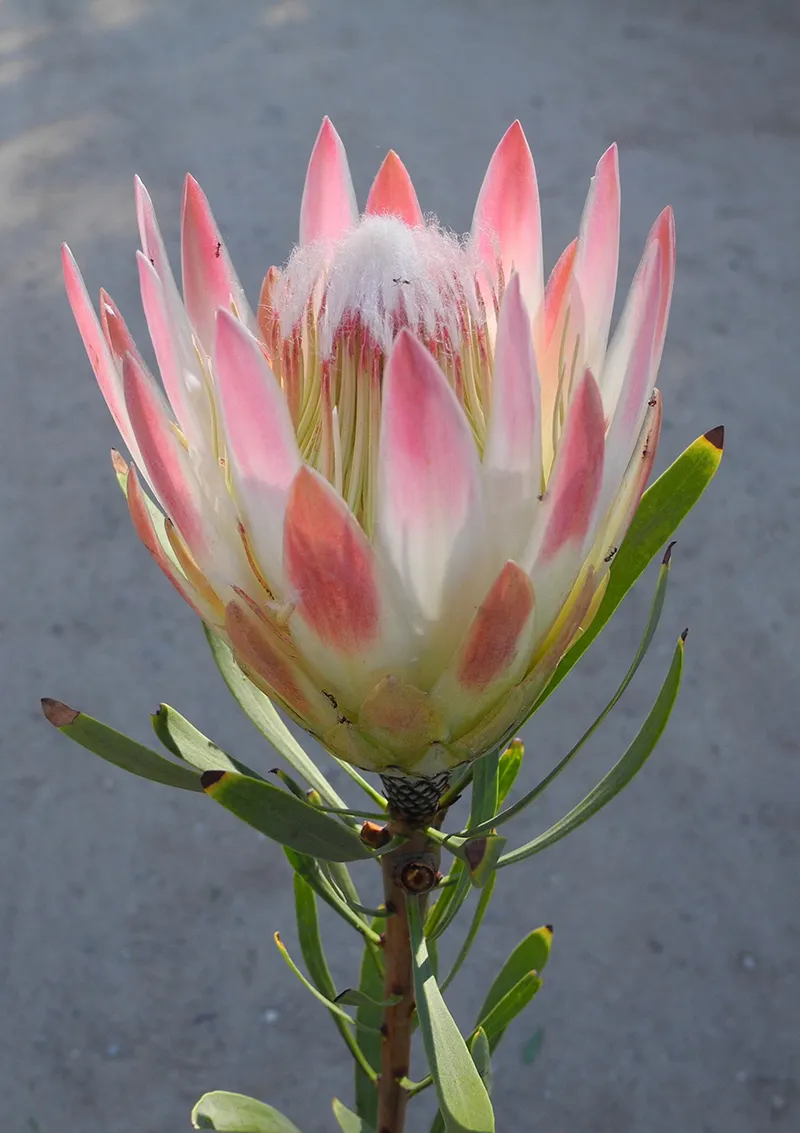
Protea repens ‘Pink’
sugar bush
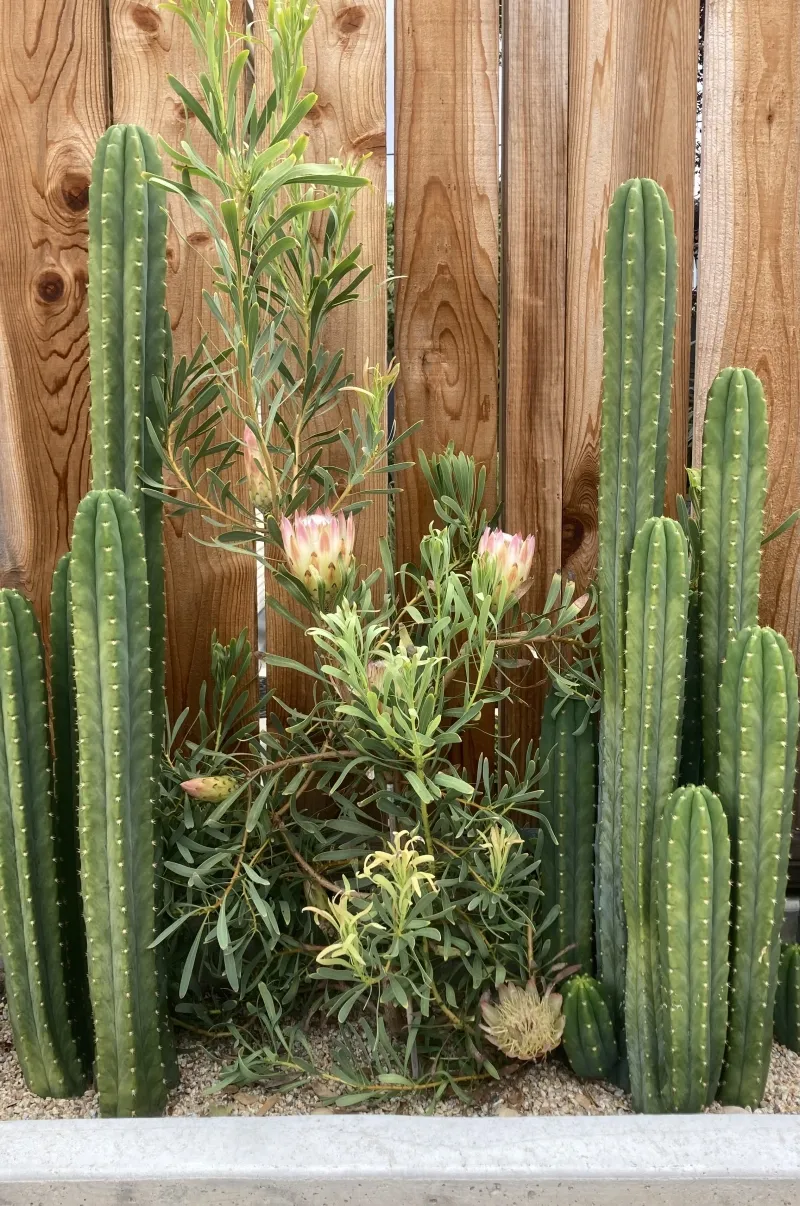
Upright shrub with showy pale-pink and cream flowers. Very adaptable and hardy. Good in pots.
Seen in Protea and Leucospermum →
 Height | 10–15ft |
|---|---|
 Width | 6–10ft |
 Tolerates | Drought, Wind |
 Water needs | Low – Moderate |
Proteas are well adapted to our Mediterranean climate, making them carefree plants with bountiful rewards. After a few years, when your protea is established, it will want deep watering every couple weeks, though it will tolerate more if the drainage is excellent. While typical protea respond very poorly to clay soils, this one is fairly durable in heavy soils. If grown in heavier soils the watering should be less frequent and the soil should be well amended with cactus mix during planting. Yellowing leaves often indicate overwatering, though if the plant has been kept on the dry side they can indicate a PH imbalance, which can be fixed by adding cottonseed meal or chelated iron. | |
 Hardy to | 25°F |
 Exposure | Part Shade – Full Sun |
 Plant traits | Flowering, Screen, Shrub |
 Indoor / outdoor | Outdoor |
 Drainage | In Ground: Cactus Mix, In Pots: Cactus Mix, Tolerates Heavy Soil, Tolerates Sandy Soil |
 Fertilizing | Bloodmeal, Fish Emulsion, Low Needs, No Phosphorus |
 Origin | South Africa |
 California native | No |
 Sunset zones | 15–24, H2 |
Growing Notes
Proteas can be kept smaller by pruning, but don't prune more than two years of growth where there are no leaves and the branches are woody. Proteas can even be espaliered or pruned into a loose informal screen.
By tip-pinching buds early on (each time they have grown a few leaves), you can force your protea to become more dense. Since they bloom on the terminal buds, this will delay flowering.
Special Interest
Their coveted flowers on stiff stems are long-lasting after they're cut, perfect for arrangements.
Stories featuring this plant
In stock today in San Francisco
| 5 gallon | 7 available | $69 |
The above information reflects the observations of Grubb and Nadler and our extended plant community. We always consider input from fellow horticulturists and welcome feedback from those with additional information on the culture of this plant.
© 2020–2026 Grubb and Nadler. All rights reserved.