
Radermachera sinica
emerald tree, China doll
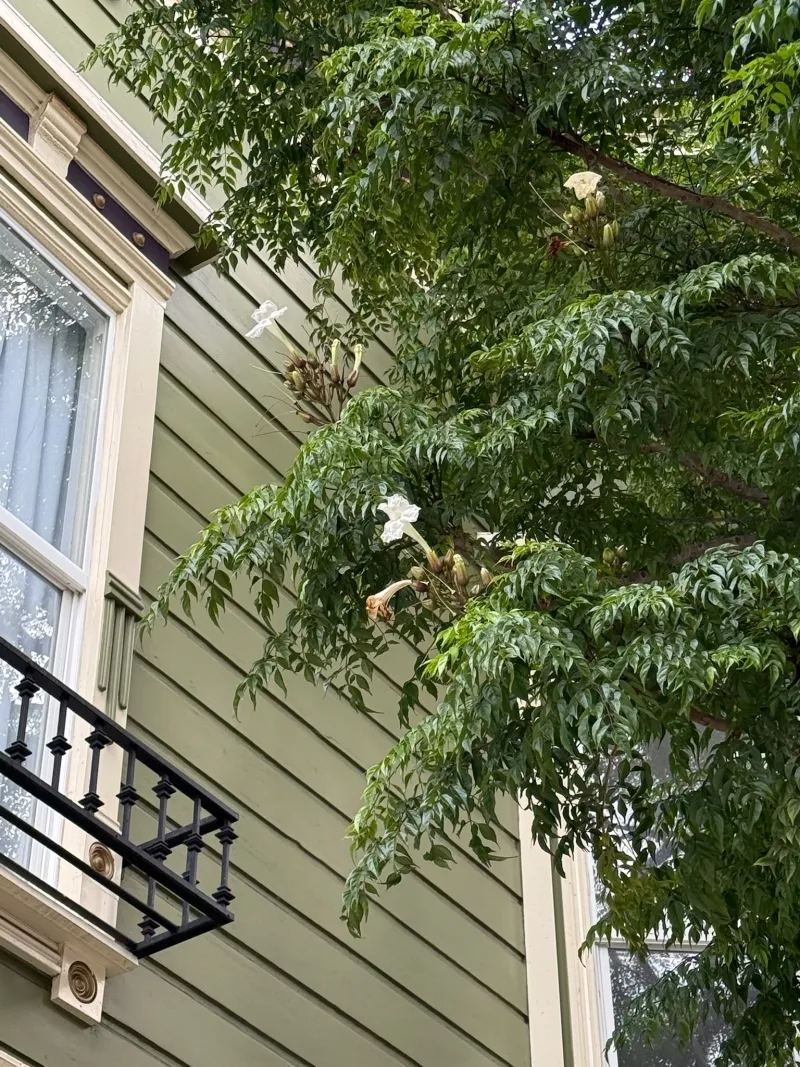
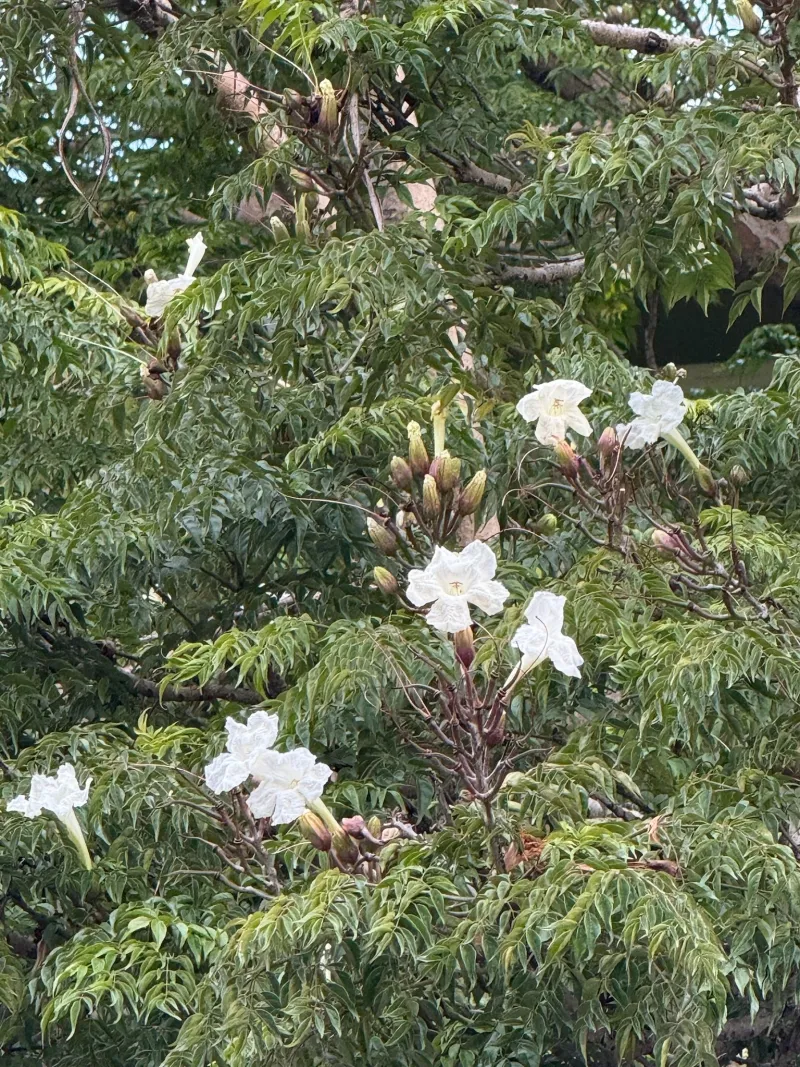
Growing it outdoors
Emerald tree is evergreen, grows upright, often with multiple trunks, produces scattered large, fragrant cream-colored tubular blossoms spring to fall. Graceful tropical look.
 Synonyms | Stereospermum sinicum |
|---|---|
 Height | 18–35ft |
 Width | 10–20ft |
 Tolerates | Coast, Cool Summers, Narrow Planting, Pots |
 Water needs | Moderate |
Water this plant regularly, when the top inch or so of soil feels dry. If you establish this pattern over several years, then you can cut back to watering every week or two in dry weather. Use drippers, emitters, or a slow stream of water so that it doesn't run off; allow the water to trickle all the way down through the deepest layers of soil. In a pot slowly water the entire surface until water comes out of the bottom of your pot. In cooler coastal regions it may require water monthly or less after getting established. This plant is fairly hard to overwater, especially if the drainage is good and the weather is warm. | |
 Hardy to | 23°F |
 Exposure | Full Shade – Full Sun |
 Plant traits | Flowering, Foliage Feature, Tree, Tropical |
 Drainage | In Ground: Planting Mix, In Pots: Potting Soil |
 Fertilizing | All Purpose |
 Origin | S China, Taiwan |
 California native | No |
 Sunset zones | 8, 9, 13–24, H1, H2 |
Growing Notes
Known primarily as a houseplant, this native of southern China and Taiwan has proven adaptable to garden culture in coastal valleys and milder coastal areas.
Long, beanpod-like fruits form in warmer areas. In chillier, foggier coastal areas fruit rarely forms.
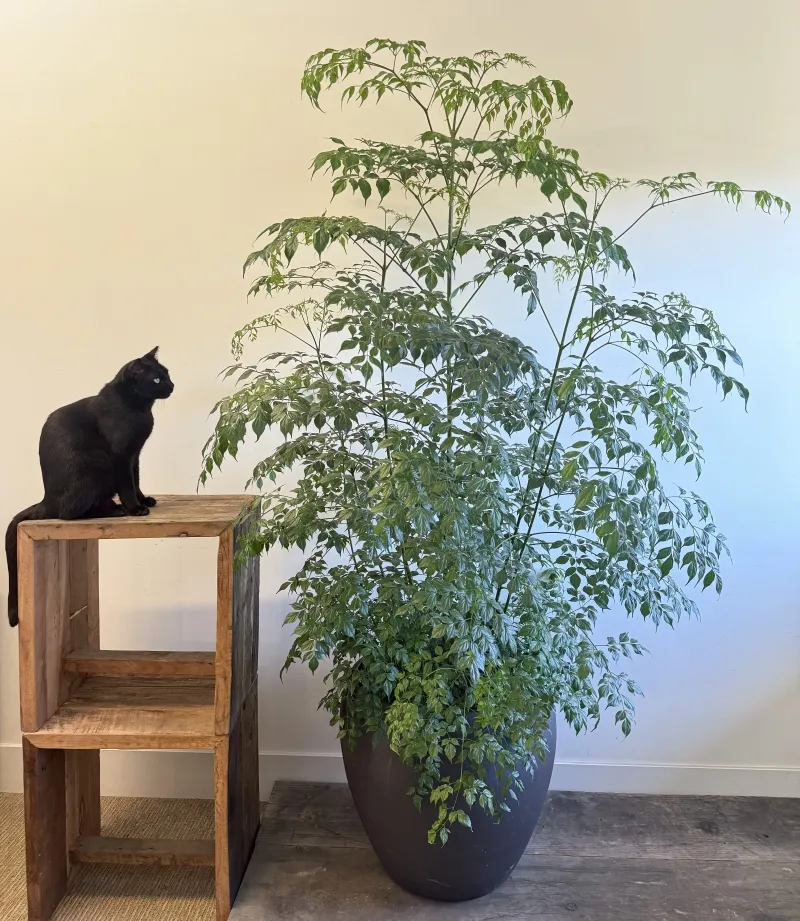
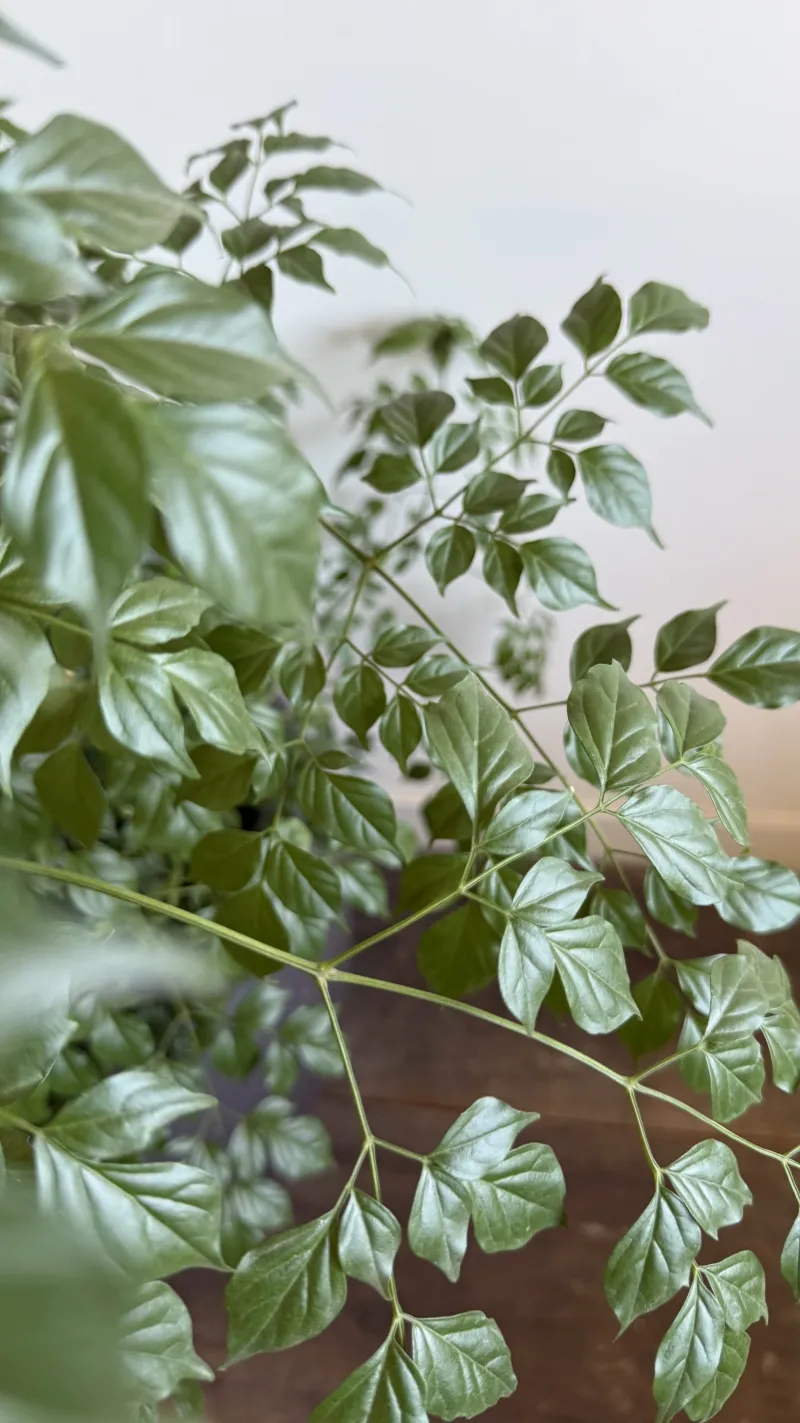
Growing it indoors
| Synonyms | Stereospermum sinicum |
|---|---|
| Height | 1–12ft |
| Width | 1–4ft |
| Water needs | When soil surface is dry. |
Fully saturate this plant when the surface of the soil feels nice and dry. It will also tolerate drying out in the top inch or so of the pot, but doesn't want to dry out completely. | |
| Exposure | Bright Indirect – Direct Sun |
| Plant traits | Flowering, Foliage Feature, Tree, Tropical |
| Drainage | In Pots: Potting Soil |
| Fertilizing | All Purpose |
| Origin | S China, Taiwan |
Which store do you shop at?
Special Interest
A relative of jacaranda and trumpet vine.
Links
The above information reflects the observations of Grubb and Nadler and our extended plant community. We always consider input from fellow horticulturists and welcome feedback from those with additional information on the culture of this plant.
© 2020–2026 Grubb and Nadler. All rights reserved.