
Brachychiton rupestris
Queensland bottle tree
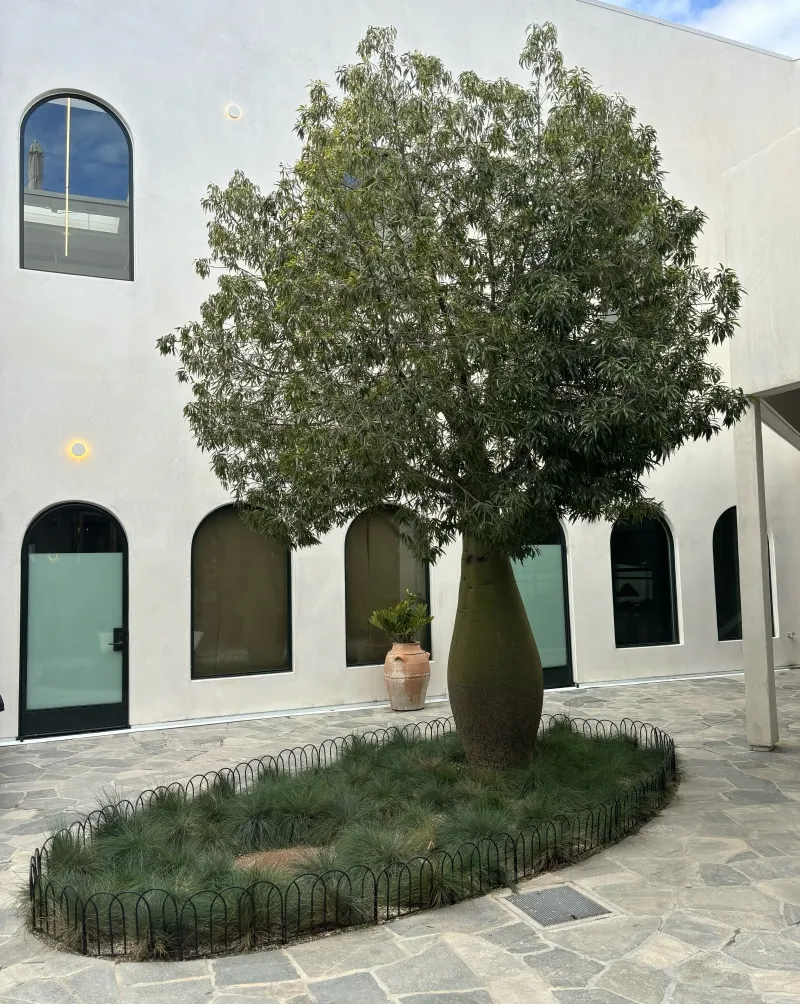
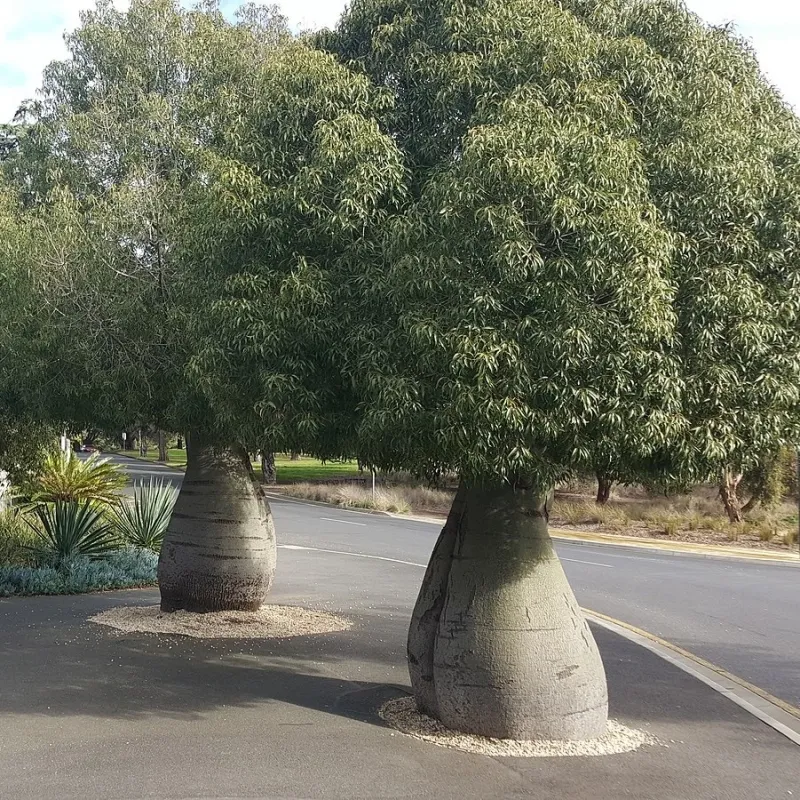
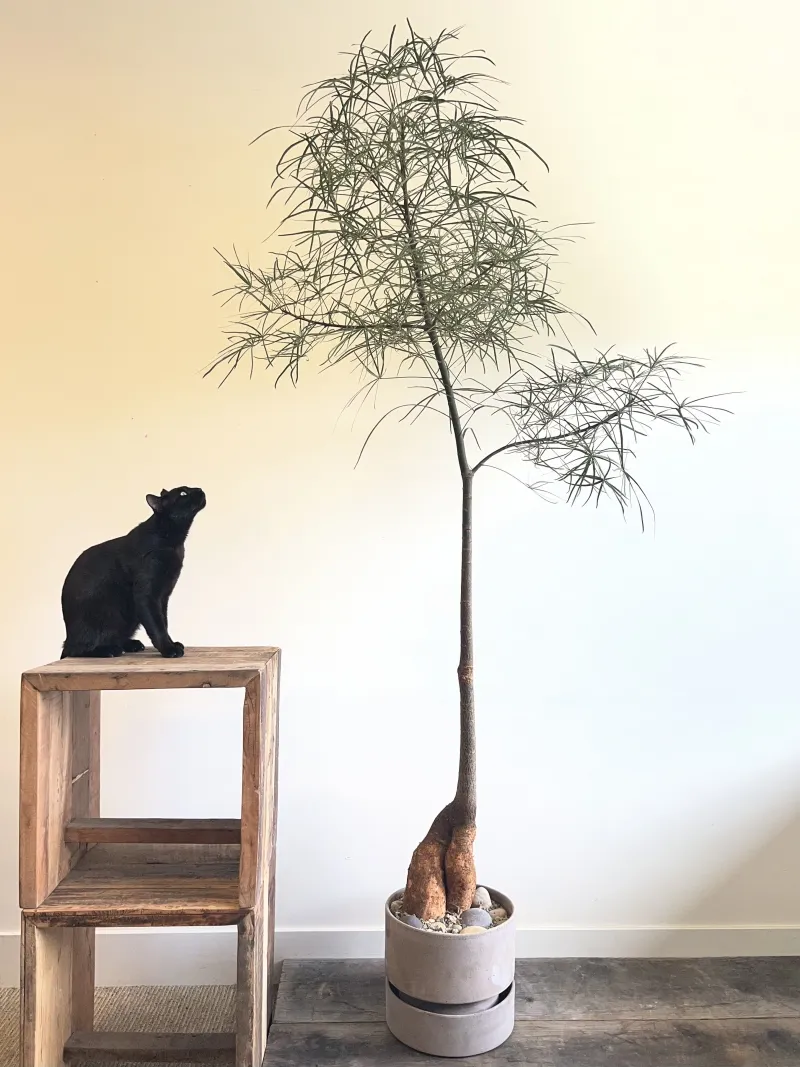
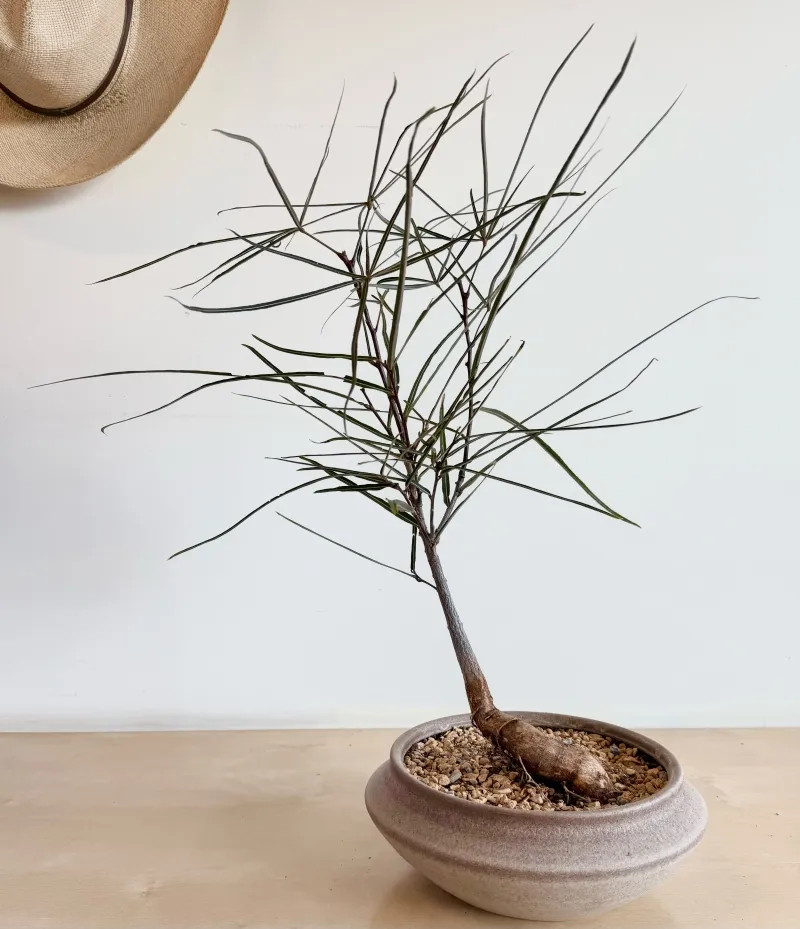
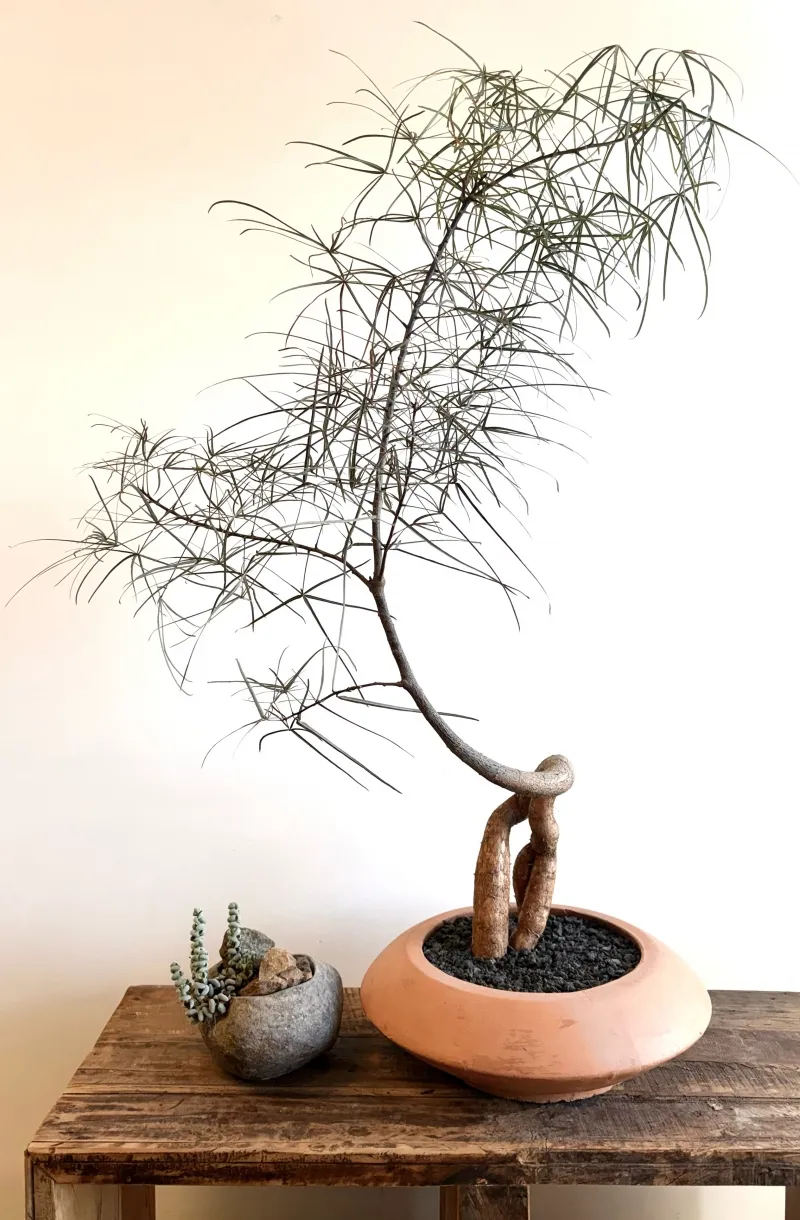
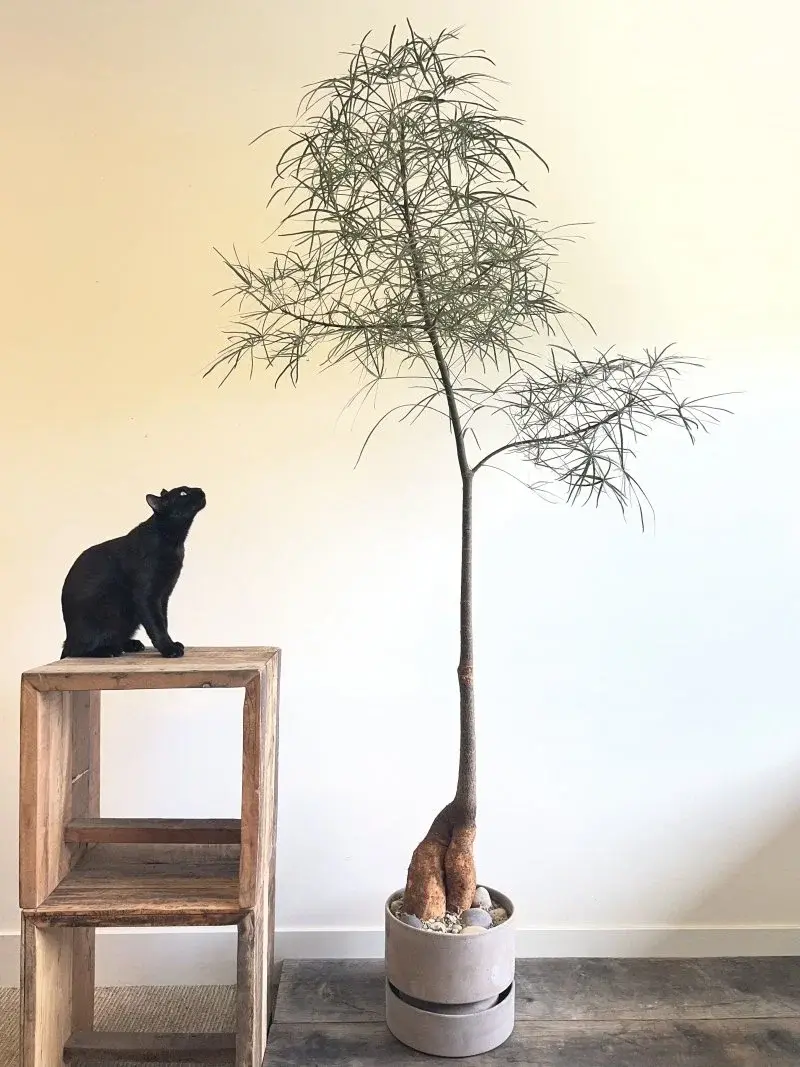
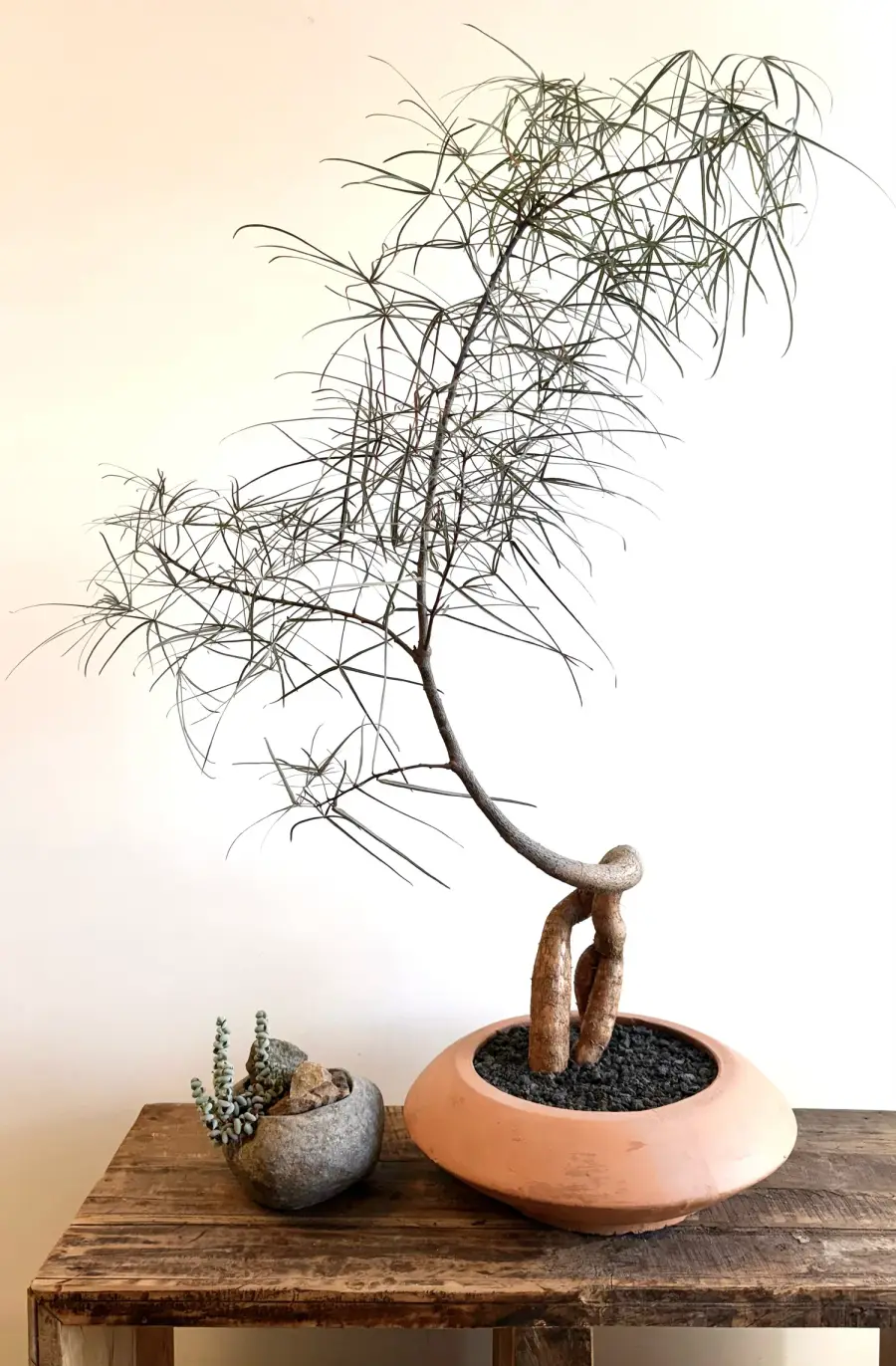
Small tree valued for its large, bulbous trunk and fine, spidery foliage. Makes an excellent landscape specimen or bonsai when grown in a pot—try raising it to expose the roots for effect.
In stock in San Francisco and Los Angeles
from $19.95
Growing it outdoors
 Mature size | 10–25ft tall 15–30ft wide |
|---|---|
 Exposure | Full Shade – Full Sun |
 Hardy to | 18°F |
 Sunset zones | 8, 9, 11–24, H1, H2 |
 Water needs | Low For the first three years after it's planted, this tree should be watered deeply but infrequently (when the top three inches of soil or so have dried). After that, the tree won't need supplemental water except in hot and dry environments. Use drippers, emitters or a slow stream of water so that it doesn't run off; allow the water to trickle all the way down through the deepest layers of soil. A great trick for watering trees is to drill a one-eighth inch hole on the bottom edge of a five-gallon bucket, then set the bucket with the hole aligned next to the tree and fill the bucket with water. Fill once for a one or five gallon plant, fill twice for a seven or 15 gallon plant, three times for 25g or larger plants. Propping the bucket up on bricks will help it drain faster, if needed. |
 Tolerates | Cold, Drought, Heat, Pots, Wind |
 Plant traits | Caudiciform, Ornamental Fruit, Sculptural, Tree |
 Drainage | In Ground: Cactus Mix, In Pots: Cactus Mix, Tolerates Sandy Soil |
 Fertilizing | All Purpose |
 Origin | E Australia |
Growing Notes
Excellent choice for pots, even very small ones.
This tree can be hard-pruned to develop a specimen with a large swollen base and small crown. Leaf shapes vary over the growth cycle and from youth to age.
The gnarled roots of this plant make an artistic display. Expose them by cutting the bottom off your nursery can and placing it on the soil or on the surface of another pot of soil. Once your plant is well rooted cut off the original nursery can and wash away the soil. If you'd like to create an even more dramatic 'root sculpture' do this several times using nursery cans (or even a plastic garbage can that can be removed later).
Best to cage this plant if you have gophers in your area as we have reports of gophers killing off trees before they can establish.
Briefly deciduous: It can shed leaves before flushing new growth.
One of our staff grows this tree in full bright shade in a redwood forest. He notes that the plant survives and looks good, but growth is severely limited.
Growing it indoors
| Mature size | 6–18ft tall 4–6ft wide |
|---|---|
| Exposure | Bright Indirect – Direct Sun |
| Water needs | When soil is mostly dry. When i doubt, water less. It is easier to drown this plant than to starve it for water. |
| Plant traits | Caudiciform, Ornamental Fruit, Sculptural, Tree |
| Drainage | In Pots: Cactus Mix |
| Fertilizing | All Purpose |
| Origin | E Australia |
Growing Notes
This plant thrives indoors in a fairly bright condition. It will need minimal water. It is best to keep it in a fairly small pot. Much of the soil can be removed from this plant without damaging it.
Similar plants
Special Interest
Has been grown successfully for decades as an indoor bonsai.
Stories featuring this plant
Links
What we've learned from growing this plant ourselves and in our customers' gardens. We always love to hear more. Tell us
© 2020–2026 Grubb and Nadler. All rights reserved.