
Schefflera arboricola
umbrella plant
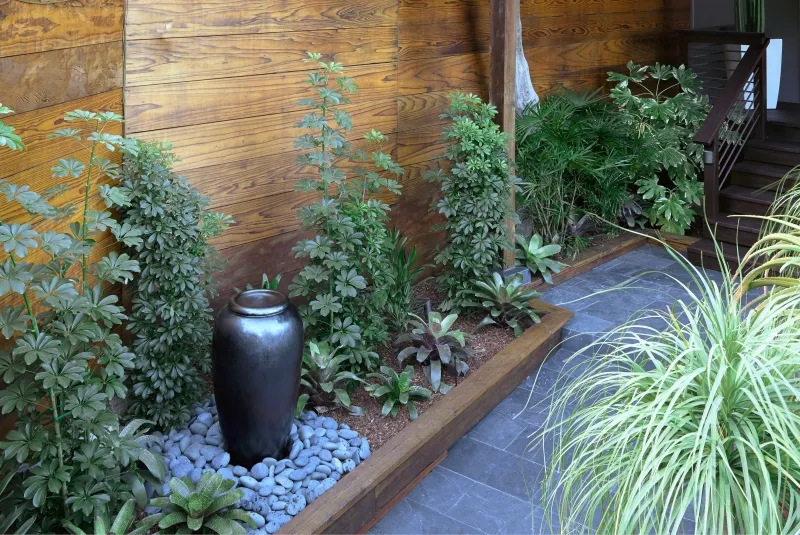
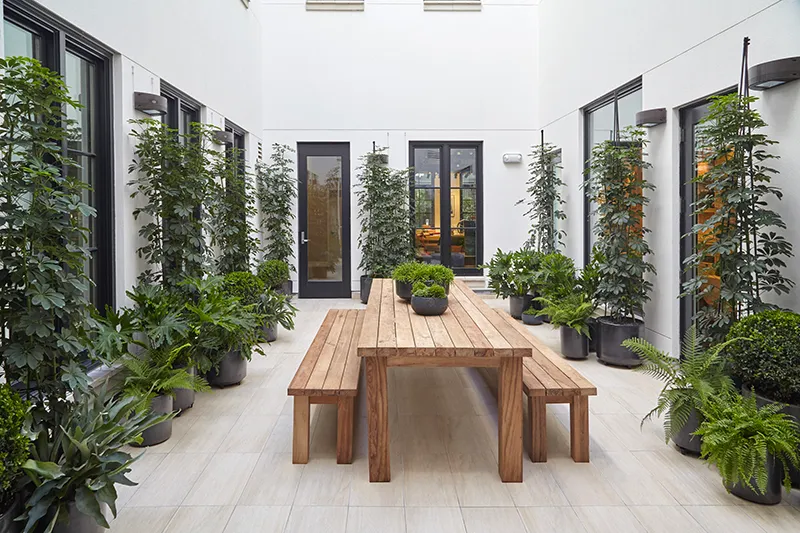
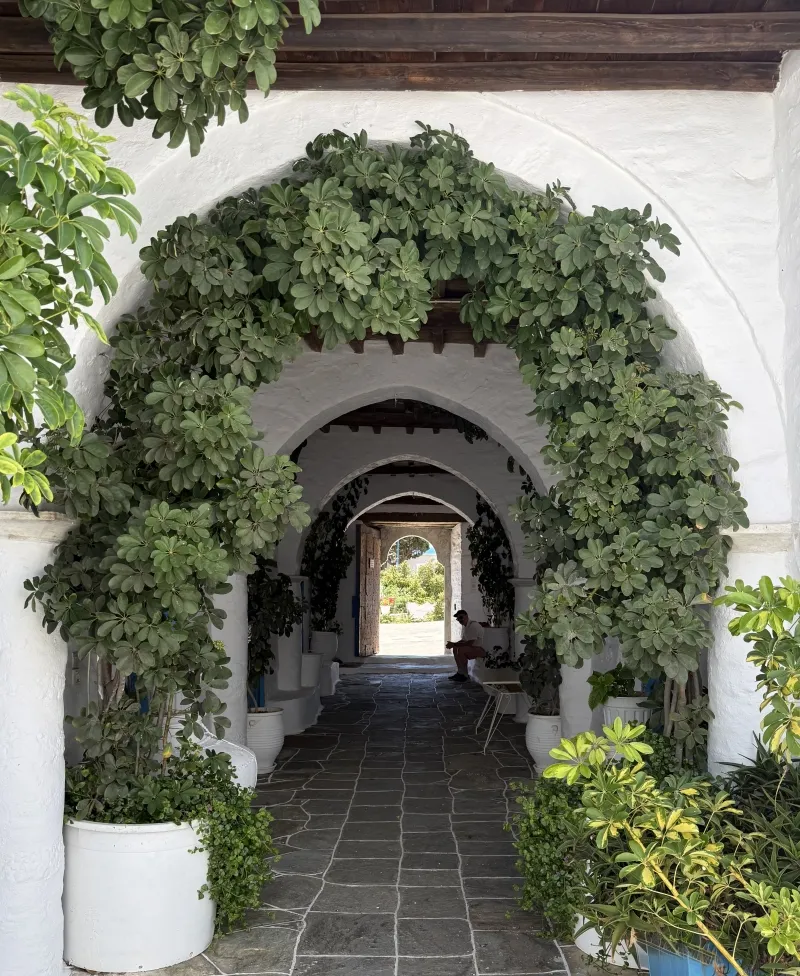
Growing it outdoors
Although it grows very happily outdoors, a plant that has lived indoors may sunburn at first if it's moved straight into the sun. It will recover.
 Height | 6–20ft |
|---|---|
 Width | 6–20ft |
 Tolerates | Cool Summers, Pots |
 Water needs | Moderate |
Water this plant regularly, when the top inch or so of soil feels dry. If you establish this pattern over several years, then you can cut back to watering every week or two in dry weather. Use drippers, emitters, or a slow stream of water so that it does not run off; allow the water to trickle all the way down through the deepest layers of soil. In a pot slowly water the entire surface until water comes out of the bottom of your pot. | |
 Hardy to | 28°F |
 Exposure | Full Shade – Part Shade |
 Plant traits | Foliage Feature, Screen, Shrub, Tropical |
 Drainage | In Ground: Planting Mix, In Pots: Potting Soil |
 Fertilizing | All Purpose |
 Origin | Taiwan |
 California native | No |
 Sunset zones | 8, 9, 13–24, H2 |
Growing Notes
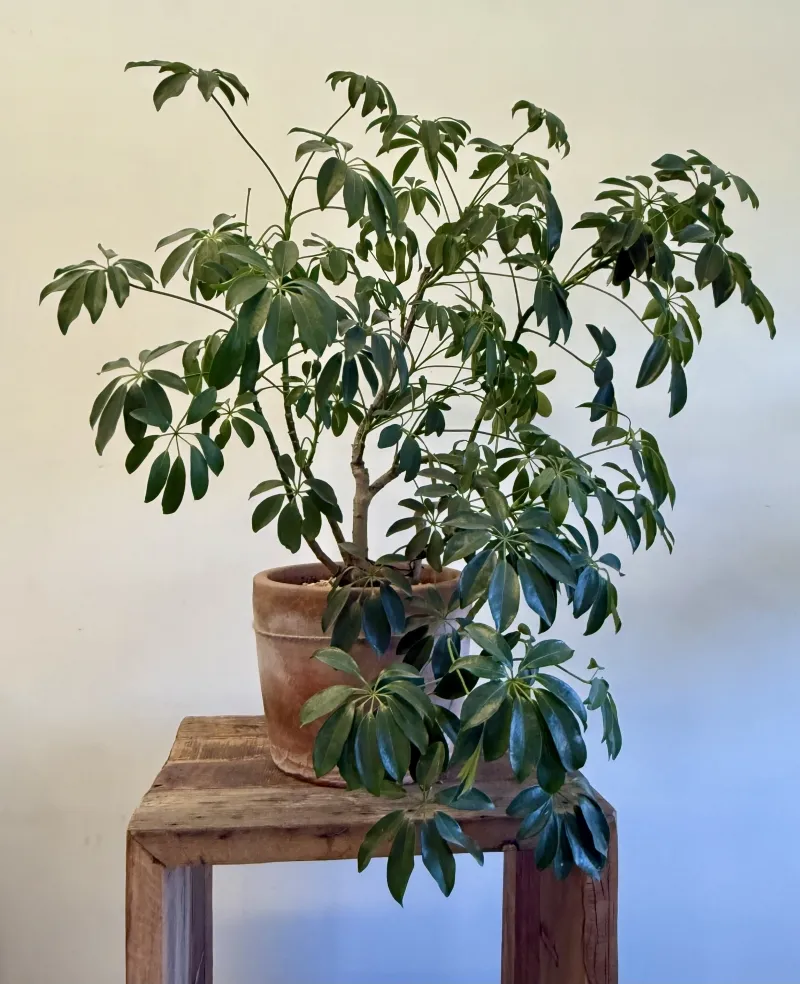
Typically has an upright mildly sprawling form. You can tip pinch by pinching off the very tip of the stem of the plant, which will cause a bushier plant over time. This is best started early if a bushy plant is desired. If the umbrella plant ever gets too tall it responds well to a hard pruning to reset its center of gravity lower. This often leads to a bushier form as well.
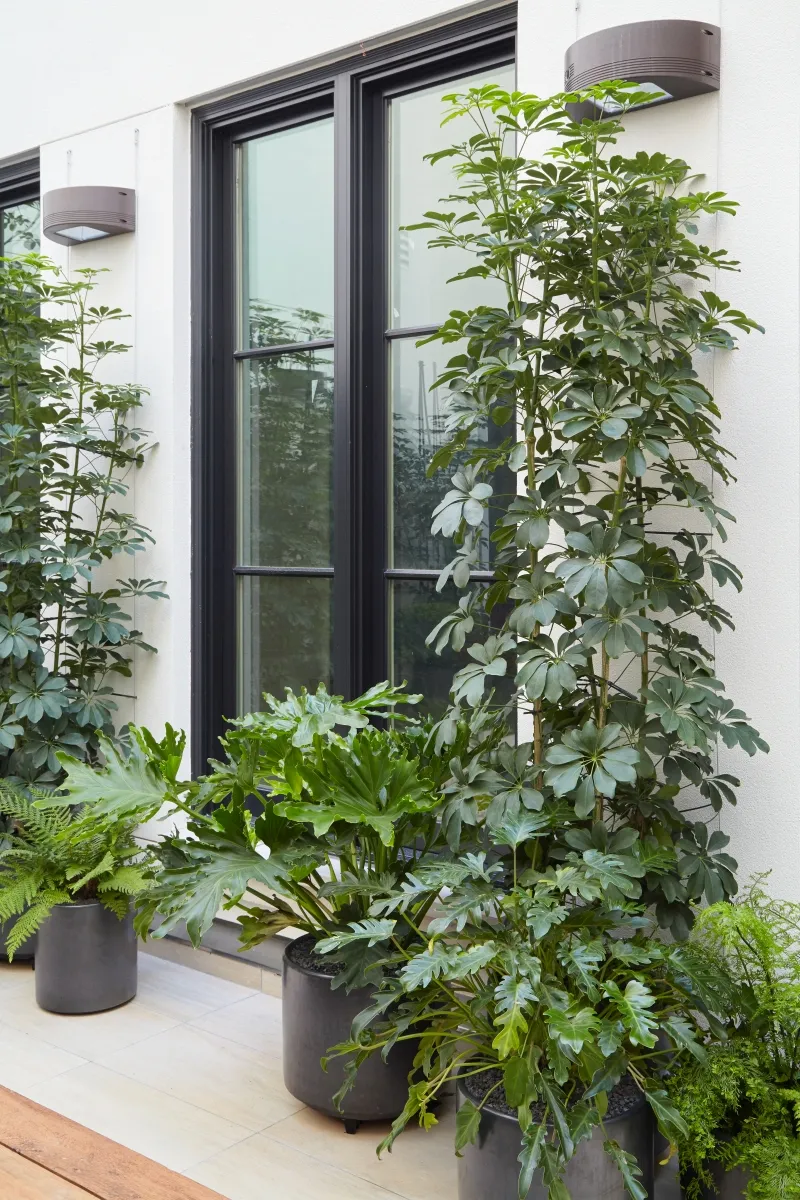
Growing it indoors
Bushy, tough, tropical looking shrub responds well to pruning if it ever gets too large for the space. Fast growing.
| Height | 6–20 |
|---|---|
| Width | 6–20ft |
| Water needs | When soil surface is dry. |
This plant wants water when the top of the soil is dry, but you can still feel moisture just below the surface. This plant will often fall into a once-a-week watering cycle, but remember that your watering should be based on the moisture left in the soil, which will depend partly on the moisture in the room and the weather outside. The soil surface goes a bit deeper for larger pots; for example, a plant in a 14-inch diameter pot should dry out a couple of inches deep before you water it, while a plant in a 4-inch pot will only want to dry out in the top half inch or so of soil. | |
| Exposure | Moderate Indirect – Partial Direct |
| Plant traits | Foliage Feature, Screen, Shrub, Tropical |
| Drainage | In Pots: Potting Soil |
| Fertilizing | All Purpose |
| Origin | Taiwan |
Growing Notes
Pinch off the tips of the stems to make a bushier plant; start early if you want a full shape. If it grows too tall, it takes a hard pruning well, which also makes it bushier. Turn the pot every few weeks so it doesn't lean toward the window.
In stock today in San Francisco
Indoor sizes
| 6 inch | 4 available | $19.95 |
| 10 inch | 1 available | $79 |
Outdoor sizes
| 3 gallon | 5 available | $49 |
| 7 gallon | 7 available | $99 |
Stories featuring this plant
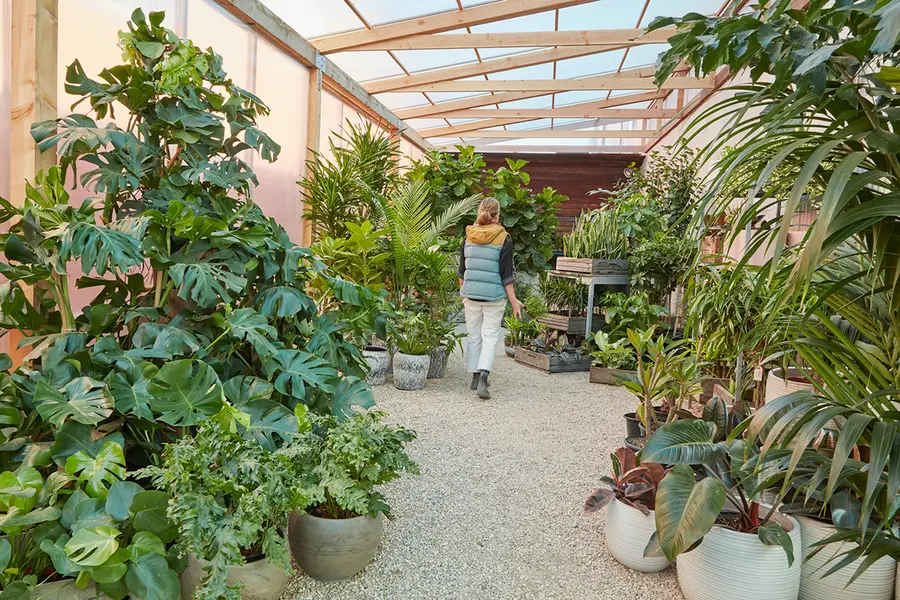 Garden storyHouseplant Care: Light, Water, and SoilHere at FGG, the question we hear most often from customers is “How often do I water my houseplant?” It sounds like a simple question, but the answer is actually pretty complicated.
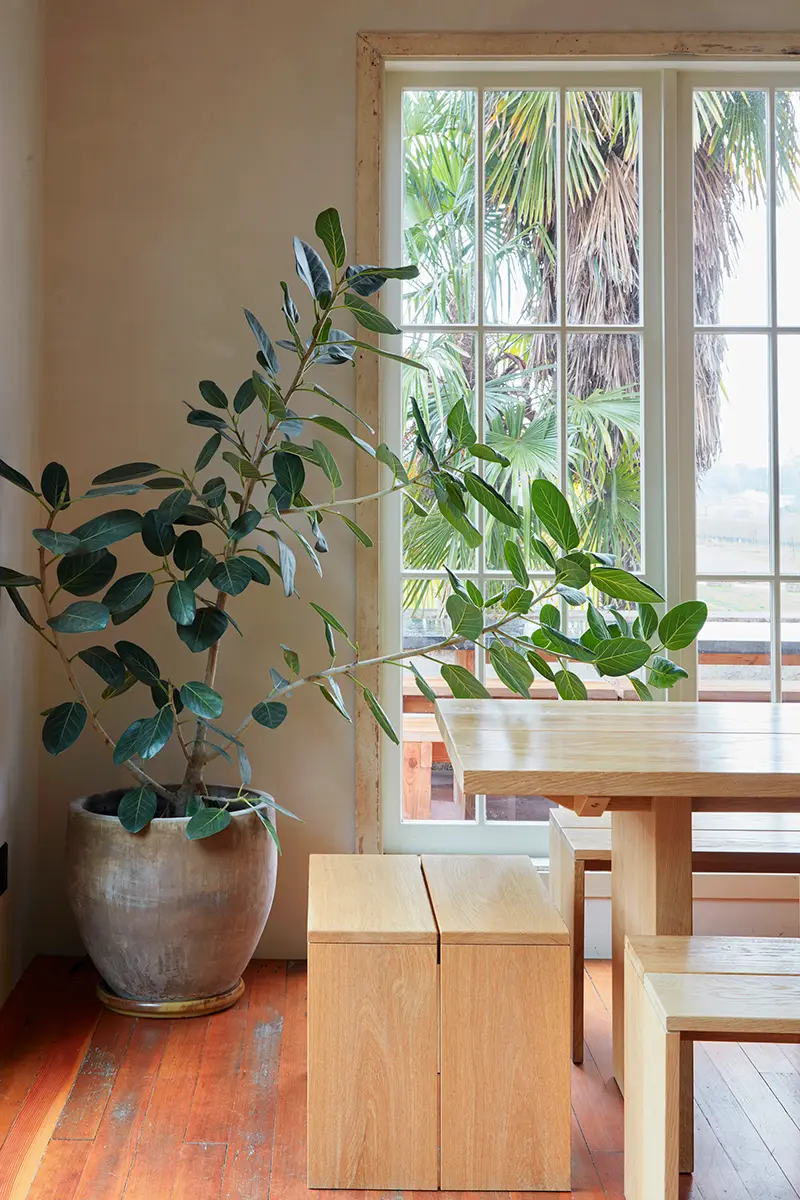 Garden storyFavorite Houseplants for Direct SunHere’s a pro tip: Almost all indoor plants will happily grow in bright indirect light, but only some are okay with sitting in a sunny window. feeling the direct warm sun on their leaves. We’ve got some beautiful houseplant suggestions for spots in your home with bright direct sun.
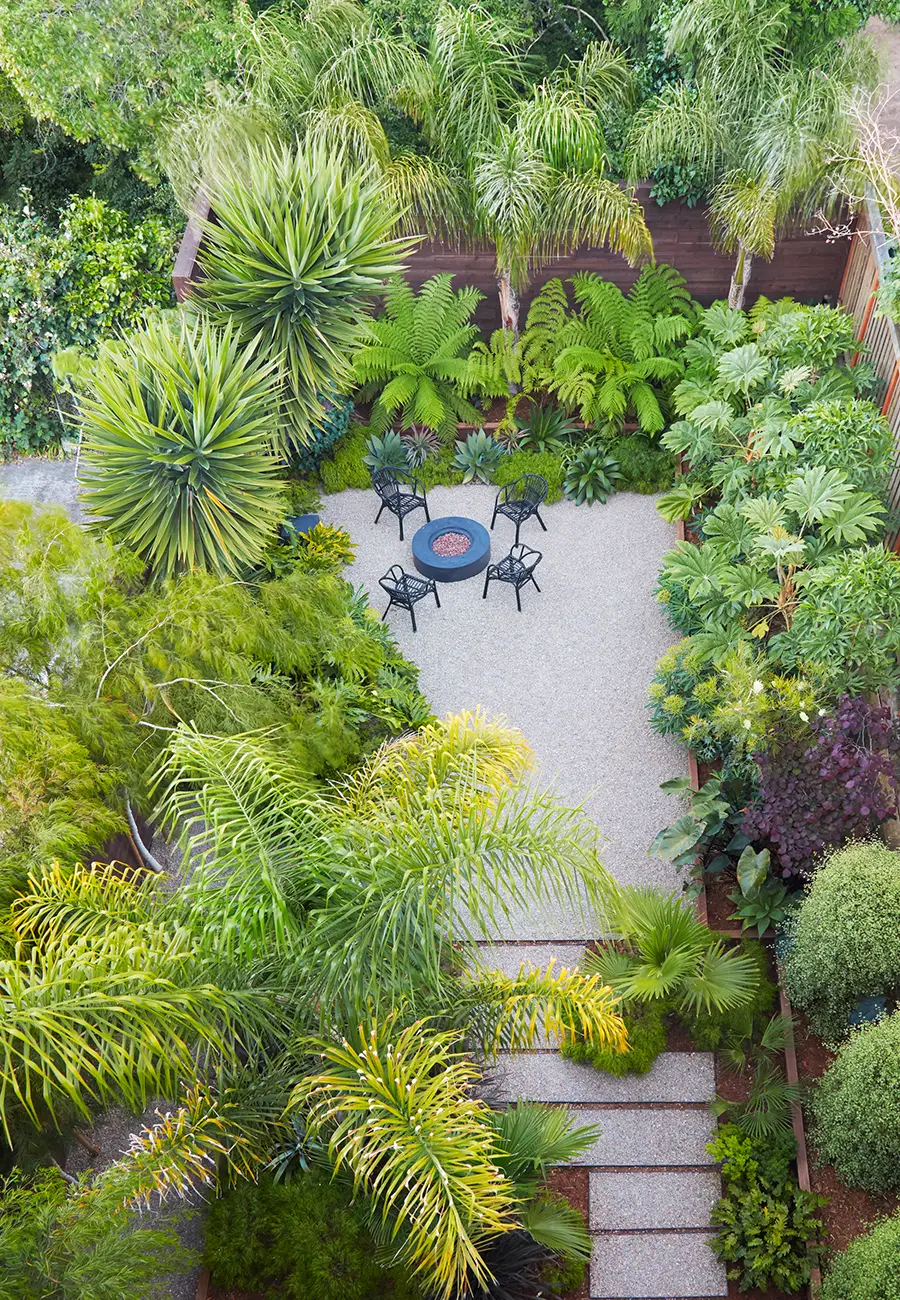 Garden storyUnderstanding Your Climate: Here's Why Coastal California is Paradise for Plant LoversWe all know San Francisco has lots of fabulous quirks, and the climate is one of the weirdest. For visitors and newcomers, our weather can be a puzzle, but for plant nerds (like all of us here at Flora Grubb Gardens), this particular puzzle is what makes San Francisco a gardening paradise.
More Info
This plant has been grown as a houseplant, but it also excels outdoors in mild climates. See Sunset zones if you are interested in growing this plant outside. Also note that anytime a houseplant is moved outside, some transitional stresses should be expected, including burning (when a plant that can and in fact would often prefer to grow in direct sunlight has not been cultivated in direct sun) and also drooping or leaf drop (usually associated with a shift in temperature). Planting outdoors during mild weather will help negate these effects, and if the plant is properly cared for, it should rebound with new acclimated growth.
Links
The above information reflects the observations of Grubb and Nadler and our extended plant community. We always consider input from fellow horticulturists and welcome feedback from those with additional information on the culture of this plant.
© 2020–2026 Grubb and Nadler. All rights reserved.