
Senecio barbertonicus
Barberton groundsel
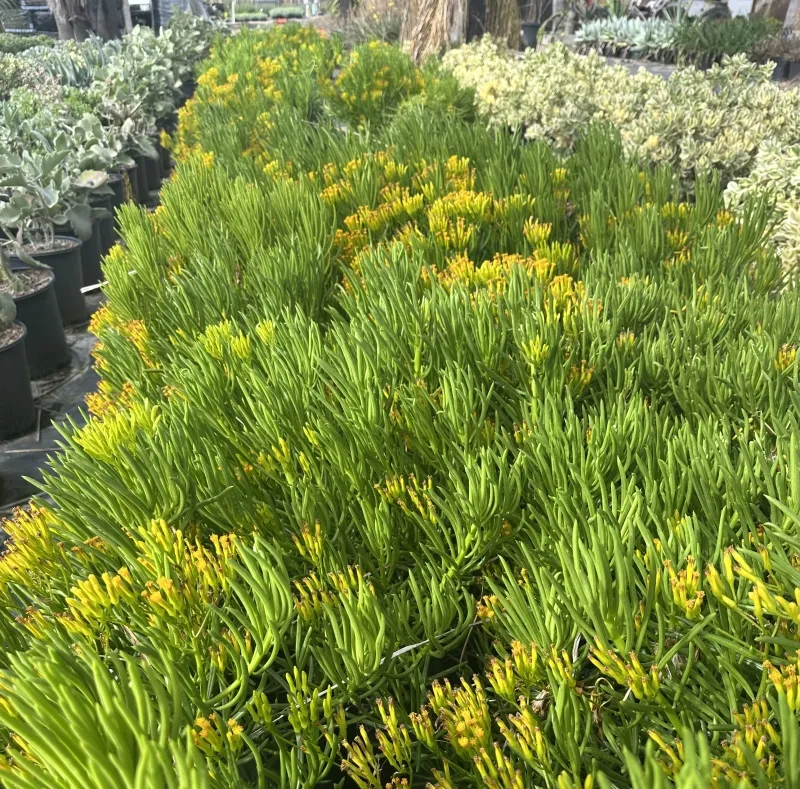
Fabulous, lush, low-water succulent shrub combines well with broad-leaved plants. Golden flowers at branch tips fall-winter. Give it some shade where summer stays hot.
 Synonyms | Kleinia barbertonica |
|---|---|
 Height | 2–5ft |
 Width | 3–6ft |
 Tolerates | Drought, Pots, Salt, Wind |
 Water needs | Low |
Senecios are thrifty, low-water succulent plants that are very versatile. They should be watered when dry. Shriveling or dropping of older lower leaves is a sign of underwatering (or possibly too little light). Generally they'll want water every two to three weeks during the dry season to keep looking their best, but will tolerate more water given good drainage. These upright forms are more drought tolerant than other Senecios. | |
 Hardy to | 25°F |
 Exposure | Full Sun – Part Shade |
 Plant traits | Flowering, Shrub, Succulent |
 Indoor / outdoor | Outdoor |
 Drainage | In Ground: Cactus Mix, In Pots: Cactus Mix, Tolerates Sandy Soil |
 Fertilizing | All Purpose, Low Needs |
 Origin | SE Africa |
 California native | No |
 Sunset zones | 13–24 |
Growing Notes
This senecio can be cut back hard, even within a foot of the ground, and they will regrow with a bushier form. Alternatively, you can let your senecio grow a few leaves and then pinch back the tips to get a much bushier form without the scarring and setback of a yearly hard pruning.
This plant can tolerate near full shade. When grown in shady coastal marine influence areas it becomes susceptible to powdery mildew. It is likely to do well growing out of the marine influence in almost full bright shade, but expect it to be less upright and possibly even lean over and wander.
Though this shrub looks soft, the leaves and stems are brittle and should be kept back from high traffic areas.
Reports suggest that this plant gets much taller, given the support of a structure or other plants, then we typically see it in gardens - up to ten feet tall!
Special Interest
Easily grown from woody cuttings.
Hard to beat for its combo of bright, rich green foliage, and cheery golden flowers that often appear as a pleasing surprise when you least expect them.
Links
Which store do you shop at?
The above information reflects the observations of Grubb and Nadler and our extended plant community. We always consider input from fellow horticulturists and welcome feedback from those with additional information on the culture of this plant.
© 2020–2026 Grubb and Nadler. All rights reserved.