
Senecio mandraliscae
blue chalk sticks
Blue succulent ground cover with pickle leaves forms a deep, weed-smothering mat. Cascades from pots and walls.
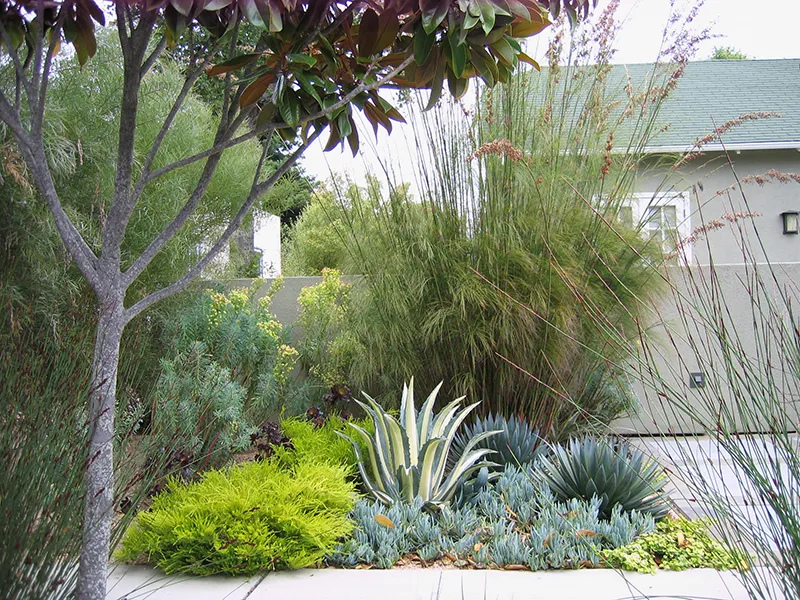
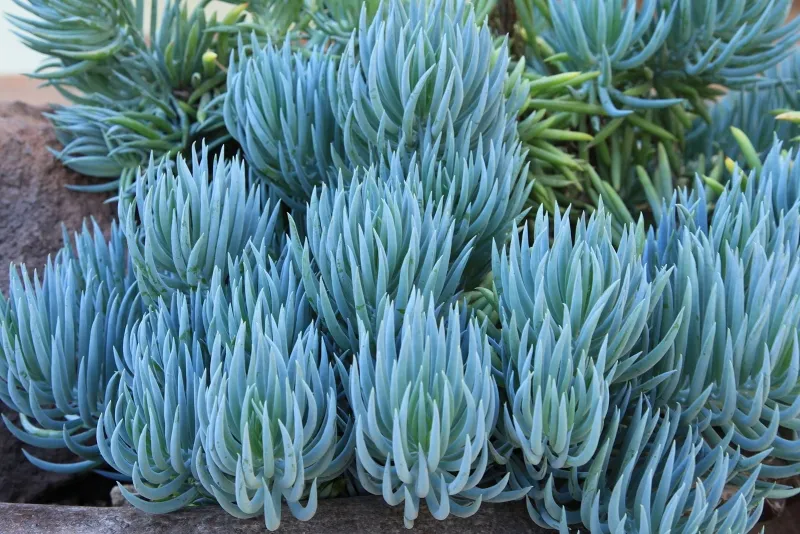
 Synonyms | Senecio talinoides subs. mandraliscae |
|---|---|
 Height | 6–12in |
 Width | 1–3ft |
 Tolerates | Coast, Cool Summers, Drought, Fog, Pots, Salt, Wind |
 Water needs | Low |
The blue, chalky, waxy leaves of this plant make it quite drought tolerant, though it will look its best when given water once dry. Shriveling or dropping of older lower leaves is a sign of underwatering (or possibly too little light.) Generally blue chalk sticks will want water every two to three weeks during the dry season to keep looking their best, with more frequent waterings in inland areas with dry heat. | |
 Hardy to | 25°F |
 Exposure | Part Shade – Full Sun |
 Plant traits | Ground Cover, Hanging, Spreading, Succulent |
 Indoor / outdoor | Outdoor |
 Drainage | In Ground: Cactus Mix, In Pots: Cactus Mix, Tolerates Sandy Soil |
 Fertilizing | All Purpose |
 Origin | W South Africa |
 California native | No |
 Sunset zones | 8, 9, 12–23 |
Growing Notes
When grown as a groundcover, this plant will eventually begin to smother itself; once this happens it's best to prune it back hard each spring, creating a cleaner form. These cuttings are easily rooted.
Blue chalk sticks will grow in the shade, but looks undesirable and as such this should be avoided. Also, avoid planting this plant where leaf litter accumulates as it is difficult to rake the leaves out without damaging the plant.
Special Interest
Occasional yellow, daisy like flowers.
The origin of this plant is unclear and some surmise that it is likely an old garden hybrid.
Links
Which store do you shop at?
The above information reflects the observations of Grubb and Nadler and our extended plant community. We always consider input from fellow horticulturists and welcome feedback from those with additional information on the culture of this plant.
© 2020–2026 Grubb and Nadler. All rights reserved.