
Stetsonia coryne
toothpick cactus
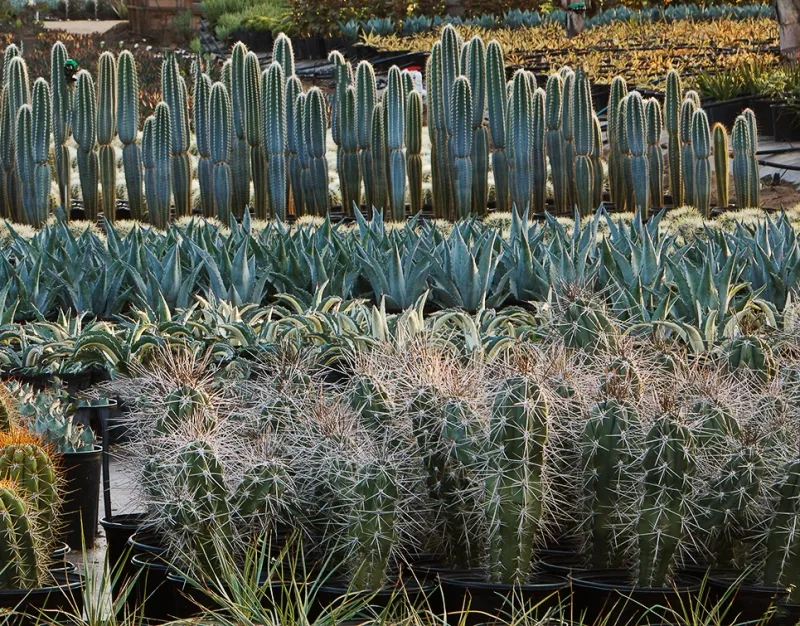
Muted blue grey cactus thrives in pots and with good drainage. Becomes branched and treelike with time. Night blooming white flowers.
 Synonyms | Cereus coryne |
|---|---|
 Height | 12–20ft |
 Width | 10–15ft |
 Tolerates | Drought, Deer, Heat, Pots, Salt |
 Water needs | Low |
This cactus is from the deserts South America and as such likes to go totally bone dry between waterings, making it very low-maintenance. If you see your cactus begin to shrivel or lose firmness, your cactus is likely totally dry and should be watered. To get good healthy growth your plant doesn't want to sit around totally dried out during it's growing season. Once it is dry, water it. This cactus comes from an area with summer rainfall and is actively growing during that time, when it is forgiving of overwatering errors. During winter dormancy it should be kept extra dry and won't tolerate overwatering. Remember that if kept in a small pot your plant will want more frequent watering. | |
 Hardy to | 25°F |
 Exposure | Full Sun |
 Plant traits | Armed, Cactus, Columnar, Flowering, Solitary |
 Indoor / outdoor | Outdoor |
 Drainage | In Ground: Cactus Mix, In Pots: Cactus Mix, Tolerates Sandy Soil |
 Fertilizing | All Purpose |
 Origin | S South America |
 Sunset zones | 13, 16, 17, 19–24 |
Growing Notes
This plant is likely very tolerant of high levels of salt, as it naturally grows along the margins of salt flats in South America. It also grows in heavy clay in its native range, but won't tolerate this in areas with winter rainfall.
Feed only during summer months as encouraging lush growth during its winter rest period can cause disease.
This cactus is reportedly hardy to around 20F if kept dry during winter chill.
Special Interest
The species name 'coryne' means 'club' in Greek. Just imagine the spiked club one of these arms would make!
The toothpick cactus makes edible fruit with a tangy citrus flavor.
In stock today in Los Angeles
| 3 gallon | 3 available | $49 |
The above information reflects the observations of Grubb and Nadler and our extended plant community. We always consider input from fellow horticulturists and welcome feedback from those with additional information on the culture of this plant.
© 2020–2026 Grubb and Nadler. All rights reserved.