
Trithrinax acanthocoma
Brazilian needle palm
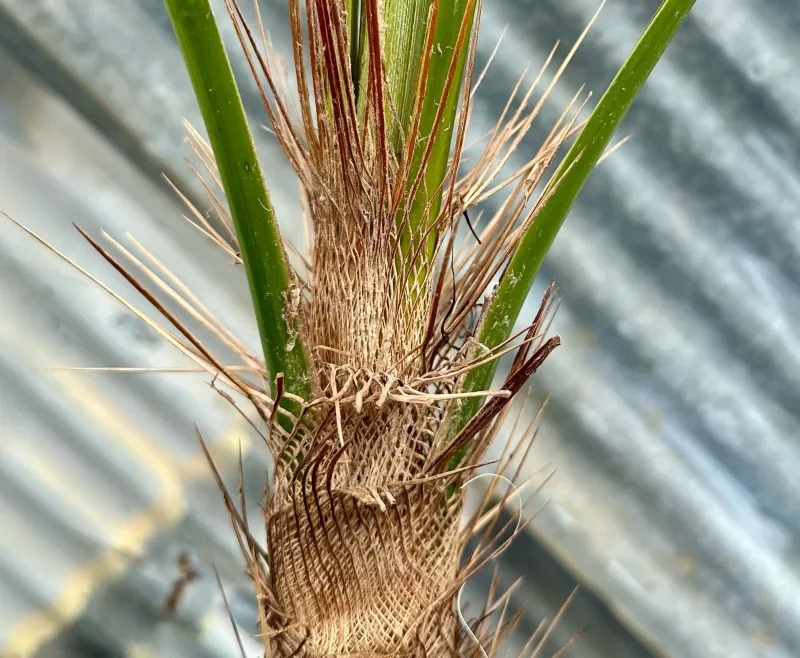
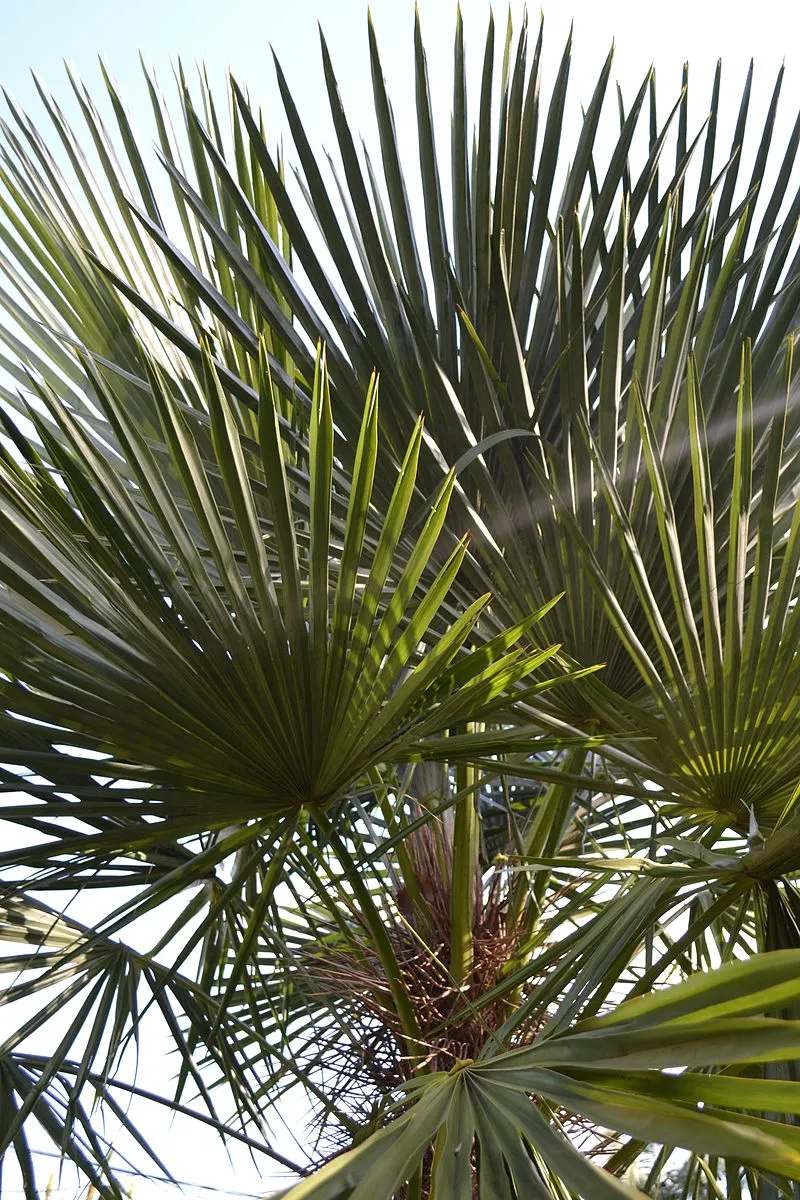
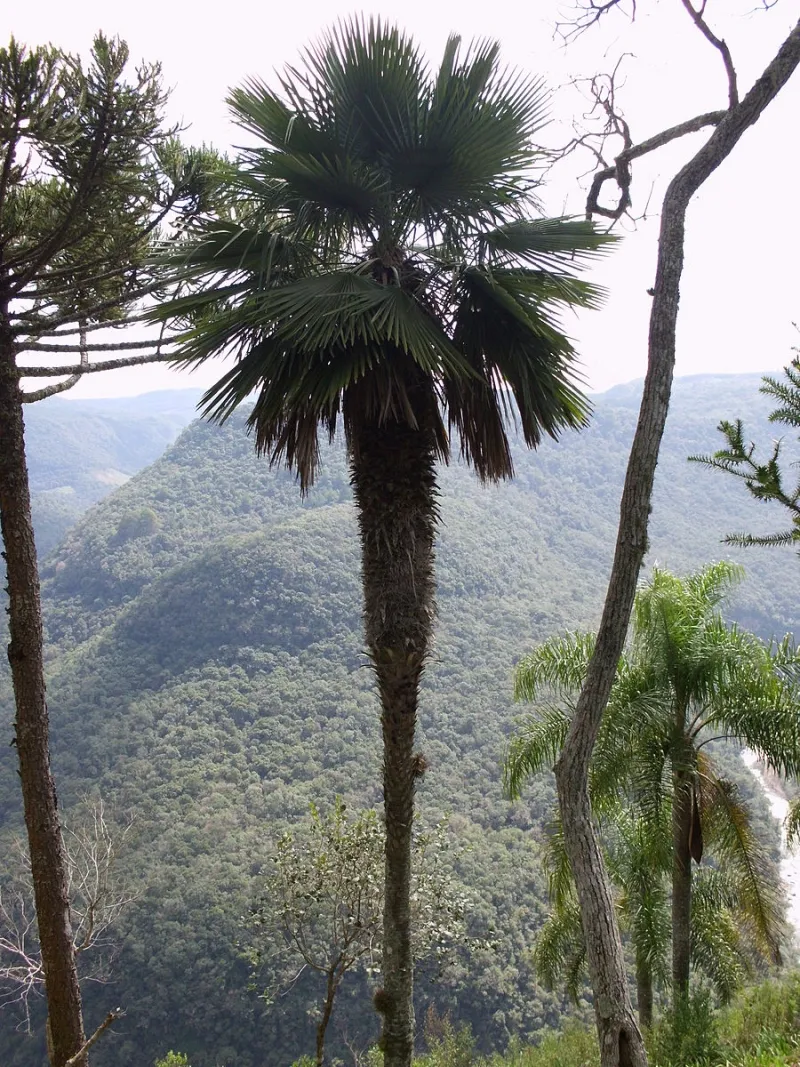
Broad, flat, shiny-green leaves & intricate basket-weave, needle-armed trunk. Showy white flowers and ivory egg-like fruits. Tolerates drought & seasonally wet soil.
Seen in Palms for the Dry Garden →
 Height | 12–20ft |
|---|---|
 Width | 6–10ft |
 Tolerates | Cold, Drought, Heat, Pots, Neglect |
 Water needs | Low – Moderate |
Not all palms love water! This one is actually drought-tolerant and can live quite happily on little or no water in cooler climates once it's established, though it'll grow more slowly and may not look as lush. To keep your palm looking its best, be sure to water it consistently and deeply while it's getting established, then after a few years give it a good deep soaking every couple of weeks. It will also be happy to have more water as long as it has adequate drainage. | |
 Hardy to | 14°F |
 Exposure | Part Shade – Full Sun |
 Plant traits | Armed, Bees, Columnar, Flowering, Foliage Feature, Ornamental Fruit, Palm, Screen, Sculptural, Solitary, Tree, Tropical, Trunking |
 Indoor / outdoor | Outdoor |
 Drainage | In Ground: Cactus Mix, In Pots: Cactus Mix, Tolerates Heavy Soil, Tolerates Sandy Soil |
 Fertilizing | Palm Fertilizer |
 Origin | S Brazil |
 California native | No |
 Sunset zones | 8, 9, 11–24 |
Growing Notes
Among the most cold-hardy of tree palms. Tolerates shade, sun, and heat, too. Heat speeds its growth. Plants in the chilly NorCal fog belt are slow. Not at its best in constant or severe winds.
As with most palms, fertilize in March, June, and September.
Special Interest
Flowers and fruit are highly ornamental, as are the broad, stiff, flat leaves with grey-silver accents on the undersides.
Spines on the trunk, spines on every leaf tip: This palm's fierceness makes it an effective deterrent when planted in numbers and in the right spot. Handle with care, and keep away from passageways and play areas.
Stories featuring this plant
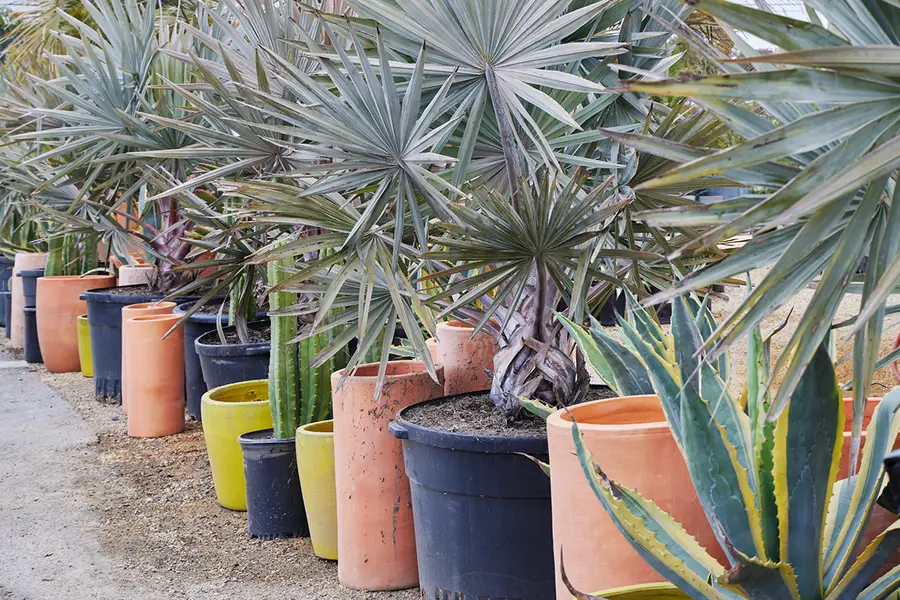
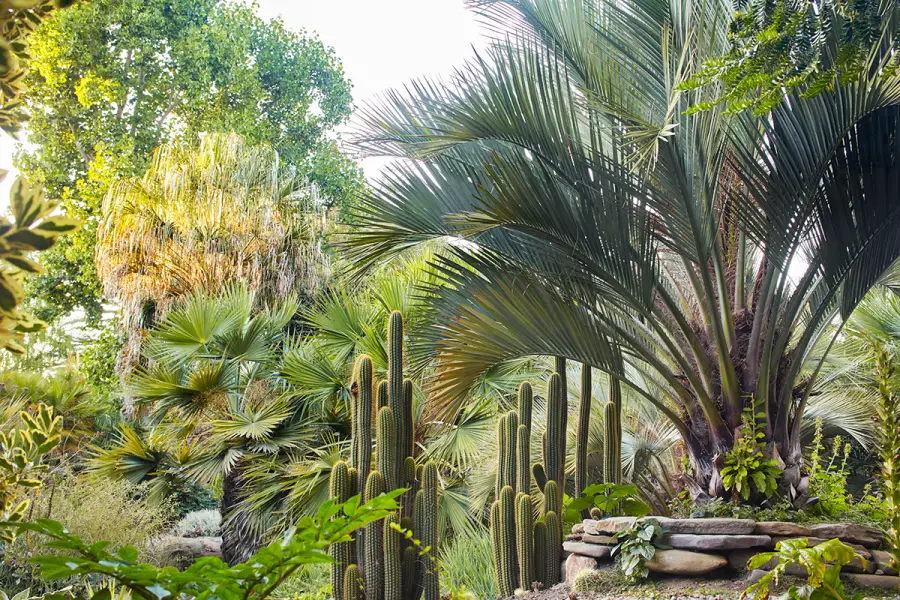 Garden storyPalms for the Dry GardenThe dry garden is a place we cultivate for harvest and beauty and life outdoors without overdoing the water in our summer-dry climate. With all their beauty and versatility, palms can play an important in the dry garden.
 Garden storyPalms for Tight SpacesThere are many challenges when planting a garden, including considering damage to retaining walls, sidewalks, foundations, and underground utilities. Often the easiest way to overcome these tricky spots is planting small plants that won’t have a large impact on nearby infrastructure. But what if you need a larger, more substantial element?
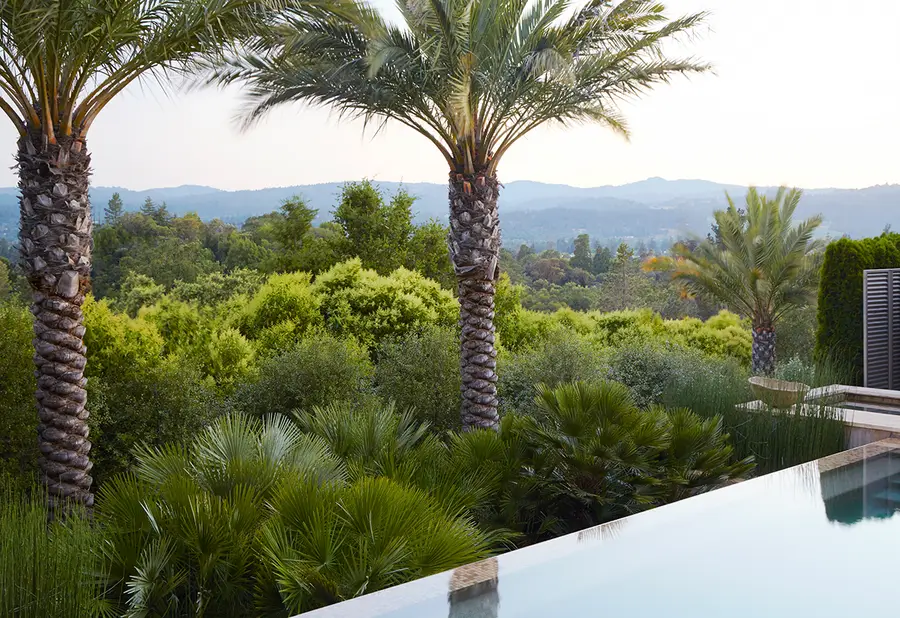 Garden storyThe Ultimate Guide to Growing Palm Trees in Coastal CaliforniaWe can grow many kinds of palms in our coastal California gardens — palm trees, shrubby palms, bamboo palms, little foliage palms — lucky us! Our guide to everything palm has all the info you need to make the best selections for your garden.
More Info
Courageous gardeners in areas where winters regularly dip below the low 20s Fahrenheit should consider growing this beautiful palm.
Native to southern Brazil, where it grows in the company of Paraná pines (Araucaria angustifolia) and is exposed to well below-freezing temperatures.
Links
Which store do you shop at?
The above information reflects the observations of Grubb and Nadler and our extended plant community. We always consider input from fellow horticulturists and welcome feedback from those with additional information on the culture of this plant.
© 2020–2026 Grubb and Nadler. All rights reserved.