
Washingtonia robusta
Mexican fan palm
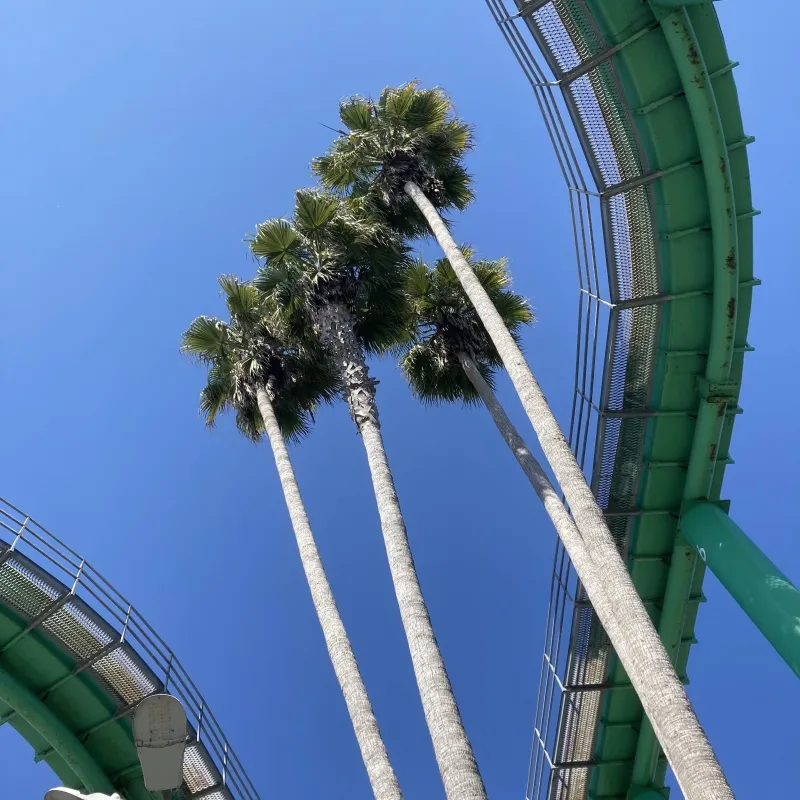
California's classic skyline palm. Fast-growing, tough, and versatile. Used extensively, and to great affect, when planted in multiples.
 Altura Altura | 50–100 pies |
|---|---|
 Ancho Ancho | 10–15 pies |
 Tolera Tolera | Sequía, Venados, Calor, Suelo húmedo, Macetas, Descuido, Sal, Viento |
 Riego Riego | Bajo – Moderado |
This palm should be watered deeply every week or two once it's established. It prefers not to ever dry out completely. That said, we often see these growing (sometimes from spontaneous seedlings) in California, so clearly this palm can take drought. We have one friend who has good drainage and has a constant drip on his Mexican fan palm and it grows like a rocket, over a foot a year without fertilizer. Since this palm naturally grows in wet desert draws this replicates its ideal habitat. | |
 Resiste hasta Resiste hasta | 20 °F |
 Exposición Exposición | Sombra parcial – Pleno sol |
 Características Características | Con espinas, Palma, Solitaria, Tropical, Forma tronco |
 Interior / exterior Interior / exterior | Exterior |
 Drenaje Drenaje | En el suelo: mezcla para cactus, En maceta: mezcla para cactus, Tolera suelo pesado, Tolera suelo arenoso |
 Fertilización Fertilización | Uso general |
 Origen Origen | Baja California, México |
 Nativa de California Nativa de California | No |
 Zonas Sunset Zonas Sunset | 9–24 |
Notas de cultivo
The hint to this palm is the species name 'robusta'. This one tolerates just about anything. Pots? Sure. Heat? No problem. Poor soil (either too heavy or lean)? Not going to bother it. Salty seaside conditions? Right at home. Wet feet? Even better. Wind? Who cares.
Basically avoid areas where you have drizzly windy fog and coast COMBINED. Even then it will survive, just with a smaller tattered looking crown with few healthy green leaves. Growth will slow appreciably in cool weather. Also avoid extreme colds dropping below 20F.
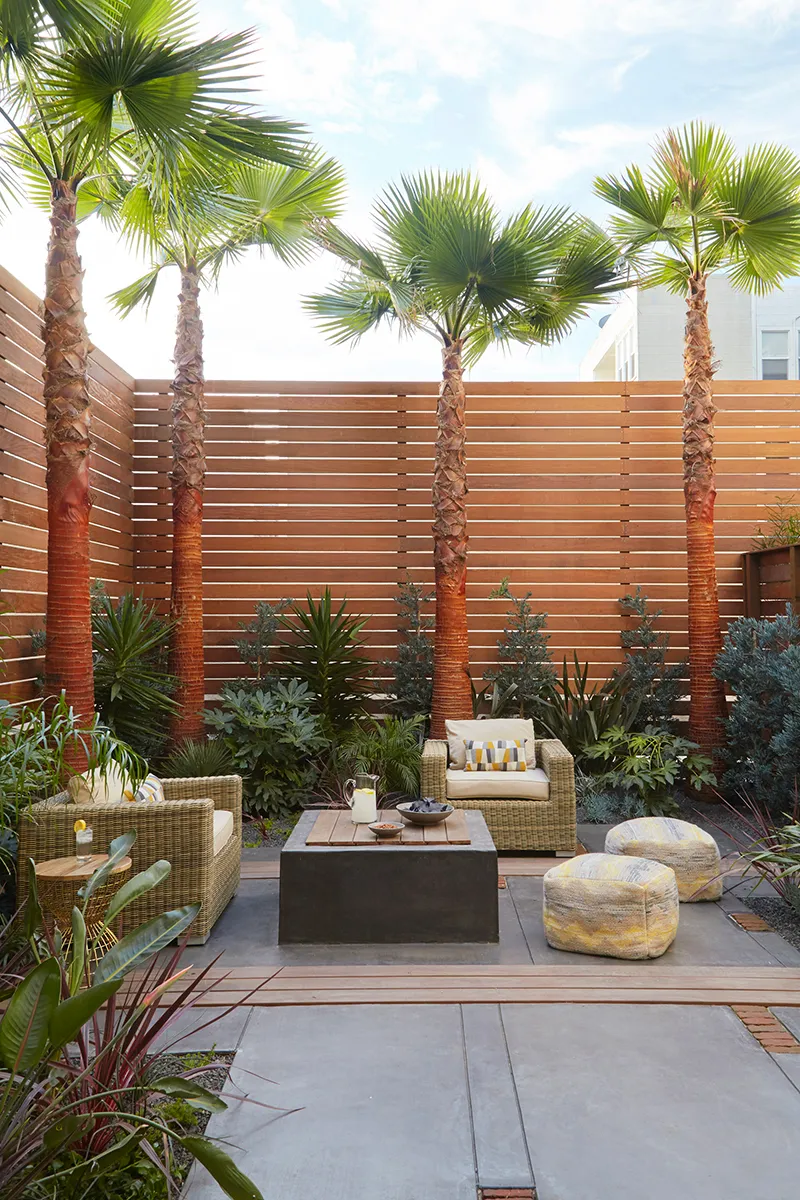
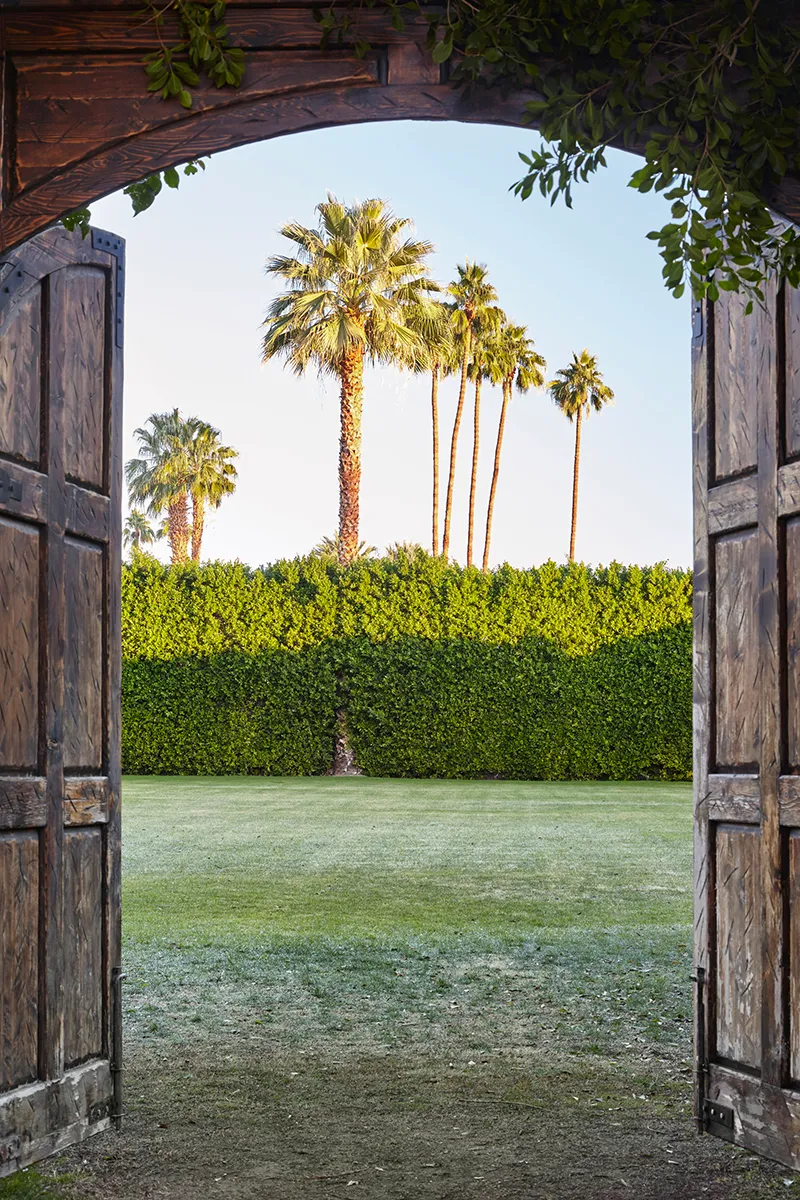
Be sure to check the height on this one! It gets tall. The upside of this is you get a mature palm within a decade or two. The downside is that your grandkids neighbors three blocks over will have a better view of the palm than they do! This is also the reason we recommend planting this palm in groups. A single very tall palm can look a bit out of place, but a grouping of Mexican fan palms mature handsomely. Mass planting is also used in larger scale projects, such as lining boulevards. Such as the heirloom palms seen across California, from Santa Cruz's Morrissey Boulevard to Robertson Boulevard Chowchilla and Adams Boulevard in LA. Many of these were planted in the 1800s!
This palm is quite resilient and fast growing once it gets going (even without fertilizer), but if you want to indulge it fertilize three times a year. Fertilizing at spring equinox, summer solstice and fall equinox will allow for a winter rest. Be sure to feed your palm with a fertilizer that contains micronutrients (especially including magnesium). Some gardeners choose to feed this palm until it develops a couple feet of trunk (to speed up the foliage feature stage) and then cut off fertilizer (to extend the time this palm is a pleasing small to mid scale palm).
This solitary palm will grow only one trunk during its lifetime. If you have a pot with multiple trunks in it, that's because multiple separate palm trees were germinated in the pot. The good news is that you won't need to thin out suckers over time to maintain the number of trunks you started out with.
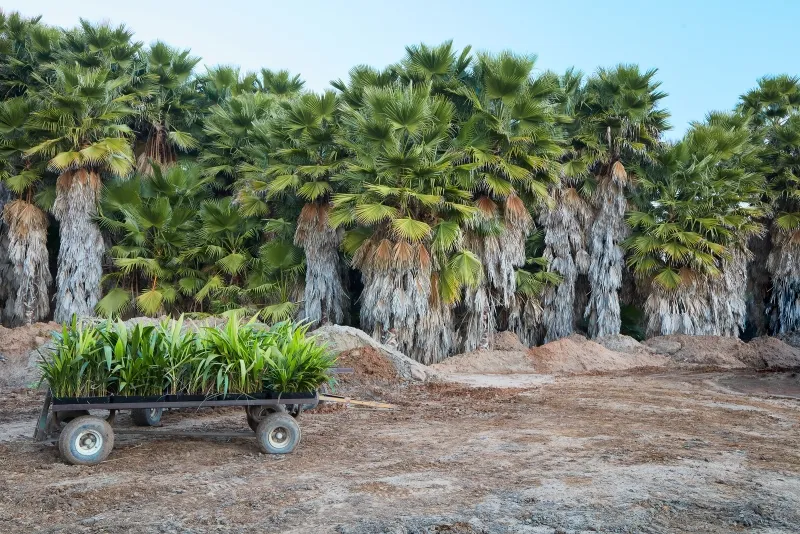
This palm holds its leaves for a long time, creating a beard or skirt on the trunk. If you want, you can always prune off the beard for a cleaner look. If fire retardancy is a consideration the beard should be removed annually, though this palm is adapted to fire and will recover from burning. Fully removing your palms persistent beard will leave a glorious cinnamon colored, ringed trunk that will fade to grey over time (as in the photo for this plant). Alternatively, by pruning the petiole where it meets the trunk (but not removing the entire leaf sheath) your palm will develop a characteristic lattice pattern over time. Take care when pruning as this palm has sharp serrated petioles.
Growing this palm in pots will dwarf it.
Interés especial
You'll occasionally see a palm offered that is a hybrid between W. robusta and W. filifera (the California fan palm). We call this one the filabusta!
Enlaces
Esta información refleja las observaciones de Grubb and Nadler y de nuestra comunidad de amantes de las plantas. Siempre tomamos en cuenta las aportaciones de otros horticultores y agradecemos los comentarios de quienes tengan más información sobre el cultivo de esta planta.
© 2020–2026 Grubb and Nadler. Todos los derechos reservados.