
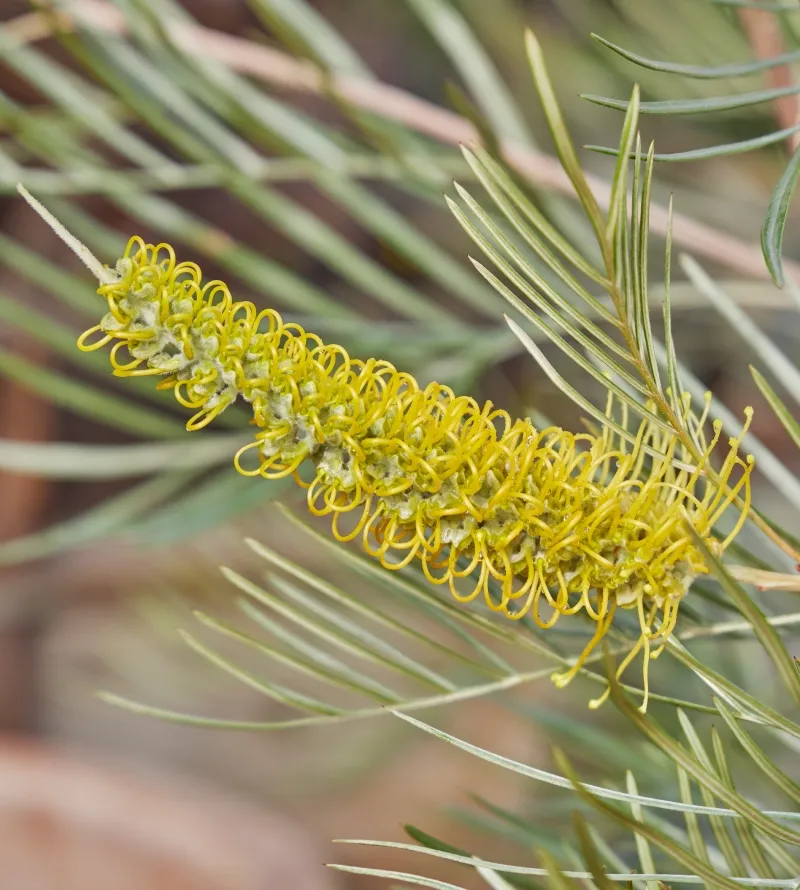
We’re now growing grafted grevilleas: the showy Australian shrubs we love, each one grown on the roots of a tougher cousin, the silky oak (Grevillea robusta). Here’s why, and how to grow them.
What is a grafted grevillea?
A grafted grevillea is two plants joined into one. The top is the grevillea you chose, with its flowers, leaves, and shape. The roots belong to a young silky oak, a big, tough tree from the east coast of Australia. The two are joined while they’re small, and they grow on together as one plant.
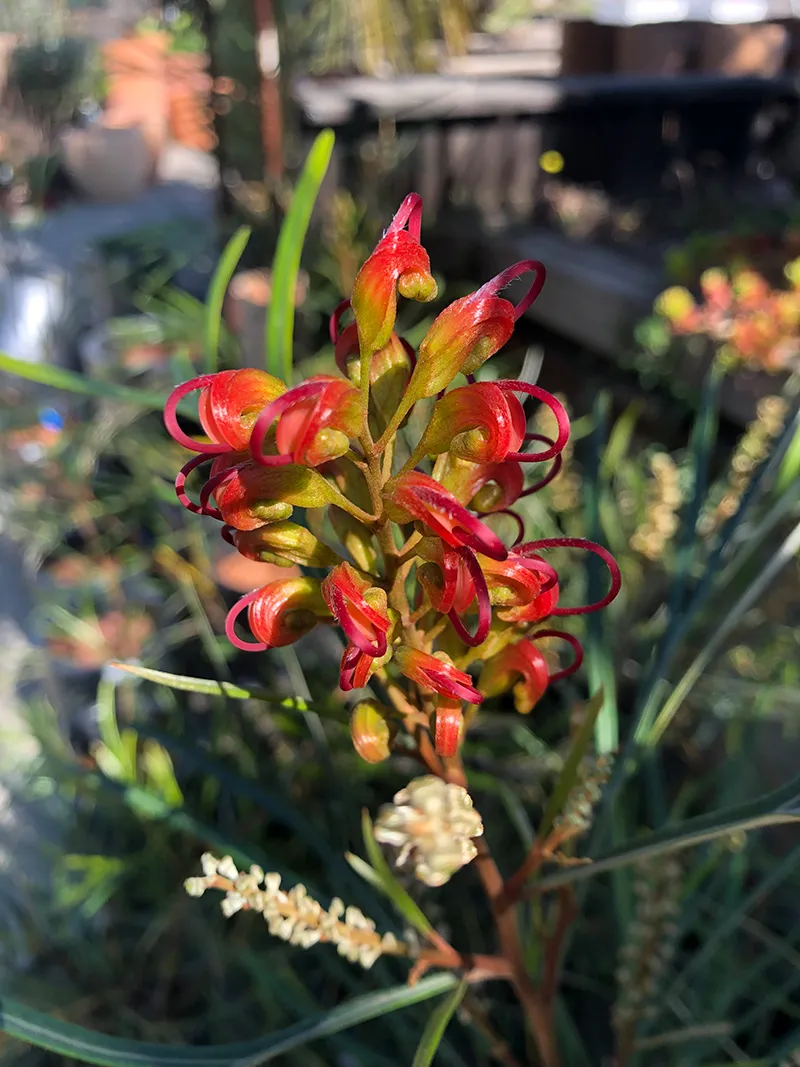
Why we graft
Grevilleas are some of the best plants for coastal California: low water, in bloom most of the year, and adored by hummingbirds. But many of the showiest ones come from sandy, fast-draining, nutrient-poor soils, and on their own roots they can be fussy in our gardens. Silky oak roots make them easier in three ways.
- Wet winters. Our rain comes in winter, when the soil is cool and slow to dry, and that’s when grevillea roots are most likely to rot. Silky oak roots handle wet, poorly drained soil far better.
- Heavy soil. Many California gardens sit on clay. On their own roots, grevilleas want a sandy, fast-draining spot. Grafted, they’re happy in a much wider range of soils.
- Richer soil and fertilizer. Australian soils are famously low in phosphorus, and grevilleas and their relatives in the protea family evolved to scavenge every bit of it. Too much, from a rich garden bed or an all-purpose fertilizer, can kill them. Silky oak roots are far more forgiving of the richer soils and everyday fertilizers that can kill a grevillea on its own roots.
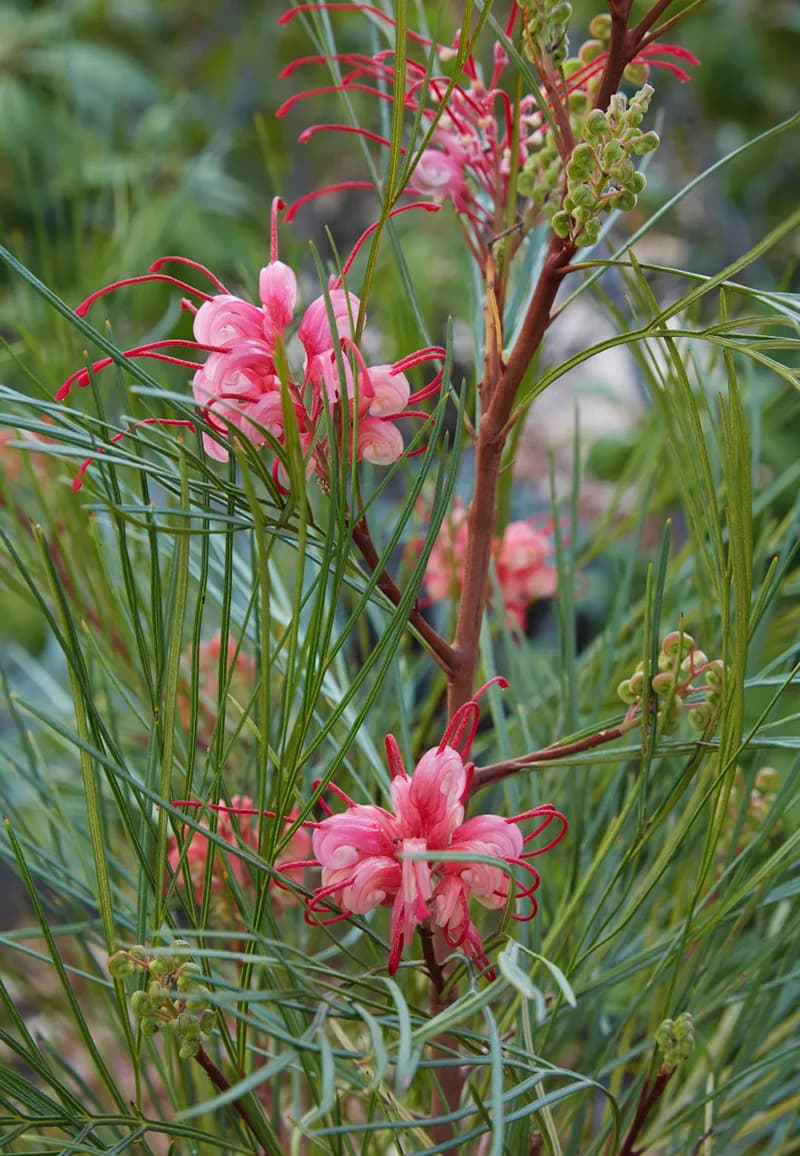
We’ve been growing these for a while now, and the difference is easy to see. Our grafted grevilleas are much more vigorous, and they’re in bloom nearly all year. They also stay green through the winter: some grevilleas turn a little yellow in our cool, wet California winters, but the grafted ones don’t seem to.
Grafting also lets us grow grevilleas that are hard to grow from cuttings, and it makes weeping standards: a groundcover grevillea grafted high on a silky oak trunk, so it spills down like a fountain.
Caring for a grafted grevillea
- Remove shoots from below the graft. Any shoot that comes from below the join is silky oak. Snip it off while it’s small, or it can take over the plant and grow into a tree.
- Feed it lightly. Grafted grevilleas are more forgiving, but they still grow best with a low-phosphorus fertilizer made for natives or proteas.
- Water it while it settles in. Water regularly through its first summer. Once it’s established, it needs little summer water.
- Give it room. Grafted grevilleas grow faster and bigger than the same grevillea on its own roots.
Our grafted grevilleas
Here’s every grafted grevillea we grow. Tap one to see its guide, its sizes, and which store has it. Some of the photos show the flowers for now; photos of our grafted plants are on the way.
 Grevillea ‘Amber Passion’ graftedAmber-to-coral shrimp-like flowers appear year-round on thread-leaf shrub. Grafted onto Grevillea robusta rootstock enabling use in wider range of conditions: heavy moist soil, phosphorus.In stock in Marina del Rey
 Grevillea ‘Firesprite’ graftedRed-gold shrimp-like flowers appear year-round on ferny-leaf shrub. Grafted onto Grevillea robusta rootstock enabling use in wider range of conditions: heavy moist soil, phosphorus.Not in stock right now
 Grevillea ‘Honey Gem’ graftedRich gold flowers peak in late winter, lighter year-round. Grafted onto Grevillea robusta rootstock enabling use in wider range of conditions: heavy moist soil, phosphorus.Not in stock right now
 Grevillea ‘Long John’ graftedPink-red flowers appear year-round on thread-leaf shrub. Fast-growing. Grafted onto Grevillea robusta rootstock enabling use in wider range of conditions: heavy moist soil, phosphorus.Not in stock right now
 Grevillea ‘Majestic’ graftedReddish and cream flowers on a fast-growing large shrub with ferny foliage. Grafted onto Grevillea robusta rootstock enabling use in wider range of conditions: heavy moist soil, phosphorus.Not in stock right now
- Grevillea ‘Ned Kelly’ graftedApricot orange-pink blooms held against perforated grayish foliage. Grafted onto Grevillea robusta rootstock enabling use in wider range of conditions: heavy moist soil, phosphorus.Not in stock right now
 Grevillea ‘Robyn Gordon’ graftedUpright shrub with dense clusters of deep-red flowers most months. Grafted onto Grevillea robusta rootstock enabling use in wider range of conditions: heavy moist soil, phosphorus.Not in stock right now
- Grevillea ‘Royal Mantle’ graftedDistinctive red "toothbrush" flowers almost year-round. Fast-growing. Grafted onto Grevillea robusta rootstock enabling use in wider range of conditions: heavy moist soil, phosphorus.Not in stock right now
 Grevillea ‘Sandra Gordon’ graftedLarge, fast-growing, evergreen shrub or small tree sports rich yellow spidery blossoms at branch tips. Grafted onto Grevillea robusta rootstock enabling use in wider range of conditions.Not in stock right now
 Grevillea ‘Sylvia’ graftedDark grey-green shrub with cotton candy pink flowers, loved by Fast-growing. Grafted onto Grevillea robusta rootstock enabling use in wider range of conditions: heavy moist soil, phosphorus.Not in stock right now
Not sure which grevillea is right for your garden? Come see us in San Francisco or Marina del Rey, and we’ll help you choose.