
Acacia stenophylla
shoestring acacia
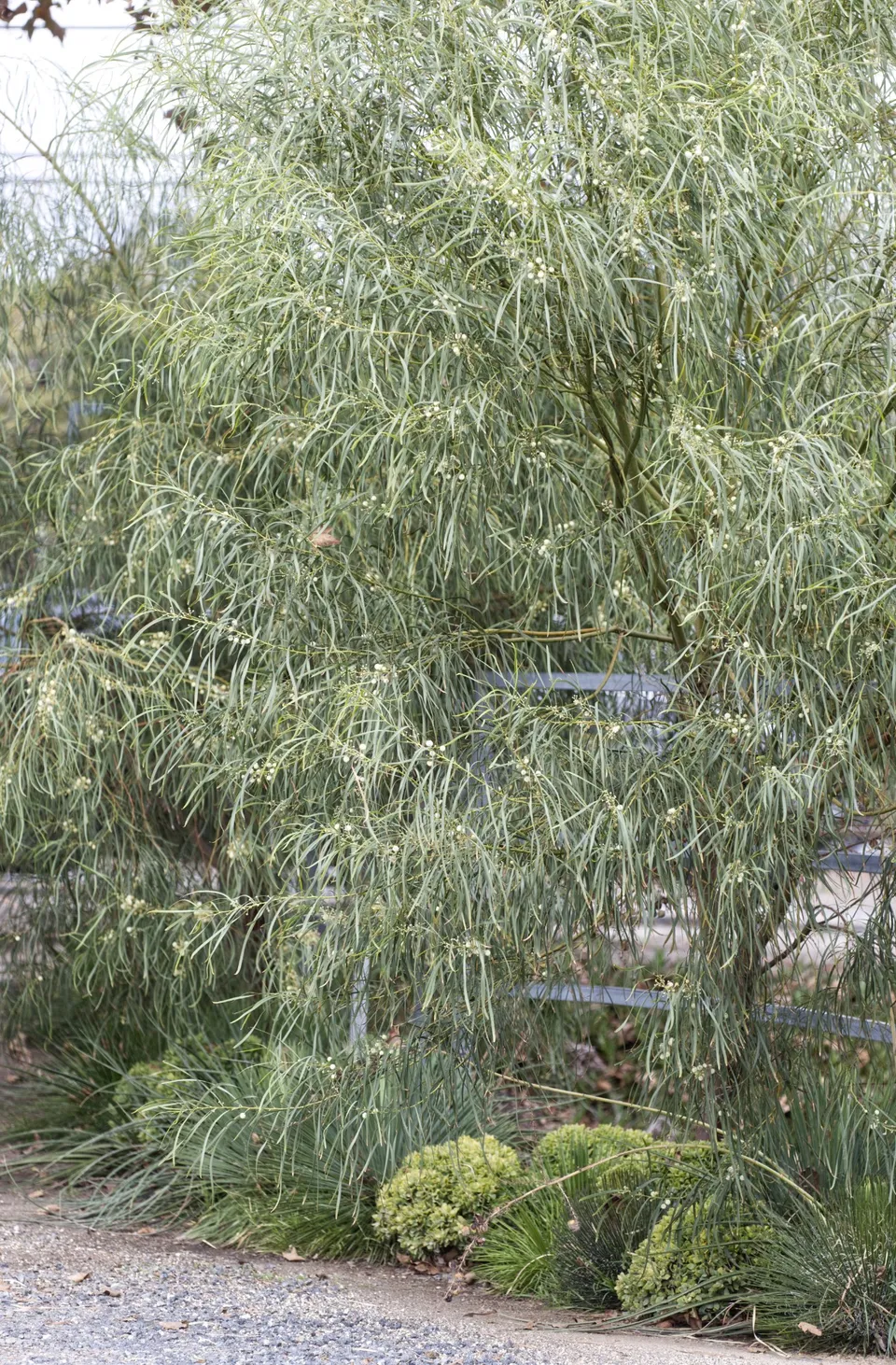
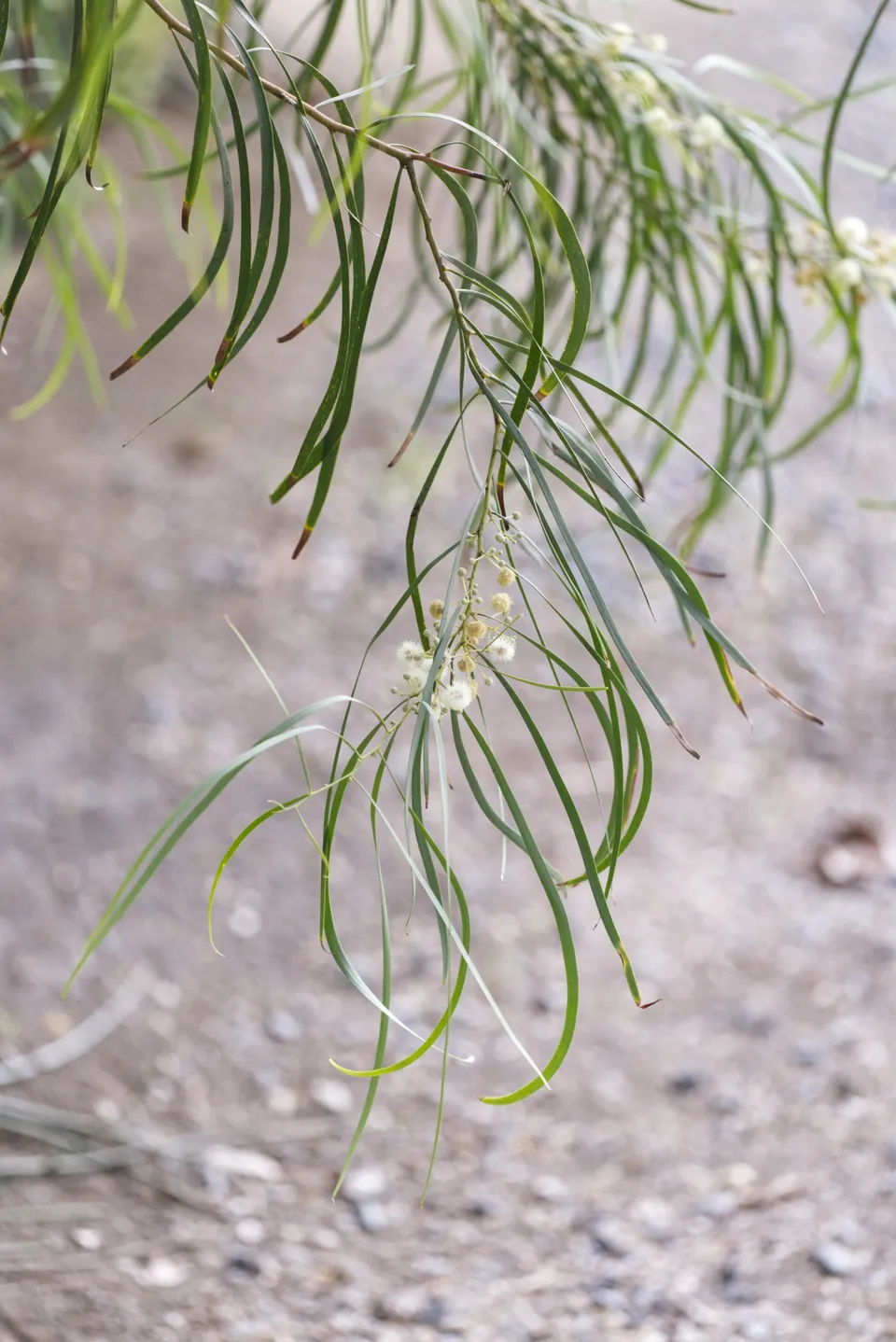
Fast-growing, long-lived weeping evergreen tree. Subtle flowers followed by attractive bead-chain seedpods. Wide in the sun, more narrow in some shade. Ok for a few years in a pot.
 Synonyms | Shoestring Acacia |
|---|---|
 Height | 20–30ft |
 Width | 15–20ft |
 Tolerates | Drought, Deer, Pots, Salt, Wind |
 Water needs | Low |
For the first three years after it's planted, this acacia should be watered deeply but infrequently (when the top three inches of soil or so have dried). After that, it won't need supplemental water except in exceptionally hot and dry environments. Use drippers, emitters or a slow stream of water so that it doesn't run off; allow the water to trickle all the way down through the deepest layers of soil. A great trick for watering street trees is to drill a 1/8-inch hole on the bottom edge of a 5-gallon bucket, then set the bucket with the hole aligned next to the tree and fill the bucket with water. Fill once for a 1-5 gallon plant, fill twice for a 7-15 gallon plant, three times for 25g or larger plants. Though these trees are drought tolerant, never let them go bone dry in a pot. | |
 Hardy to | 20°F |
 Exposure | Full Sun |
 Plant traits | Screen, Tree, Weeping |
 Indoor / outdoor | Outdoor |
 Drainage | In Ground: Cactus Mix, In Pots: Cactus Mix, Tolerates Sandy Soil |
 Fertilizing | All Purpose, Low Needs |
 Origin | Central Australia |
 California native | No |
 Sunset zones | 8, 9, 11–24, H1, H2 |
Growing Notes
Acacia are FAST growers - this plant will reach full size in under five years making it a great choice for privacy needs in your garden. Acacia are also relatively short lived, typically growing for twenty to thirty years. This combination can be used to your advantage by planting longer lived slower growing plants near your acacia
Acacia do well in pots, which effectively "dwarf" them.
In some shade, acacia look softer and the colors come out more. They also tend to get more upright as they reach for the sun. This makes them a great choice for tight urban gardening.
This tree is forgiving of pruning. Choose to prune off lower branches for a standard tree form, or tip prune to create a dense shrub or screen. Typically wide acacia can be pruned into a narrower form.
Special Interest
Our first nursery was on Guerrero street in San Francisco, where you can still go today to see the most lovely mass planting of Acacia stenophylla as a street tree in the center median. These trees recieve no supplemental irrigation.
Which store do you shop at?
The above information reflects the observations of Grubb and Nadler and our extended plant community. We always consider input from fellow horticulturists and welcome feedback from those with additional information on the culture of this plant.
© 2020–2026 Grubb and Nadler. All rights reserved.