
Myrica californica
Pacific wax myrtle
Upright, glossy-leaved shrub. Naturally dense: prune into an open form, or even shear as a hedge. Insignificant flowers are followed by blue berries loved by birds. Adaptable, fast.
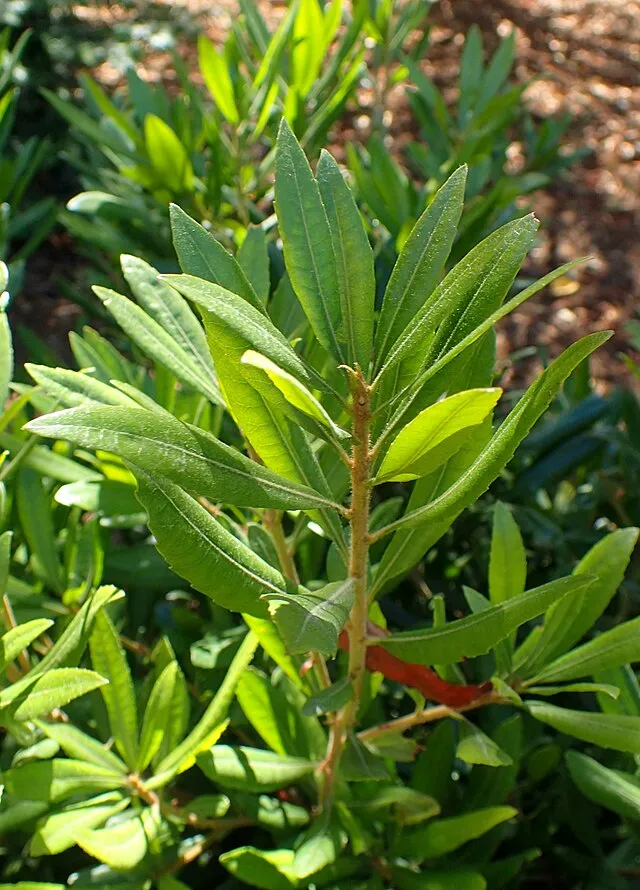
 Mature size | 15–30ft tall 10–20ft wide |
|---|---|
 Exposure | Part Shade – Full Sun |
 Hardy to | 12°F |
 Sunset zones | 4–9, 14–24 |
 Water needs | Low Being a California native from dry hillsides, this plant is very drought tolerant and will survive without water once established, given the right position and winter rainfall. That said, it looks its best with deep intermittent waterings during hot dry months. Water Pacific wax myrtle infrequently, when the top three inches of soil feel dry. Usually this will mean every week or two in dry weather. If you establish this pattern over several years, then you can cut back to watering every four to six weeks in dry weather or possibly even not at all (let your plant take the lead). Use drippers, emitters, or a slow stream of water so that it does not run off; allow the water to trickle all the way down through the deepest layers of soil. In a pot slowly water the entire surface until water comes out of the bottom of your pot. This plant, unlike some plants from our native chaparral, is also adaptable to regular water or even high water, given good drainage. |
 Tolerates | Coast, Cold, Drought, Deer, Gophers, Heat, Moist Soil, Pots, Rooftops, Neglect, Wind |
 Plant traits | Hedge, Screen, Shrub, Tree |
 Drainage | In Ground: Planting Mix, In Pots: Potting Soil, Tolerates Heavy Soil, Tolerates Sandy Soil |
 Fertilizing | Low Needs |
 California native | Yes |
 Synonyms | Morella californica |
Growing Notes
Champion wind block doubles as a privacy screen.
Can be pruned up into a small tree, this is best done early on.
This plant responds well to extreme pruning, as evidence by its quick rebound from devastating fire damage. It can be cut to the ground and will rebound quickly. Pruning is best done in the fall or early spring.
Being quite cold hardy this plant can also be grown in interior California, where it will want more water and a bit of protection from hot afternoon sun.
Special Interest
This plant is most common along the California Central Coast, though its range extends as far south as LA and as far north as British Colombia!
The waxy leaves of Pacific wax myrtle have a mild spicy flavor that can be substituted for bay leaves to season food. We have heard that the Native Americans of California chewed the leaves of this plant and even gave it a try ourselves. With their gummy wax and subtle sweet taste they make a somewhat agreeable gum if you're ever on a long hike in the chaparral.
Links
Which store do you shop at?
What we've learned from growing this plant ourselves and in our customers' gardens. We always love to hear more. Tell us
© 2020–2026 Grubb and Nadler. All rights reserved.