
Banksia integrifolia
coast banksia
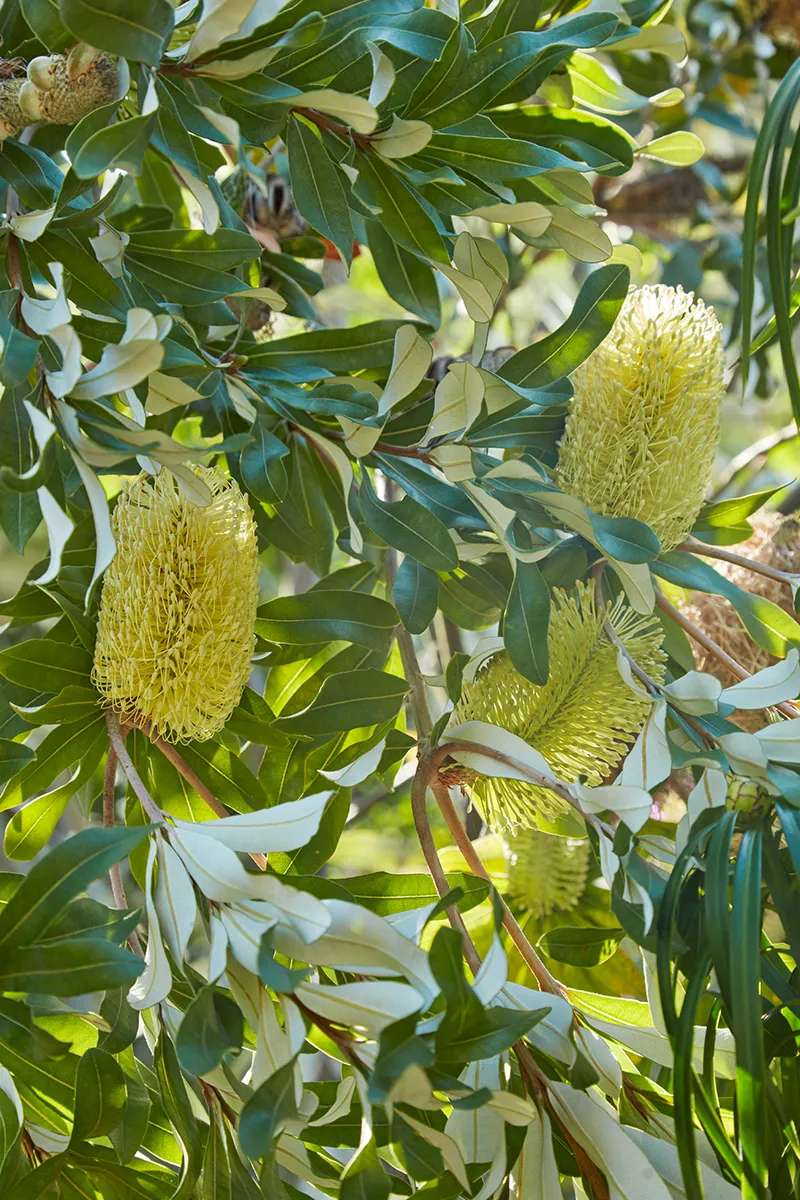
Upright tree combines oak and olive traits into a sparkling, fast-growing, long-lived tree with pale yellow flowers. Tolerates many soils, summer water. Ornamental seed pods add interest.
In stock in Los Angeles
from $69
 Mature size | 20–40 tall 15–30ft wide |
|---|---|
 Exposure | Part Sun – Full Sun |
 Hardy to | 20°F |
 Sunset zones | 14–24 |
 Water needs | Low – Moderate Banksia are from Australia and adapt well to California, particularly along the coast. They appreciate good drainage, but are somewhat adaptable to heavier soil as long as watering is infrequent (once established) and they are in a sunny spot. Once established they will grow and look their best with deep watering every other week to once a month during summer. If they have sharp drainage they will tolerate even more water. |
 Tolerates | Drought, Fog, Salt, Wind |
 Plant traits | Flowering, Tree |
 Drainage | In Ground: Cactus Mix, In Pots: Cactus Mix, Tolerates Sandy Soil |
 Fertilizing | Bloodmeal, Fish Emulsion, Low Needs |
 Origin | E Australia |
Similar plants
Growing Notes
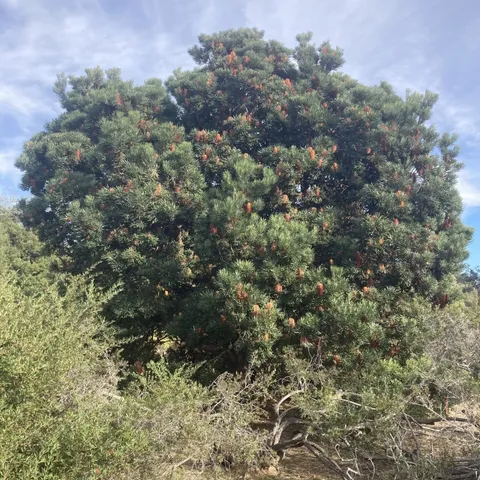
This banksia has a tree form, but can be kept smaller by pruning. We see decades old trees in California settling in around 35 feet though with great age we would expect them to grow beyond this. Don't prune more than two years of growth or you risk the plant not budding back.
Banksia prefer mildly acidic soil, and if your PH is on the high side you can add cottonseed meal or other mild acidifying fertilizer to lower it. They appreciate nitrogen in the form of fish emulsion or blood meal, but never give them any significant phosphorus and avoid potassium.
When grown in exceptionally windy areas the tree will become windswept and dwarfed, but still perform well.
This banksia wants to branch multiple times from one growth point. It's best to thin these to just one branch on primary and secondary branching to keep the tree tidy and strong.
This banksia is one of the easiest to grow, and most forgiving of heavier soils.
Special Interest
The white undersides of this banksia's leaves are quite striking, especially when lit from below at night.
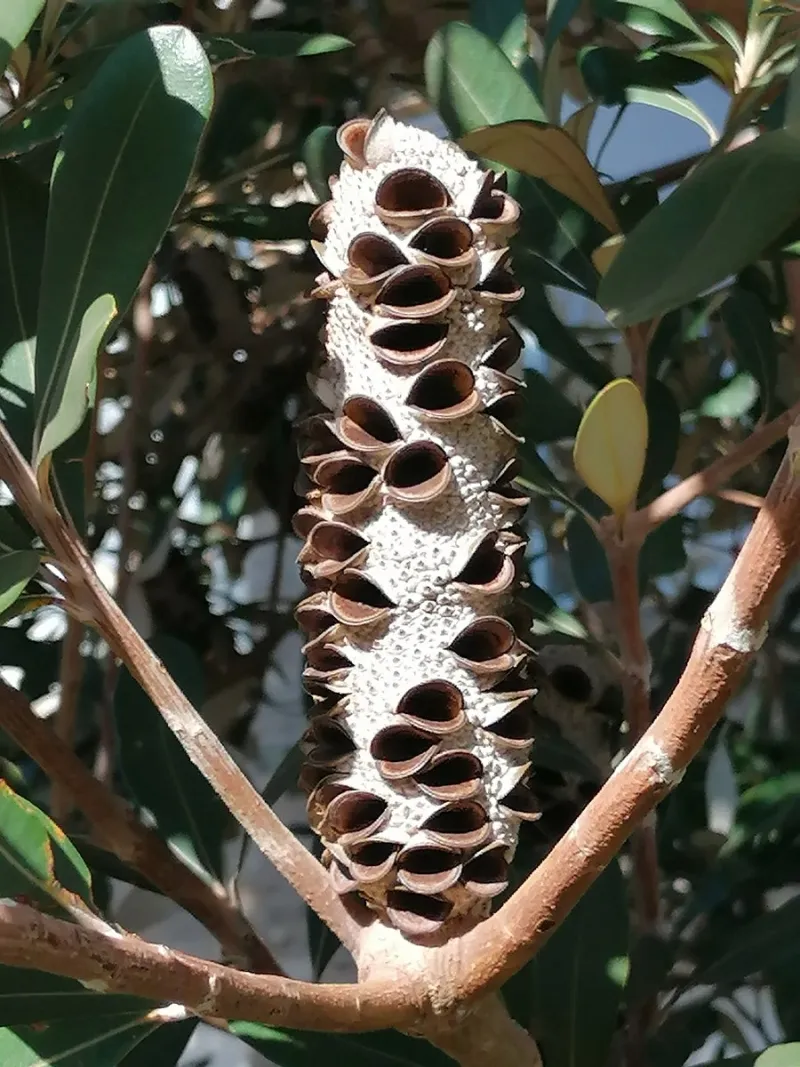
The curious seed pods of this tree resemble pine cones from another planet; they are so hard and durable that they are sometimes used in wood working, and we've seen them lathed into fantastic pepper grinders. In nature these pods protect the seeds until they are burned, releasing the seeds and activating them to renew this trees life-cycle.
Stories featuring this plant
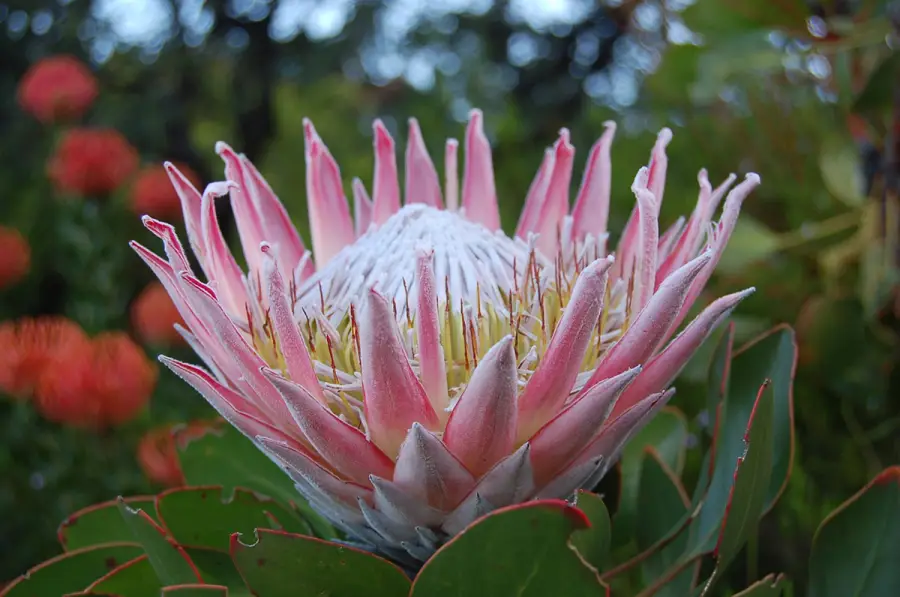 Garden storyThe Beautiful and Varied Blooms of the Protea FamilyAmong the proteaceae there is a vast variety of exotic flowers, and many of these plants have a long blooming season, especially here in coastal California, where the weather mimics their native South African and Australian coastal landscapes.
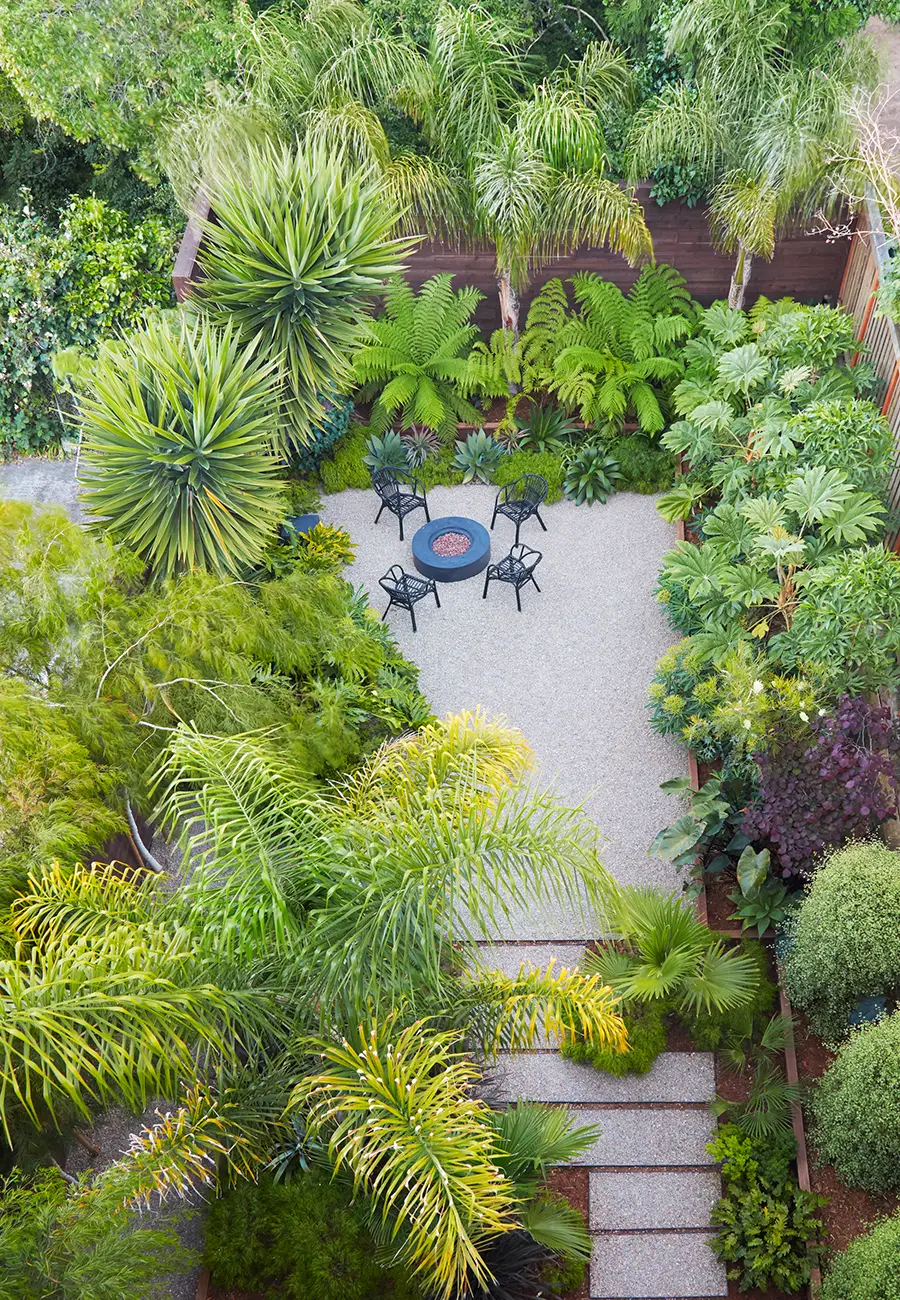 Garden storyUnderstanding Your Climate: Here's Why Coastal California is Paradise for Plant LoversWe all know San Francisco has lots of fabulous quirks, and the climate is one of the weirdest. For visitors and newcomers, our weather can be a puzzle, but for plant nerds (like all of us here at Flora Grubb Gardens), this particular puzzle is what makes San Francisco a gardening paradise.
What we've learned from growing this plant ourselves and in our customers' gardens. We always love to hear more. Tell us
© 2020–2026 Grubb and Nadler. All rights reserved.