
Asplenium ‘Austral Gem’
Austral Gem fern
Growing it outdoors
Although it grows very happily outdoors, a plant that has lived indoors may sunburn at first if it's moved straight into the sun. It will recover.
 Height | 18–24in |
|---|---|
 Width | 1–2ft |
 Tolerates | Fog, Moist Soil, Pots, Salt |
 Water needs | Moderate – High |
Water this plant regularly and deeply, when the surface of the soil has dried. Usually this is once or twice a week in dry weather. | |
 Hardy to | 23°F |
 Exposure | Full Shade – Part Sun |
 Plant traits | Clumping, Foliage Feature |
 Drainage | In Ground: Planting Mix, In Pots: Potting Soil |
 Fertilizing | All Purpose |
 Origin | Hybrid, E Australia |
 California native | No |
 Sunset zones | 15–17, 20–24, H1, H2 |
Growing Notes
The leathery leaves of this asplenium, a bird nest fern relative, make this plant more resilient to low humidity. While it prefers ample water, it won't shrivel and die with a missed watering or two. If you struggle to keep typical ferns happy this one might be the one for you!
Growing it indoors
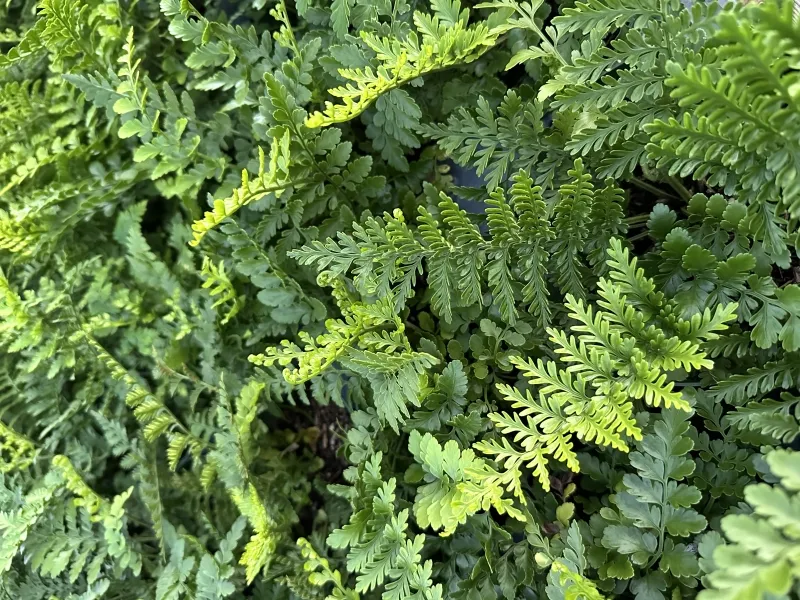
Durable lacy fern doesn't get tippy in low humidity. Great in pots or as a filler in a woodland or tropical garden design. Sterile and without spores. Tolerates coastal exposure.
| Height | 18–24in |
|---|---|
| Width | 1–2ft |
| Water needs | When soil surface is damp. |
Fully saturate this plant when the surface of the soil feels nice and dry. It will also tolerate drying out in the top inch or so of the pot, but doesn't want to dry out completely. | |
| Exposure | Low Light – Bright Indirect |
| Plant traits | Clumping, Foliage Feature |
| Drainage | In Pots: Potting Soil |
| Fertilizing | All Purpose |
| Origin | Hybrid, E Australia |
Which store do you shop at?
Special Interest
Asplenium dimorphum x difforme
This plant makes little baby ferns on the leaves that can be removed and planted. In nature this common fern adaption helps this fern to 'walk' across the forest making colonies. They don't typically spread in the garden, but you may find a fern popping up here or there near the base of your plant.
More Info
Isn't this a houseplant? Well that's a tricky question. In general this type of plant makes a great houseplant, but this specific plant hasn't been grown to be a houseplant. Houseplants are grown under regulated conditions and with sterile soil setting them up to thrive in your home. When outdoor grown plants are taken indoors they tend to transition poorly, often becoming magnets for pests. That said, if you insist on taking this plant indoors here's some advice to help you out. Start by unpotting the plant and removing any loose soil without damaging the roots. Next preemptively treat the entire plant, including the roots with an insecticidal soap. Use a new nursery can or sterilize the previous one with bleach. Repot the plant in a fresh mix and then water deeply with the insecticidal soap mix. Be sure to keep an extra close eye out for any pests that might pop up. Always consider the risk of introducing pests to your other houseplants.
Links
The above information reflects the observations of Grubb and Nadler and our extended plant community. We always consider input from fellow horticulturists and welcome feedback from those with additional information on the culture of this plant.
© 2020–2026 Grubb and Nadler. All rights reserved.