
Asplenium nidus
bird nest fern
Growing it outdoors
Although it grows very happily outdoors, a plant that has lived indoors may sunburn at first if it's moved straight into the sun. It will recover.
 Height | 1–3ft |
|---|---|
 Width | 3–4 |
 Tolerates | Cool Summers, Fog, Pots |
 Water needs | Moderate – High |
This fern is adaptable to moderate to high levels of moisture. If drainage is very sharp it's happy to be consistently moist, but also perfectly content to have the surface layer of soil dry out between waterings. If pushed too far, drying out most of the way or even all of the way through the pot, the leaves will develop large patches of brown dry marks. This isn't critical to the plants health, as long as consistent watering is restored, but will leave sightly damage while new leaves emerge. | |
 Hardy to | 32°F |
 Exposure | Full Shade – Part Sun |
 Plant traits | Epiphyte, Foliage Feature, Suckering, Tropical |
 Drainage | In Ground: Cactus Mix, In Pots: Cactus Mix, Tolerates Sandy Soil |
 Fertilizing | Acid 1/2 Strength, All Purpose |
 Origin | SE Asia, E Australia, Polynesia, E Africa |
 California native | No |
 Sunset zones | 17, 21–24, H2 |
Growing Notes
We've grown this plant indoors and out in Coastal California and have been impressed by the plants versatile and durability in various conditions.
Being epiphytic this plant typically has lightly acidic medium, but also responds to all purpose fertilizer just as well.
We love this plant as a houseplant as the big leathery leaves are so so easy to wipe dust off of, unlike many other houseplants.
Growing it indoors
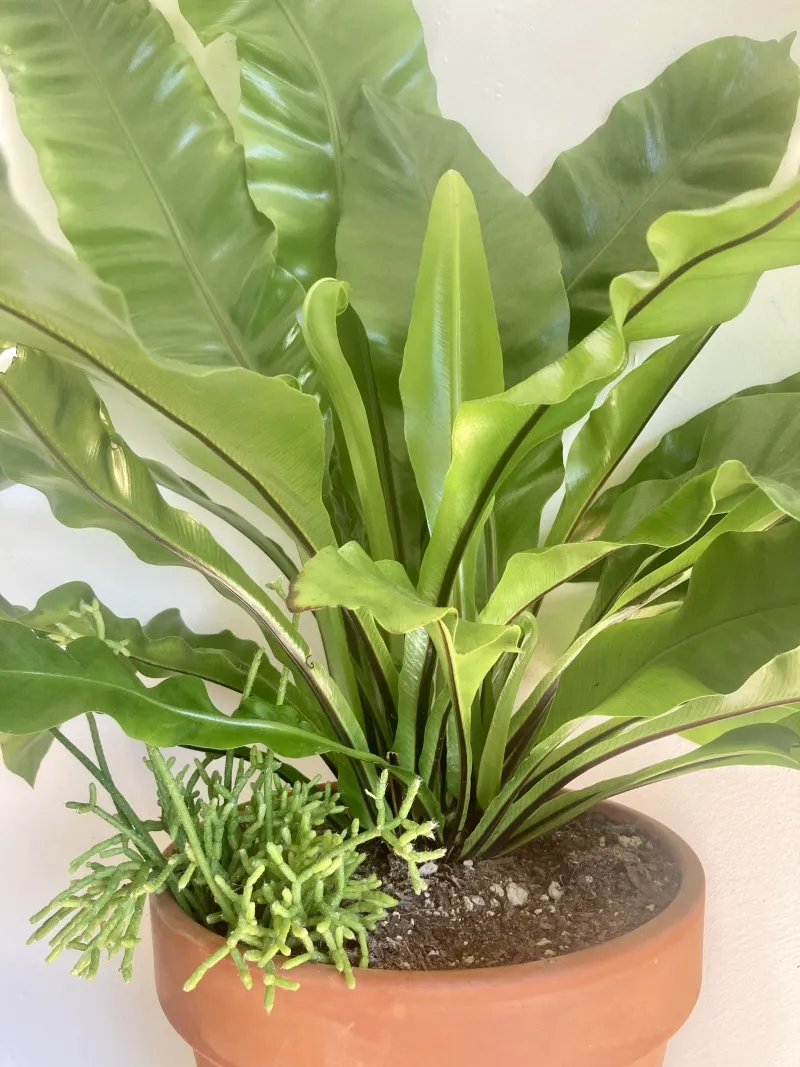
Smooth, undivided apple green fronds compose a nest-like plant. Epiphytic fern appreciates good drainage and does well mounted or in pots.
| Height | 2–4ft |
|---|---|
| Width | 2–4ft |
| Water needs | When soil surface is damp. |
Water when soil surface is still damp. This plant likes to stay evenly moist. When you touch the surface and it's no longer squishy and soggy, but feels like a well-wrung sponge, it's time to water. Often these plants can be left in a little standing water to extend the watering cycle. This plant could be watered several times a week, or less if lleft standing in some water each watering cycle. Remember a smaller pot will dry out faster, so if it's a tiny 4 inch pot you might water daily. | |
| Exposure | Bright Indirect |
| Plant traits | Epiphyte, Foliage Feature, Suckering, Tropical |
| Drainage | In Pots: Cactus Mix |
| Fertilizing | Acid 1/2 Strength, All Purpose |
| Origin | SE Asia, E Australia, Polynesia, E Africa |
Growing Notes
Since this plant likes water, but is often epiphytic (living in the cracks of trees) in nature it's especially important to have good drainage.
Can be mounted using sphagnum moss, or a mix of sphagnum moss and orchid bark. Attach to a panel, tree, fence or rock. Use fishing line or nylon that won't decompose over time.
Which store do you shop at?
Special Interest
Amazing mounted plant; viewed from below dappled light glows through the green leaves like panels of tinted glass.
More Info
This plant has been grown to be a houseplant, but also excels outdoors in mild climates. See sunset zones if you are interested in growing this plant outside. Also note that anytime a houseplant is moved outside some transitional stresses should be expected, including burning (when a plant that can and in fact would often prefer to grow in direct sunlight has not been cultivated in direct sun) and also drooping or leaf drop (usually associated with a shift in temperature.) Planting outdoors during mild weather will help negate these effects and generally if properly cared for this plant will rebound from them with new acclimated growth.
The above information reflects the observations of Grubb and Nadler and our extended plant community. We always consider input from fellow horticulturists and welcome feedback from those with additional information on the culture of this plant.
© 2020–2026 Grubb and Nadler. All rights reserved.