
Cussonia paniculata ssp. sinuata
cabbage tree
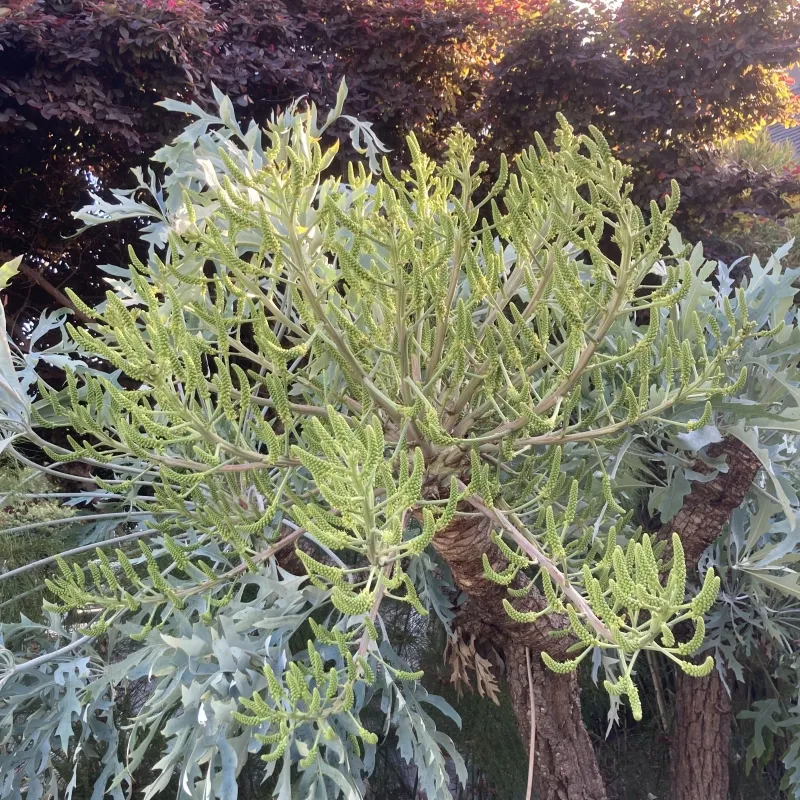
Slow-growing small tree with exotic blue foliage on palm-like trunk. Sinuata subspecies has extra-lacy leaves. Accent plant good in containers too. Drought tolerant, water for faster growth.
In stock in San Francisco and Los Angeles
from $29.95
 Mature size | 4–15ft tall 4–12ft wide |
|---|---|
 Exposure | Part Sun – Full Sun |
 Hardy to | 20°F |
 Sunset zones | 9, 13–24, H1, H2 |
 Water needs | Low – Moderate Cussonias grow a tangle of thick succulent roots that make them quite drought tolerant once established. Deep summer watering every two weeks to a month once established is recommended. If they have good drainage, they also take well to frequent irrigation, increasing growth. If you are growing cussonias in heavy soil, be sure to let them go almost totally dry between waterings. If the tree is getting too much water, you may see rot running vertically on the trunk. Occasionally plants will recover, but should be cut below the lowest area of rot. |
 Tolerates | Drought, Deer, Heat, Pots |
 Plant traits | Caudiciform, Foliage Feature, Sculptural, Tree, Tropical |
 Drainage | In Ground: Cactus Mix, In Pots: Cactus Mix, Tolerates Sandy Soil |
 Fertilizing | All Purpose |
 Origin | E South Africa |
Similar plants
Growing Notes
Upright and palm-like when young, Cussonia will become a branched tree with corky bark in great age.
This tree can be cut back hard and will sprout many new heads from the cut. Cussonia can even be cut to the ground and it will regrow (once well established). Alternatively, it will usually branch once it matures and has its first bloom.
Roots and trunk are aggressive so keep away from drains, etc.
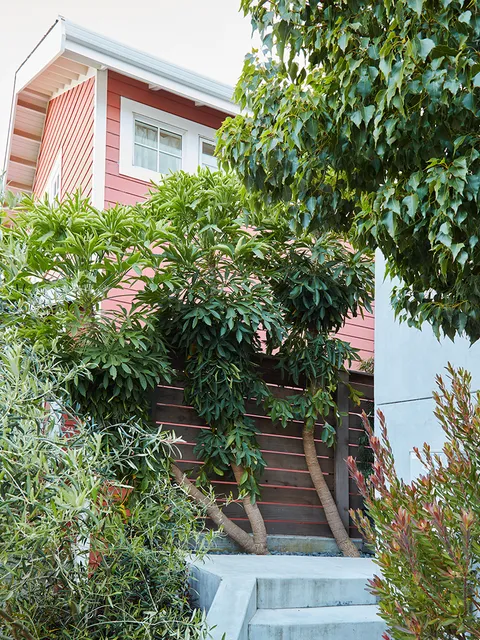
Plant them on an angle and they will grow upward from there, creating a fun curve in the trunk.
Cussonias will sometimes defoliate and then send out a multitude of new branches that should be thinned to the desired form (this is often associated with blooming). Occasionally flowering stunts the plant, and preemptively removing the flowers can help with regrowth.
Being very succulent, Cussonias are only mildly hardy. Entire trees can perish when exposed to temps in the low 20s. In areas where these cold temps are frequent, plants can resprout from the roots and be treated as a woody foliage perennial.
Special Interest
Corky bark and yellow-green flowers, loved by birds, add interest. The corky bark was once used for wagon brakes in Cussonia's native southern Africa.
Cussonias can be planted elevated on a mound; as the dirt washes away, thick roots will be exposed in bonsai style. Or you can replant in a pot every few years, lifting the roots each time to expose the sculptural roots.
What we've learned from growing this plant ourselves and in our customers' gardens. We always love to hear more. Tell us
© 2020–2026 Grubb and Nadler. All rights reserved.