
Deuterocohnia (Abromeitiella) brevifolia
Argentine ball
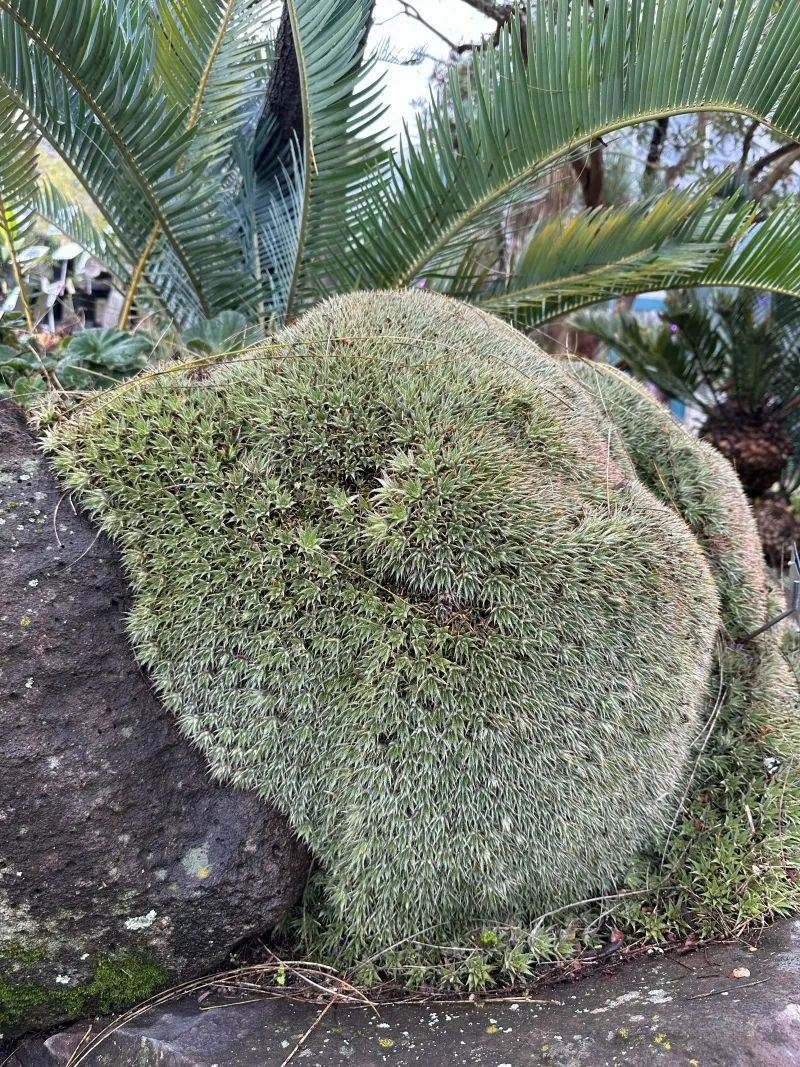
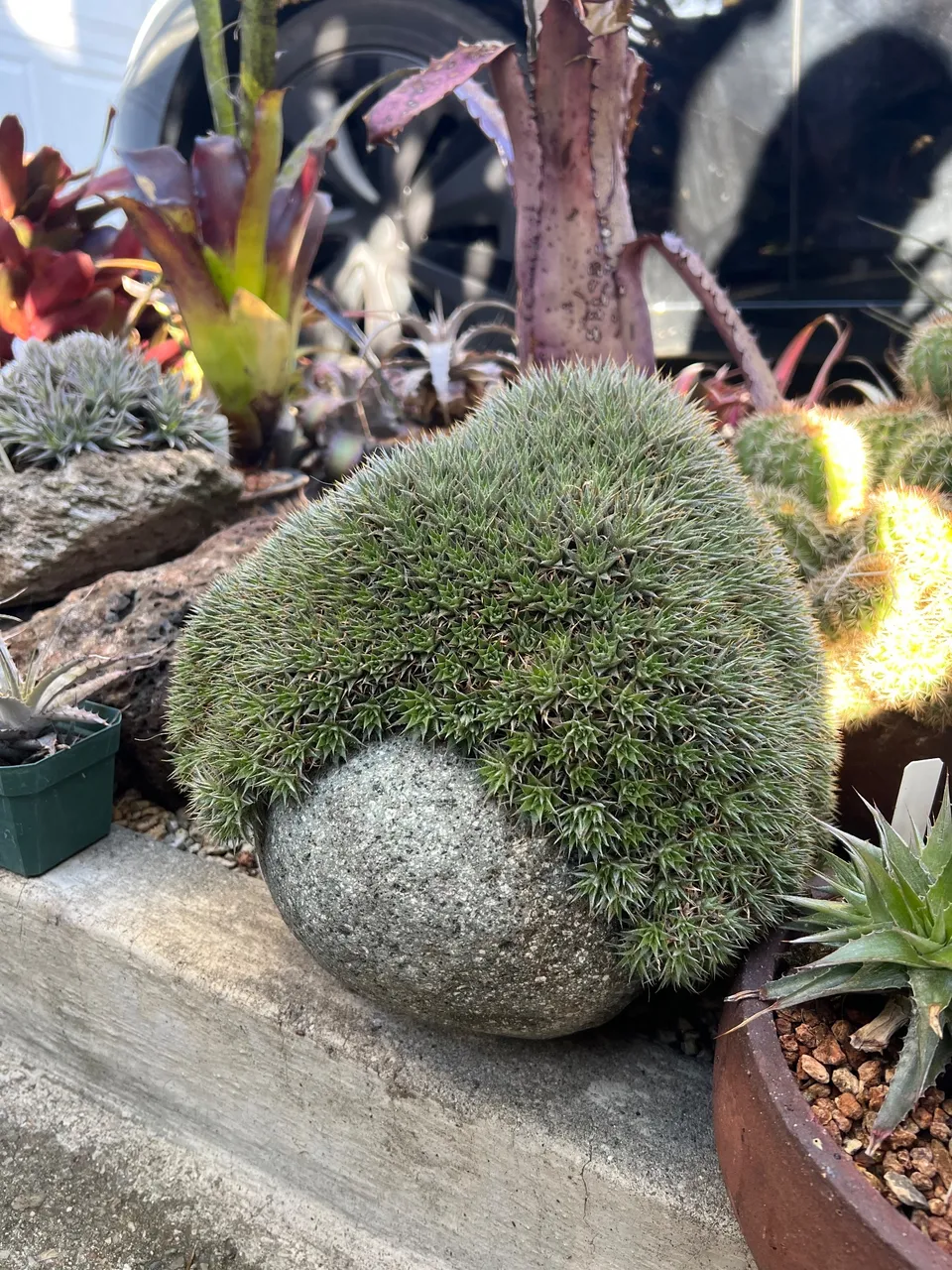
Clustering succulent bromeliad slowly develops into coral-like spreading mounds. An extraordinary sight! The prize of any garden.
 Mature size | 2–12in tall 1–6ft wide |
|---|---|
 Exposure | Part Shade – Full Sun |
 Hardy to | 25°F |
 Sunset zones | 15–17, 19–24 |
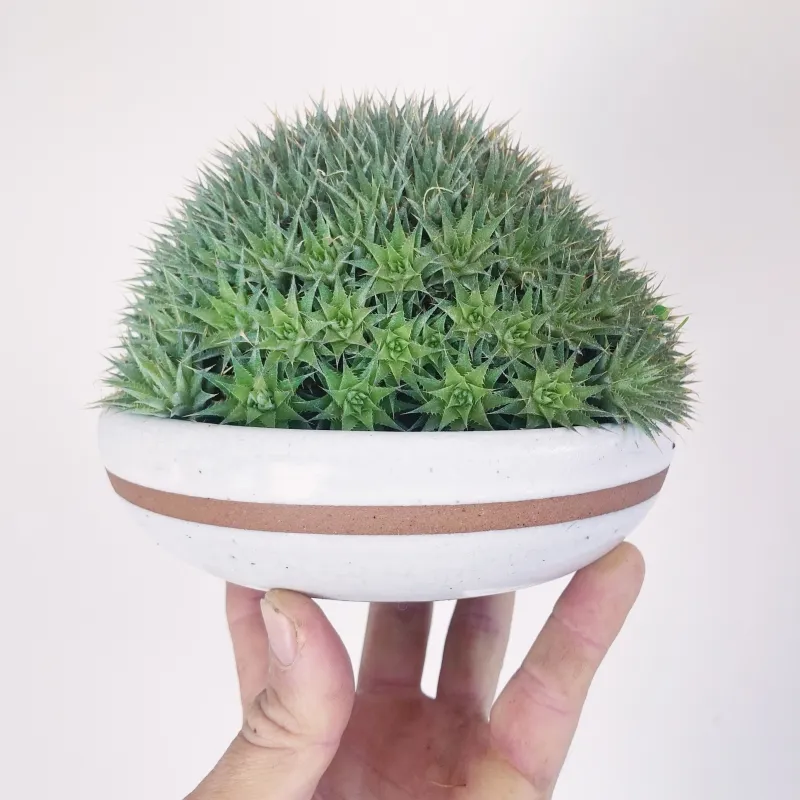
 Water needs | Low Tolerant of a wide range of watering as long as the soil is very gritty and well drained. Generally watering during winter is unnecessary unless winter rains fail. Give ample water during summer, letting the plant go around half dry, when temperatures rise. This encourages this slow growing plant to move along a bit! Be sure to water from above, evenly covering the entire surface. This plant will grow in an inch of soil in a tiny dish, but you'll want to water it consistently up to a couple times a week during hot summer days. |
 Tolerates | Drought, Deer, Heat, Pots, Rooftops, Wind |
 Plant traits | Armed, Bromeliad, Ground Cover, Rock Garden, Rosette, Spreading |
 Drainage | In Ground: Cactus Mix, In Pots: Cactus Mix, Requires Perfect Drainage, Tolerates Sandy Soil |
 Fertilizing | All Purpose |
 Origin | Argentina, Bolivia |
 Synonyms | Abromeitiella brevifolia |
Growing Notes
The most important factor when growing this plant is drainage. We recommend mixing equal parts cactus mix and pumice for our Northern California gardeners, but it can also be grown in straight cactus mix in areas with dryer winters.
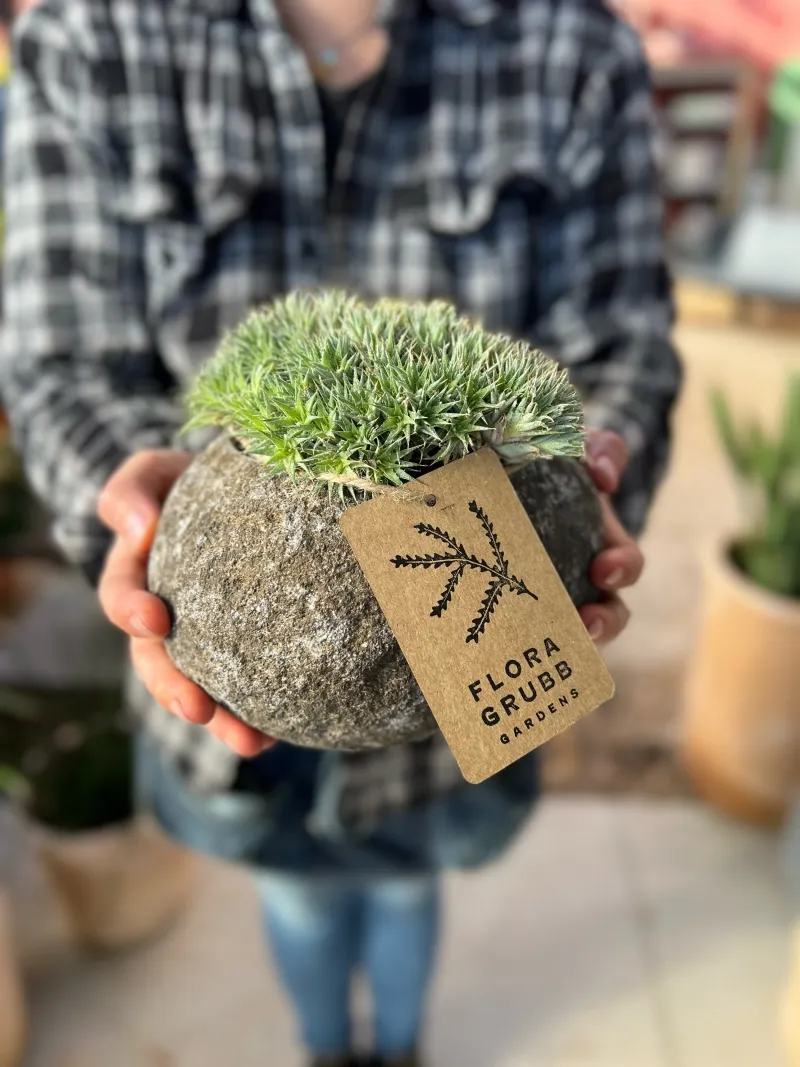
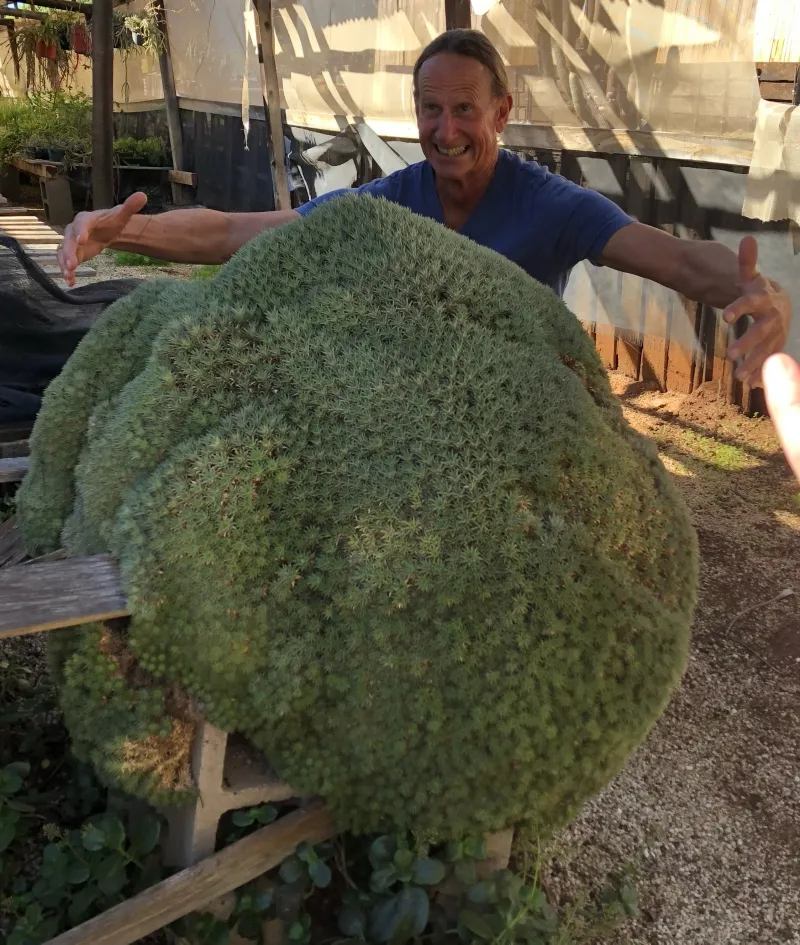
A single rosette of this plant is an inch or two across, giving it the title of worlds smallest bromeliad, but this plant steadily multiplies into hundreds or even thousands of heads eventually. A mature colony can be five feet or more across. Plant them a couple feet apart to get a continual undulating mass over time.
Individual plants can be divided and rooted to start a new colony, but generally it's best to divide off chunks of several heads instead.
Spring blooming with small tubular green flowers. The flowers are almost unnoticeable against such an impressive parent plant, but still the flowers are fun and add interest.
Browning leaf tips can occur on this plant, likely from under watering or exposure to extreme heat or cold.
Special Interest
This plant is well known for engulfing pots. One grower we know repots them once they approach the bottom of their pot. He puts them in the next size up, pot and all. After several iterations of this he laughed that, "If you X-rayed my plant it would look like a stack of Russian dolls." Other growers let their plant eat one pot and then just leave it --- growing as a mounded mass on the ground or hardscaping.
More Info
There is some confusion over the nomenclature on this plant. The information here is in regards to the smaller form of Deuterocohnia. Many call this form Deuterocohnia brevifolia ssp. chlorantha. We currently see no need to add this subspecies name, as the species name Deuterocohnia lorentziana already clearly identifies the larger leafed form.
Links
What we've learned from growing this plant ourselves and in our customers' gardens. We always love to hear more. Tell us
© 2020–2026 Grubb and Nadler. All rights reserved.