
Eucalyptus lunata ‘Moon Lagoon’
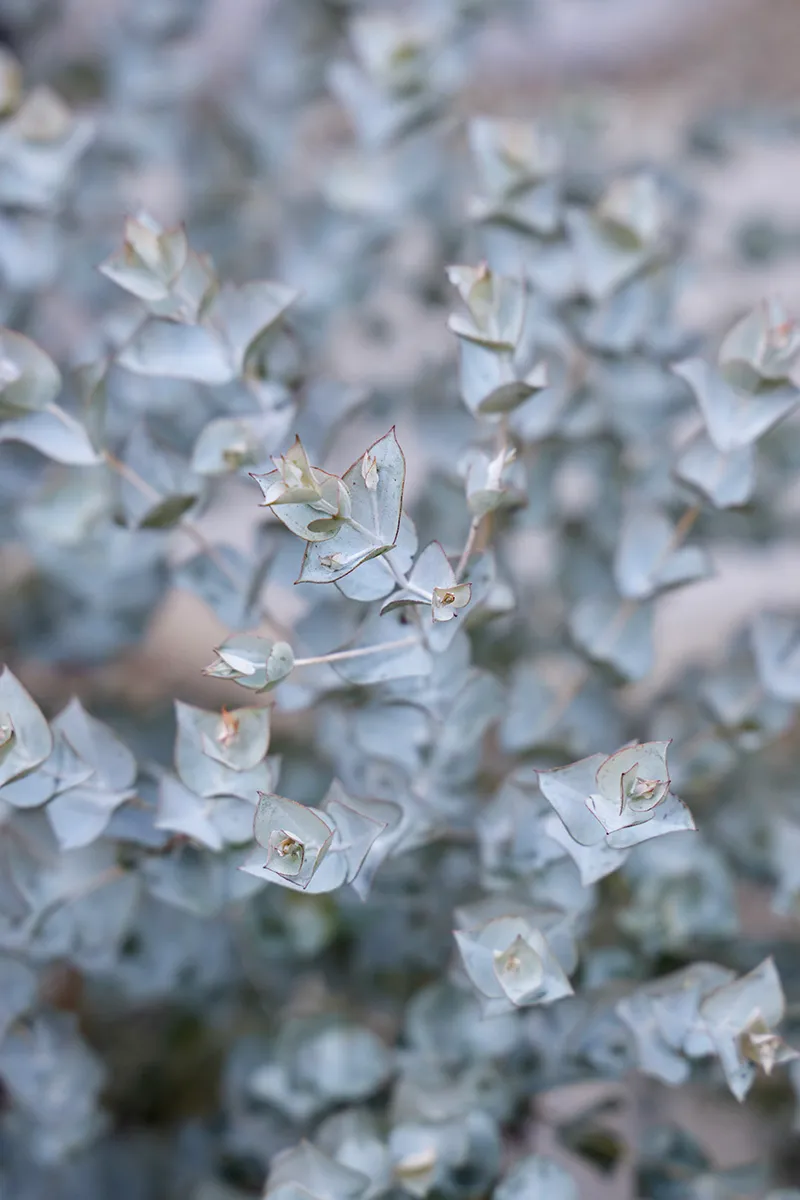
A bushy, sparklingly blue shrub for pots and sunny garden spots. Dense young growth becomes treelike, willowy and green in maturity.
 Height | 4–8ft |
|---|---|
 Width | 6–12ft |
 Tolerates | Drought, Pots, Salt, Wind |
 Water needs | Low – Moderate |
This tree should be watered deeply and regularly (when the top couple of inches of soil has dried). Usually this will mean once every week or two during dry weather. A few years after the tree has been planted, once it's established, you can likely cut back to deep infrequent waterings. Use drippers, emitters a slow stream of water so that it doesn't run off; allow the water to trickle all the way down through the deepest layers of soil. Often a tree will tap into groundwater and need less watering or none at all, once established. A great trick for watering street trees is to drill an eight inch hole on the bottom edge of a 5-gallon bucket, then set the bucket with the hole aligned next to the tree and fill the bucket with water. Fill once for a tree that came in a 1-to-5-gallon nursery pot, twice for a 7-to-15-gallon plant, three times for 25-gallon or larger plants. | |
 Hardy to | 23°F |
 Exposure | Part Shade – Full Sun |
 Plant traits | Foliage Feature, Fragrant Foliage, Screen, Shrub, Tree |
 Indoor / outdoor | Outdoor |
 Drainage | In Ground: Planting Mix, In Pots: Potting Soil, Tolerates Heavy Soil, Tolerates Sandy Soil |
 Fertilizing | All Purpose |
 Origin | Australia |
 California native | No |
 Sunset zones | 8, 9, 13–23 |
Growing Notes
This trees unique powder blue juvenile growth is sought after and used extensively in the cut flower industry. While it grows into an attractive small tree, this plant is easily maintained as a shrub by cutting it back hard (even to within a few inches of the ground) when mature leaves form. This coppicing reinvigorates the tree, which will send up many new shoots and revert back to juvenile leaves.
Which store do you shop at?
The above information reflects the observations of Grubb and Nadler and our extended plant community. We always consider input from fellow horticulturists and welcome feedback from those with additional information on the culture of this plant.
© 2020–2026 Grubb and Nadler. All rights reserved.