
Schefflera actinophylla ‘Amate’
large leaved umbrella tree
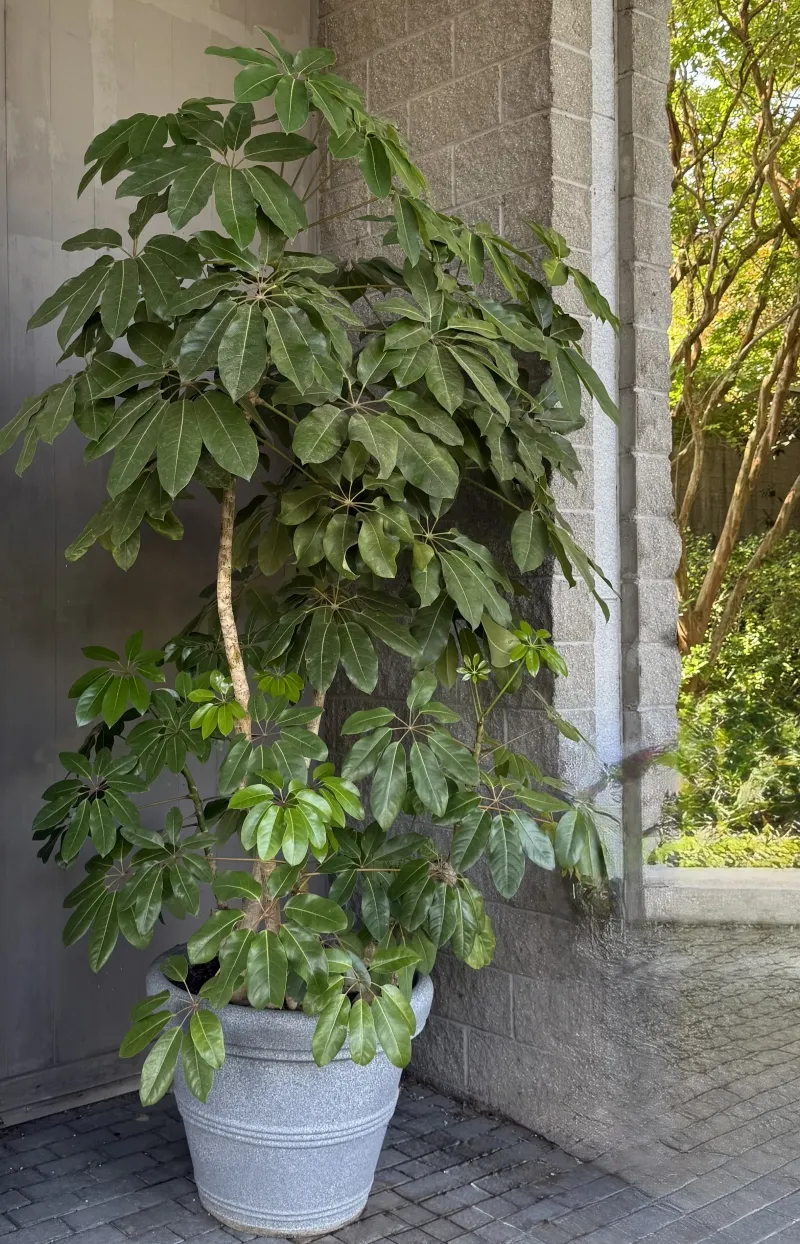
Growing it outdoors
Although it grows very happily outdoors, a plant that has lived indoors may sunburn at first if it's moved straight into the sun. It will recover.
 Mature size | 3–10ft tall 3–5ft wide |
|---|---|
 Exposure | Moderate Indirect – Partial Direct |
 Hardy to | 29°F |
 Sunset zones | 17, 21–24, H2 |
 Water needs | When soil is mostly dry. This plant wants the top two thirds of its soil to dry out between waterings, while always having some moisture left deep in the pot. Generally the plant will want water every one to three weeks. |
 Tolerates | Heat, Pots |
 Plant traits | Foliage Feature, Shrub, Tropical |
 Drainage | In Ground: Planting Mix, In Pots: Potting Soil |
 Fertilizing | All Purpose |
 Origin | Selection, Australia |
Growing Notes
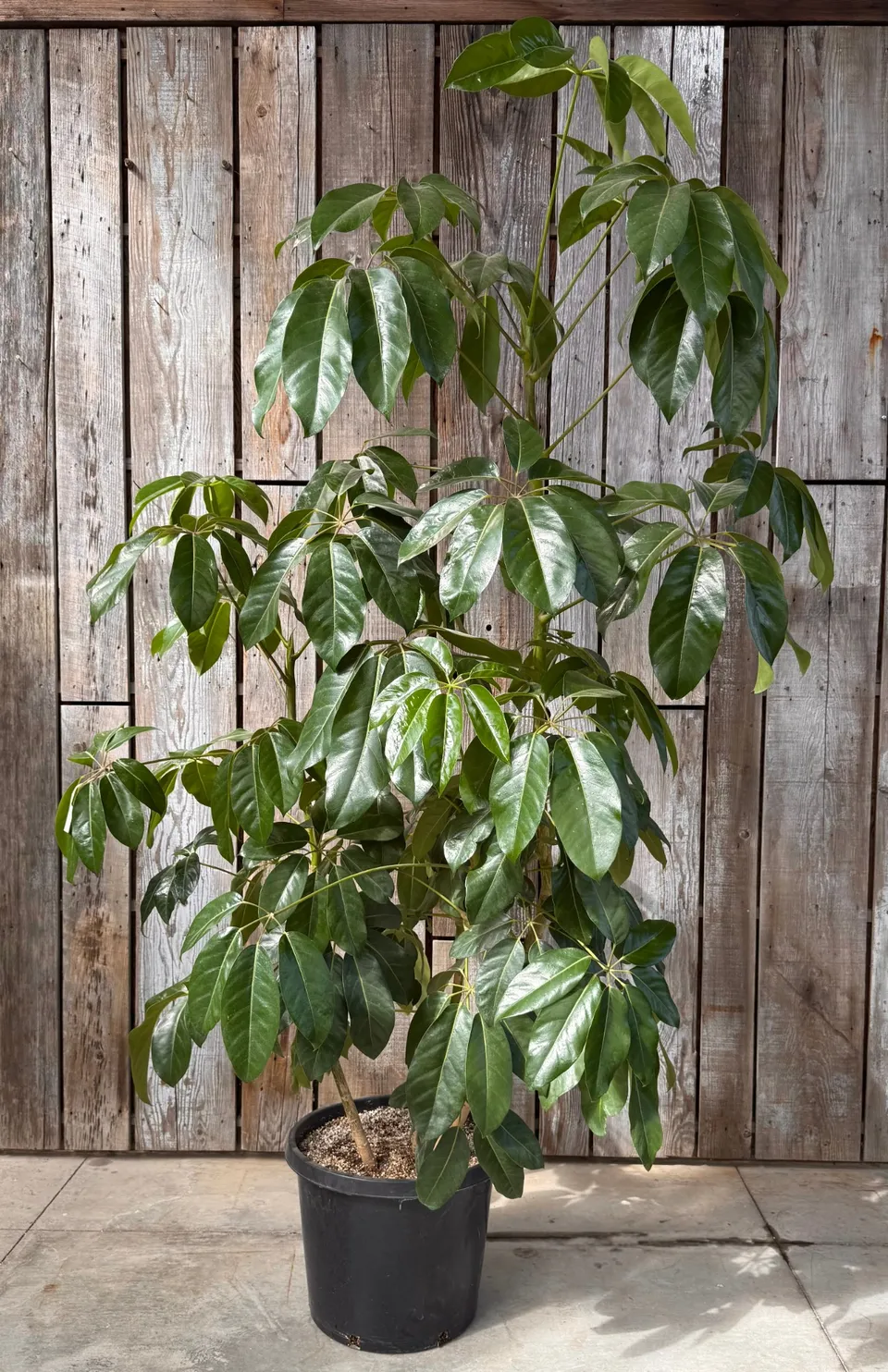
The cultivar 'Amate' has better resistance to mites, possibly due to its glossy leaves, making it a great choice for drier rooms without airflow. We also just love that glossy shine, so pretty!
Some also report that the darker leaves allow it to tolerate lower light conditions than typical actinophylla.
The lowest leaves will naturally turn dry and brown, and then shed as they are replaced by new growth. It's totally natural to see browning 'dying' lower leaves as long as the plant is happy and growing.
If this tree ever gets too tall you can prune it back to a lower height; it will regrow, often with multiple growth points, from where it was pruned. This is best done in spring or early summer when the plant is actively growing. The top can be rooted, and in fact when you see large stumpy specimens of this plant they are usually rooted cuttings of large trunk segments.
Growing it indoors
Tropical foliage feature. The cultivar 'Amate' has smaller darker leaves that are more succulent and glossier; it is also overall a smaller plant. Shrubby when young, treelike with age.
| Mature size | 3–10ft tall 3–5ft wide |
|---|---|
| Exposure | Bright Indirect – Partial Direct |
| Water needs | When soil is mostly dry. This plant wants the top two thirds of its soil to dry out between waterings, while always having some moisture left deep in the pot. Generally the plant will want water every one to three weeks. |
| Plant traits | Foliage Feature, Shrub, Tropical |
| Drainage | In Pots: Potting Soil |
| Fertilizing | All Purpose |
| Origin | Selection, Australia |
Growing Notes
The cultivar 'Amate' has better resistance to mites, possibly due to its glossy leaves, making it a great choice for drier rooms without airflow. We also just love that glossy shine, so pretty!
Some also report that the darker leaves allow it to tolerate lower light conditions than typical actinophylla.
The lowest leaves will naturally turn dry and brown, and then shed as they are replaced by new growth. It's totally natural to see browning 'dying' lower leaves as long as the plant is happy and growing.
If this tree ever gets too tall you can prune it back to a lower height; it will regrow, often with multiple growth points, from where it was pruned. This is best done in spring or early summer when the plant is actively growing. The top can be rooted, and in fact when you see large stumpy specimens of this plant they are usually rooted cuttings of large trunk segments.
Which store do you shop at?
Special Interest
Rumor has it that 'Amate' was named for nursery grower Archie Amate, who noticed it growing in a batch of typical actinophylla seedlings. His chosen plant has since been replicated through tissue culture, keeping the cultivar consistent for over twenty years!
More Info
This plant has been grown as a houseplant, but it also excels outdoors in mild climates. See Sunset zones if you are interested in growing this plant outside. Also note that anytime a houseplant is moved outside, some transitional stresses should be expected, including burning (when a plant that can and in fact would often prefer to grow in direct sunlight has not been cultivated in direct sun) and also drooping or leaf drop (usually associated with a shift in temperature). Planting outdoors during mild weather will help negate these effects, and if the plant is properly cared for, it should rebound with new acclimated growth.
Links
What we've learned from growing this plant ourselves and in our customers' gardens. We always love to hear more. Tell us
© 2020–2026 Grubb and Nadler. All rights reserved.