
Pittosporum tenuifolium ‘Beach Ball’
Beach Ball pittosporum
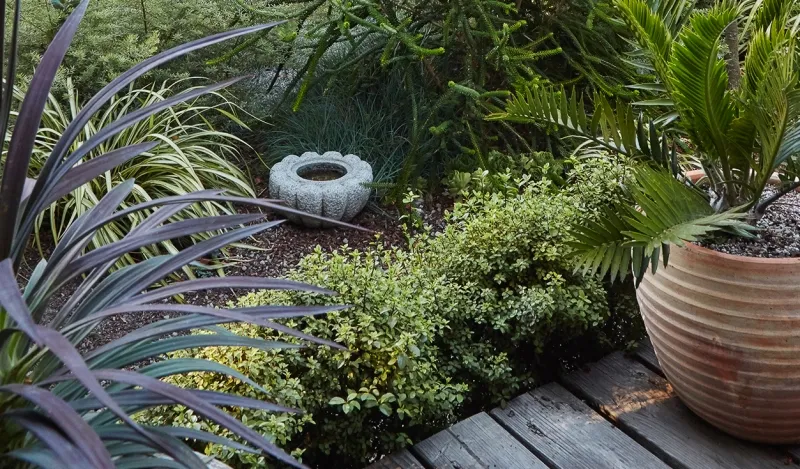
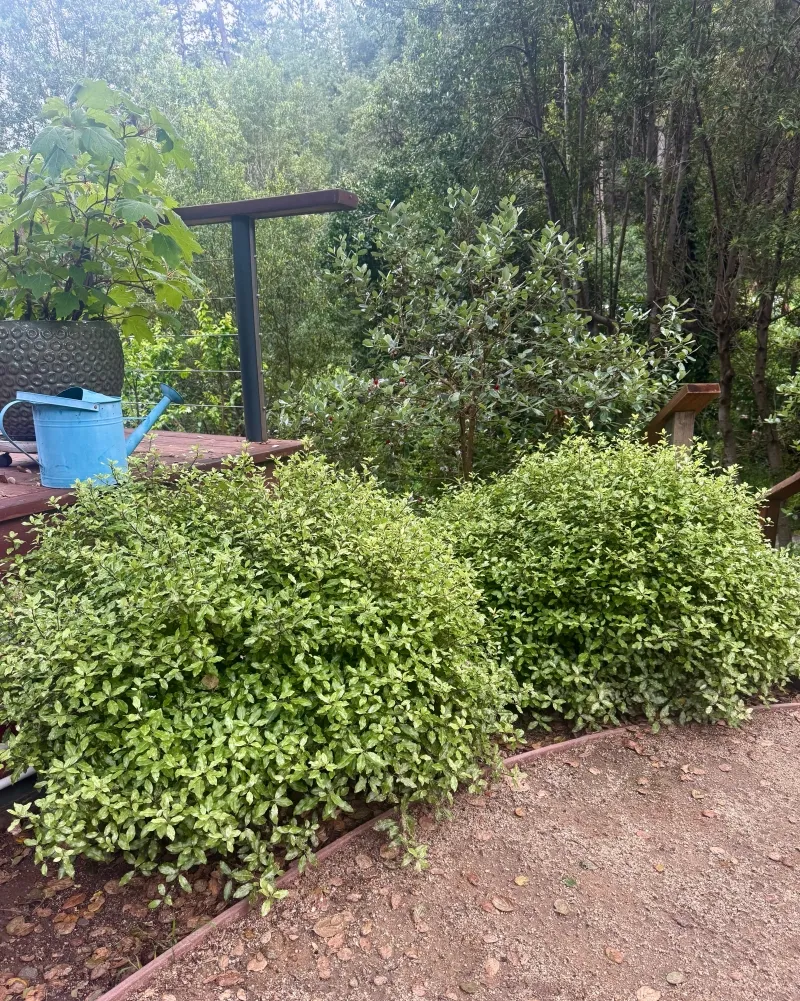
Formal-looking evergreen shrub rarely needs pruning due to its naturally dense habit. Useful planted in multiples and pairs for a traditional design. Good in pots. Smaller than 'Golf Ball'.
 Height | 2–4ft |
|---|---|
 Width | 2–4ft |
 Tolerates | Coast, Cool Summers, Drought, Fog, Pots, Wind |
 Water needs | Low – Moderate |
Pittosporums are drought tolerant enough to live in coastal California without additional water once established, but they need regular deep water to look full and lush and will partially defoliate if allowed to go completely dry. Additionally, some reports suggest they will also defoliate if overwatered in heavy soil during winter. Luckily they usually bounce back fairly quickly once appropriate water is reestablished. Usually this means a weekly watering for a mature plant, but it could be less if the plant is in some shade, close to the coast, or in heavy soil. | |
 Hardy to | 18°F |
 Exposure | Part Sun – Full Sun |
 Plant traits | Fragrant Flower, Hedge, Shrub |
 Indoor / outdoor | Outdoor |
 Drainage | In Ground: Cactus Mix, In Ground: Planting Mix, In Pots: Cactus Mix, In Pots: Potting Soil, Tolerates Heavy Soil, Tolerates Sandy Soil |
 Fertilizing | All Purpose 1/2 Strength |
 Origin | Cultivar, New Zealand |
 California native | No |
 Sunset zones | 9, 14–17, 19–24, H1 |
Growing Notes
Good for small hedges.
Looks great mixed with other topiaries and in 'all foliage' gardens.
Special Interest
Small purple black flowers are not particularly noticeable when they appear in springtime. They smell lightly of honey during the evening, when they attract nocturnal pollinators.
The sap and leaves of pittosporum contain fragrant oils, which were used by the Maori people to freshen their homes. They also use the plant to treat various ailments and recent studies have found that pittospourms contain antimicrobial properties.
Links
In stock today in San Francisco
| 3 gallon | 10 available | $44.95 |
The above information reflects the observations of Grubb and Nadler and our extended plant community. We always consider input from fellow horticulturists and welcome feedback from those with additional information on the culture of this plant.
© 2020–2026 Grubb and Nadler. All rights reserved.