
Rosmarinus officinalis ‘Tuscan Blue’
rosemary
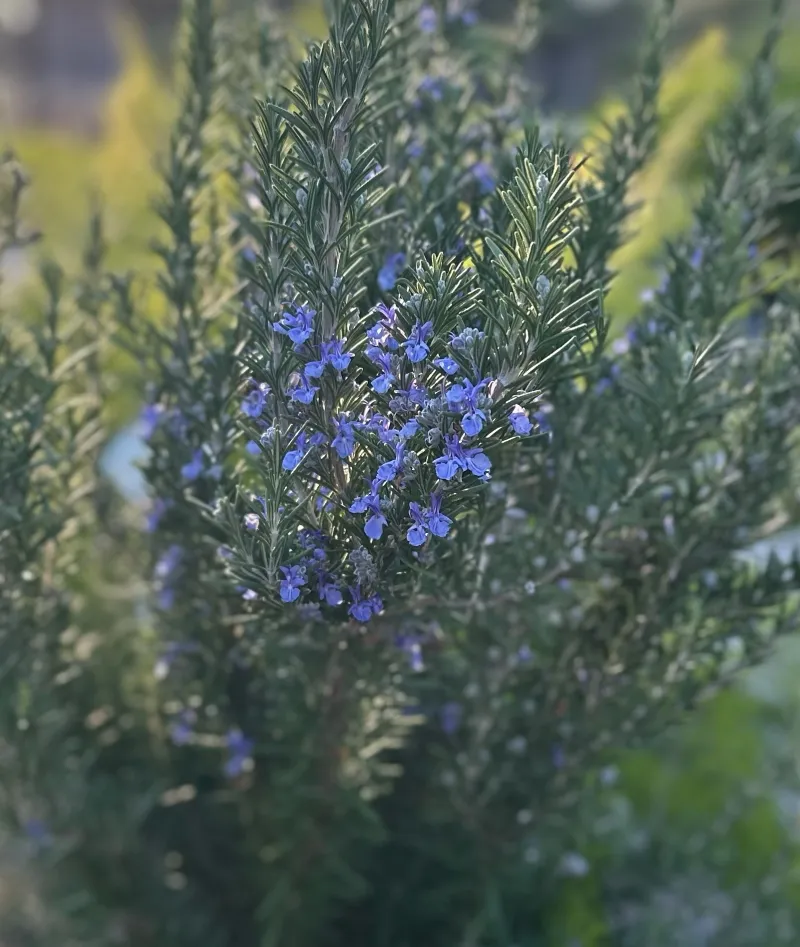
Rosemary, the resinous herb. Rounded landscape shrub with upswept branches. Indigo blue winter-spring bloom attracts bees. Drought-tolerant.
 Synonyms | Salvia rosmarinifolia 'Tuscan Blue' |
|---|---|
 Height | 3–5ft |
 Width | 2–3ft |
 Tolerates | Cold, Drought, Deer, Heat, Pots, Rooftops, Neglect, Salt, Wind |
 Water needs | Low – Moderate |
Water this plant infrequently, when the top two inches or so of soil feel dry. Usually this will mean every week or two in dry weather. If you establish this pattern over several years, then you can cut back to watering every four to six weeks in dry weather, or maybe even not at all. Since this plant is from arid areas of the Mediterranean it is very similar in needs to native California chaparral. This plant also thrives with high levels of watering, as long as the medium is well drained. Use drippers, emitters, or a slow stream of water so that it doesn't run off; allow the water to trickle all the way down through the deepest layers of soil. This plant will look more lush if given water every two to four weeks during dry weather once established. In a pot slowly water the entire surface until water comes out of the bottom of your pot. | |
 Hardy to | 0°F |
 Exposure | Part Shade – Full Sun |
 Plant traits | Bees, Edible, Flowering, Fragrant Foliage, Hedge, Shrub |
 Indoor / outdoor | Outdoor |
 Drainage | In Ground: Cactus Mix, In Pots: Cactus Mix, Tolerates Heavy Soil, Tolerates Sandy Soil |
 Fertilizing | All Purpose, Low Needs |
 Origin | Mediterranean |
 California native | No |
 Sunset zones | 4–24 |
Growing Notes
Rosemary has a handsome form when left untended, but can be sheered into hedges or even topiaries where it has a dense clean look. With its needle-like foliage, rosemary can also be trained into a flawless bonsai.
Consider fire retardancy when planting as rosemary is highly flammable and becomes dense and woody over time.
Resistant to bugs and generally care free.
Special Interest
A foundational plant in the Mediterranean garden design.
Gives bees pollen early in the season, and as such is recommended by beekeepers.
In stock today in San Francisco
| 3 gallon | 2 available | $34.95 |
| 6 inch | 9 available | $14.95 |
The above information reflects the observations of Grubb and Nadler and our extended plant community. We always consider input from fellow horticulturists and welcome feedback from those with additional information on the culture of this plant.
© 2020–2026 Grubb and Nadler. All rights reserved.