
Russelia equisetiformis
firecracker plant
Feathery, thready evergreen shrublet features red tubular flowers much of the year. Arches and cascades over pot edges and walls, and makes a nice small-scale groundcover. Loves heat.
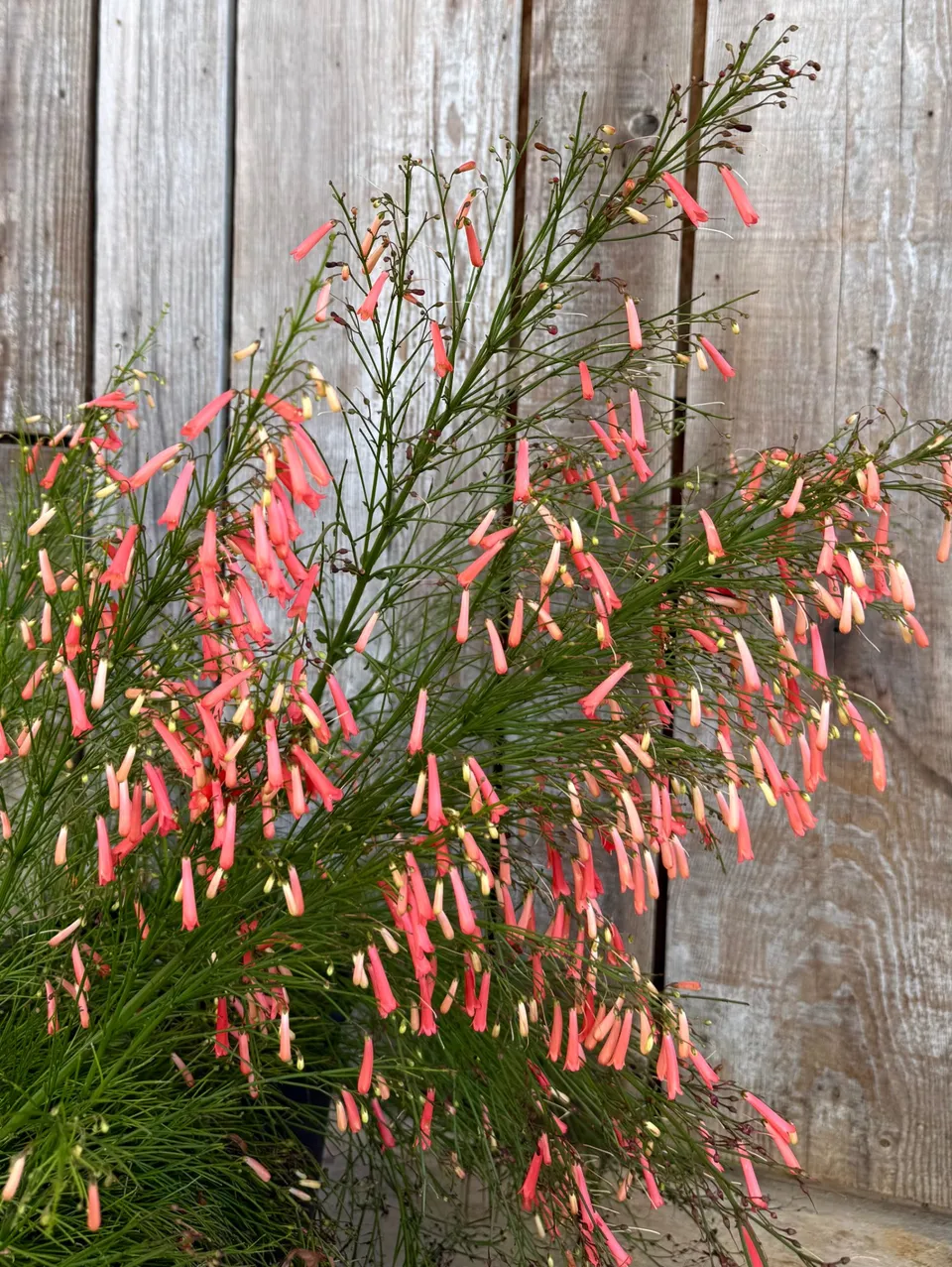
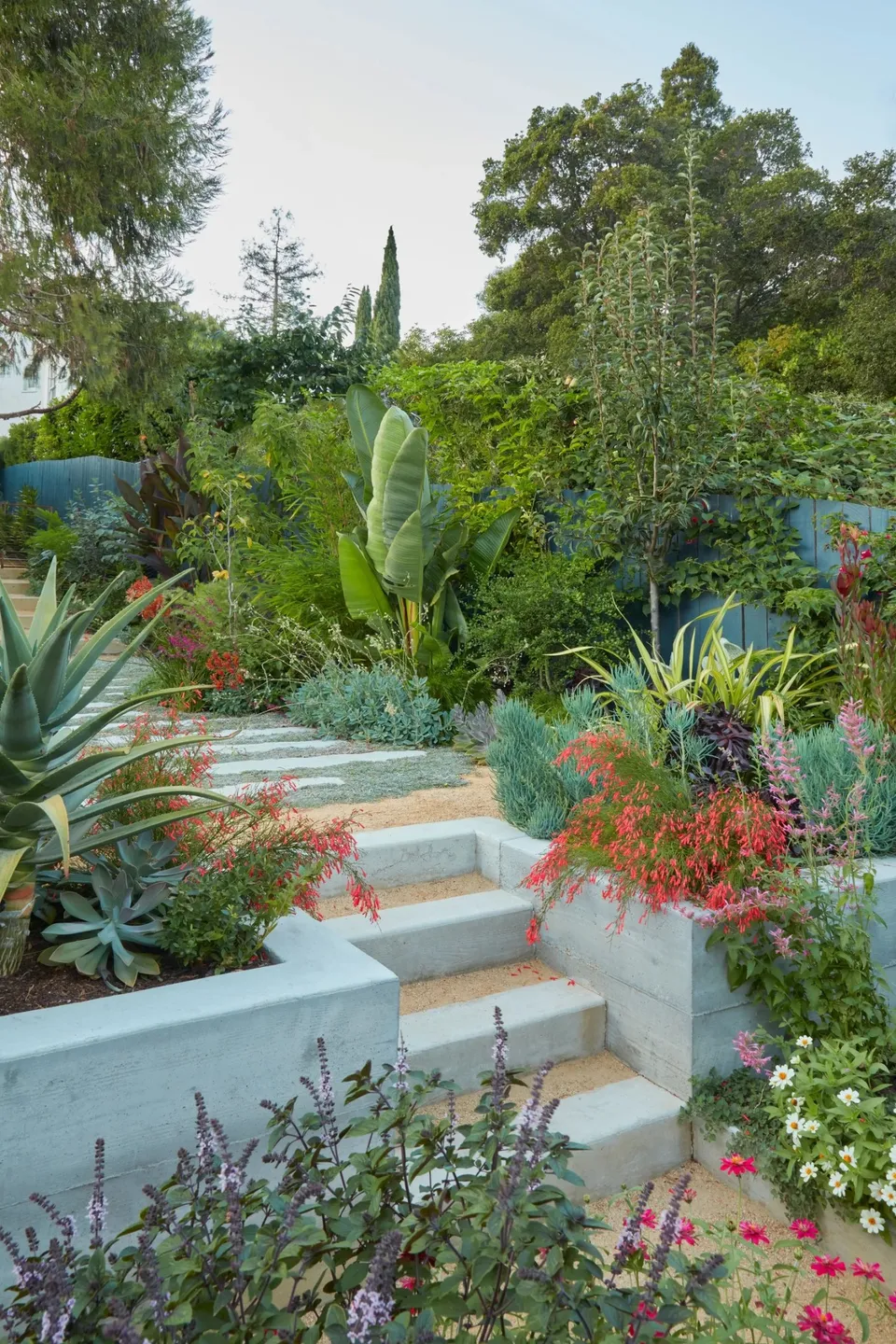
Russelia adds to the beauty of this incredible plant combination by SF Bay Area design firm Pine House Edible Gardens
 Height | 1–5ft |
|---|---|
 Width | 1–5ft |
 Tolerates | Heat, Pots, Rooftops |
 Water needs | Moderate |
For the first three years after it's planted, this plant should be watered deeply but infrequently (when the top three inches of soil or so have dried). After that, it will look best with occasional deep waterings every couple weeks to a month. Use drippers, emitters or a slow stream of water so that it doesn't run off; allow the water to trickle all the way down through the deepest layers of soil. If you find the plant slow to grow in the warm season, increase watering. Though this plant is not very thirsty, never let it go bone dry in a pot. | |
 Hardy to | 25°F |
 Exposure | Part Shade – Full Sun |
 Plant traits | Flowering, Hanging, Humming Birds, Mounding, Tropical |
 Indoor / outdoor | Outdoor |
 Drainage | In Ground: Planting Mix, In Pots: Potting Soil |
 Fertilizing | All Purpose 1/2 Strength |
 Origin | Mexico, Guatemala |
 California native | No |
 Sunset zones | 9, 12–24, H1, H2 |
Growing Notes
If planted on a flat surface, russelia will become a mounding shrub. Next to a wall, in a pot, or on a steep slope, it will arch and cascade, beautifully featuring its brilliant flowers.
It will grow in light shade but produces less bloom.
Flowering occurs in the warmer part of the year and can last throughout the year in mildest areas.
Plants can recover from freezes when spring warms up.
Special Interest
Its tubular red blossoms are the model hummingbird flower, attracting these charming birds whenever they're around.
Links
Which store do you shop at?
The above information reflects the observations of Grubb and Nadler and our extended plant community. We always consider input from fellow horticulturists and welcome feedback from those with additional information on the culture of this plant.
© 2020–2026 Grubb and Nadler. All rights reserved.