
Sansevieria masoniana
Mason's Congo snake plant
The largest sansevieria, with wide strappy leaves up to six feet tall! With sun gets a bluish sheen. Brighter light than other snake plants.
In stock in Los Angeles
from $49
 Mature size | 2–6ft tall 1–3ft wide |
|---|---|
 Exposure | Bright Indirect – Partial Direct |
 Hardy to | 35°F |
 Sunset zones | 22–24, H2 |
 Water needs | When soil is completely dry. Sanevieria are some of the toughest plants out there, as long as you let them go dry between waterings. Generally indoors this will mean watering every three to five weeks. We know a grower who swears by watering their Sansevieria whenever the rent is due. If however you grow this plant in some direct sun it will want water when it approaches dryness or right when it is completely dry. If allowed to go too dry this plant developed crips brown tips. |
 Tolerates | Drought, Heat, Pots, Neglect |
 Plant traits | Sculptural, Succulent, Suckering |
 Drainage | In Pots: Cactus Mix |
 Fertilizing | All Purpose |
 Origin | Congo, Africa |
 Synonyms | Dracaena masoniana (current name) Sansevieria 'Shark Fin' Sansevieria 'Whale Fin' |
Similar plants
- Sansevieria ‘Black Coral’
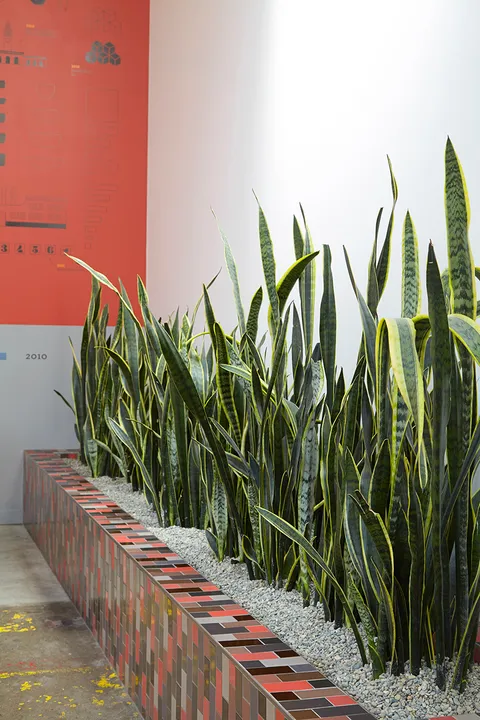 Sansevieria ‘Laurentii’
- Sansevieria ‘Moonshine’
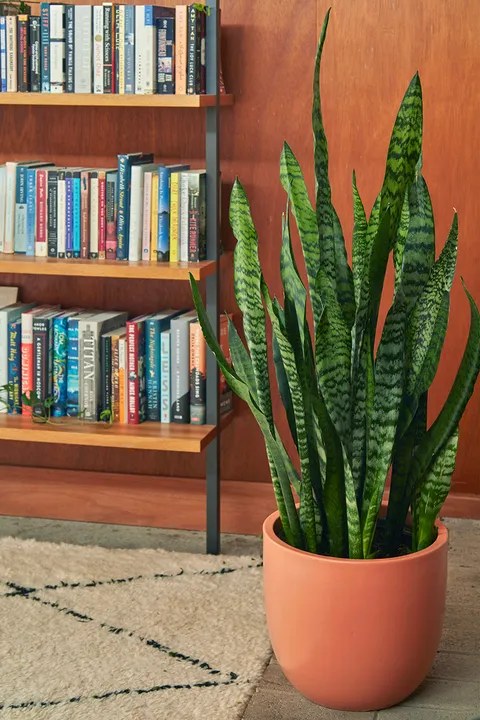 Sansevieria zeylanica
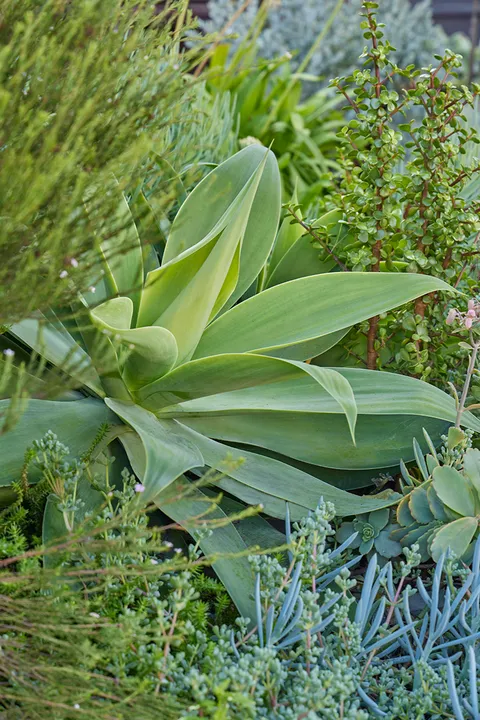 Agave attenuata
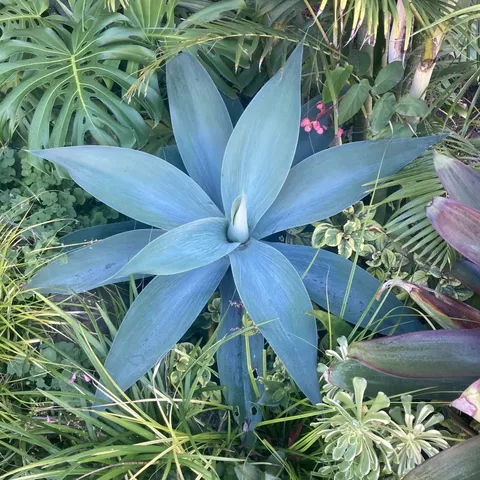 Agave attenuata ‘Boutin Blue’
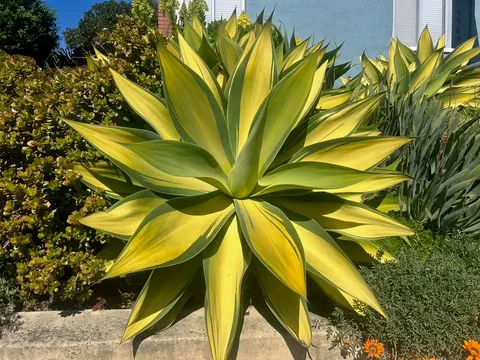 Agave attenuata ‘Kara’s Stripes’
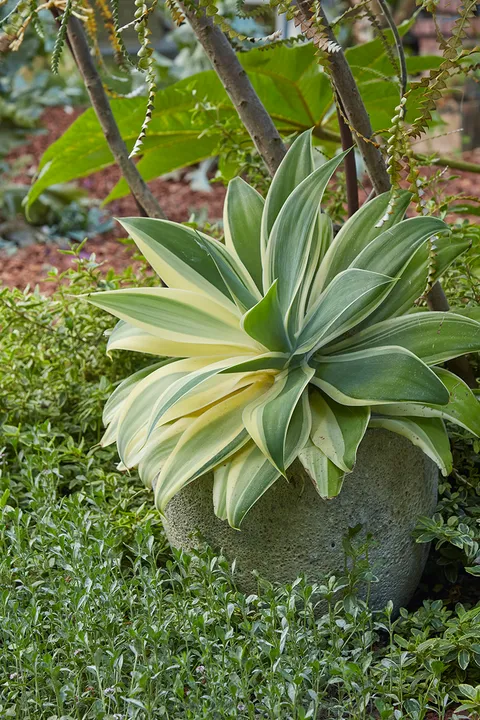 Agave attenuata ‘Ray of Light’
- Euphorbia canariensis
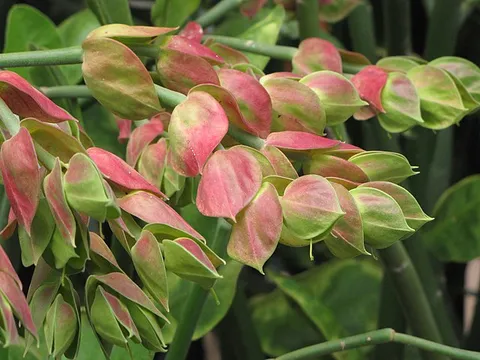 Pedilanthus bracteatus
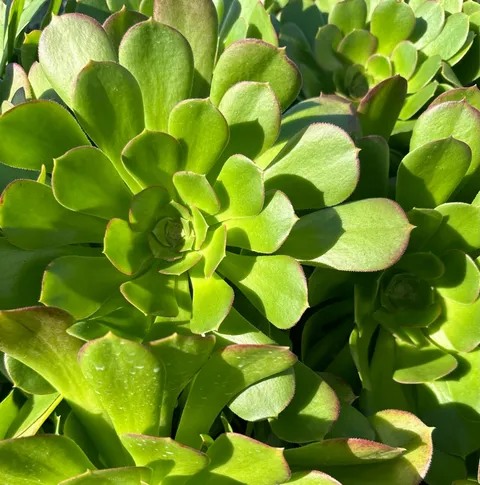 Aeonium ‘Chocolate Drop’
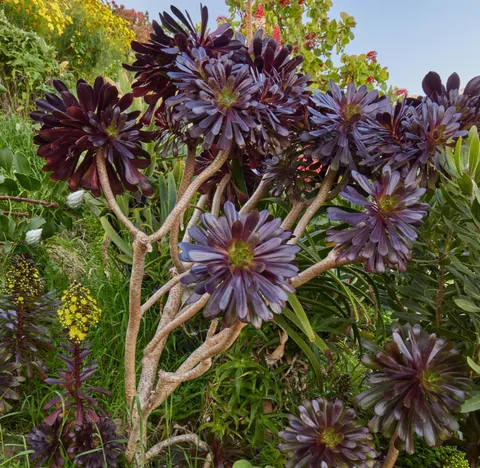 Aeonium arboreum ‘Atropurpureum Black’
Growing Notes
Good drainage is critical to Sansevieria care.
The leaves of this plant last years, even decades. They will over time get dull looking and show physical damage; when they do you can thin them out at or just below the soil surface.
Most sansevieria, including this one, are stoloniferous, meaning that they spread by thick underground (or sometimes above ground) shoots called stolons. It is very easy to propagate your sansevieria by finding a growth point and following the fleshy stolon back to the previous growth point. Cut it there and replant the stolon, with roots and all. Those with above ground stolons can be removed and planted once you see roots forming along the stolons.
This plant isn't the best choice for low light indoors, where it will last a long time, but become floppy and collapse under its large leaves. Direct diffuse to bright indirect is best.
Special Interest
You'll see this plant sold as Sansevieria 'Shark Fin' or Sansevieria 'Whale Fin'. These are just plants that have been cut and rooted midway up the leaf to give the appearance of a lower fatter leaf. Unfortunately any new leaves that come up will revert to the original form, with a thin base and elongated almond shape.
Links
What we've learned from growing this plant ourselves and in our customers' gardens. We always love to hear more. Tell us
© 2020–2026 Grubb and Nadler. All rights reserved.