
Trachycarpus fortunei
windmill palm
Iconic furry trunked palm takes cold. Showy yellow flowers in spring.
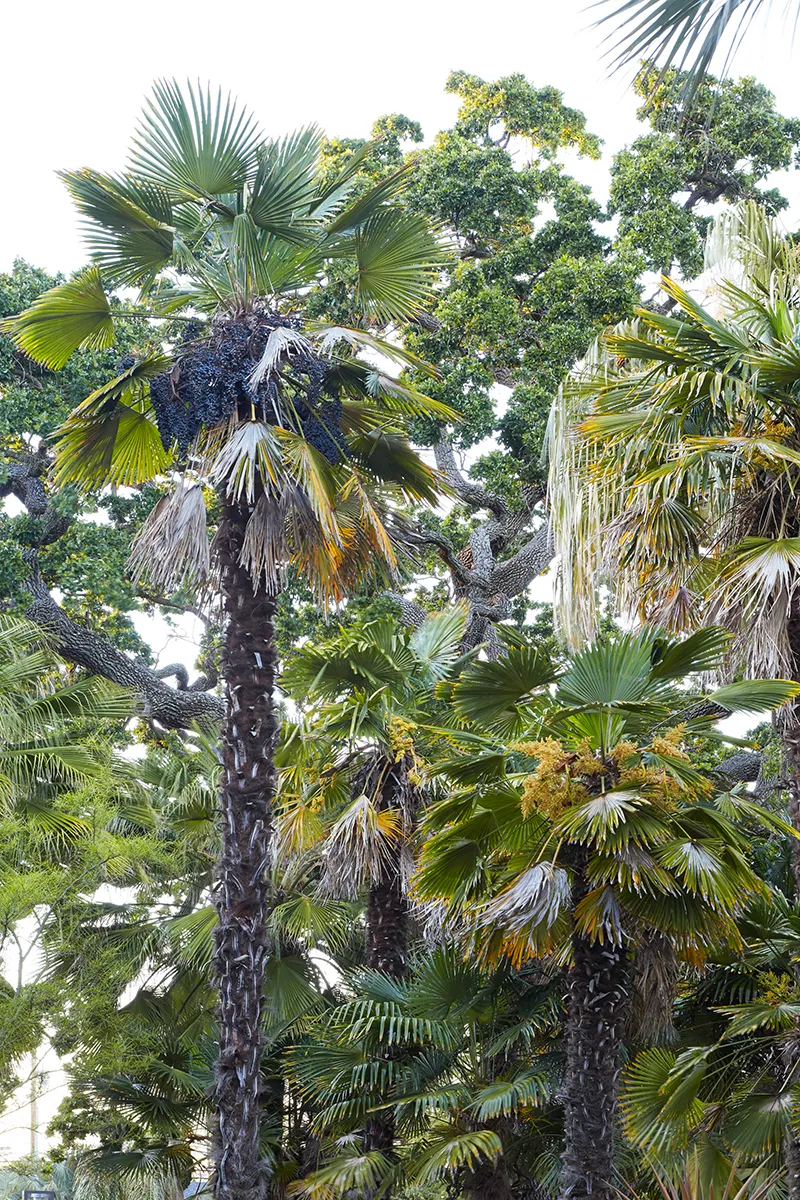
Seen in Palms for the Dry Garden →
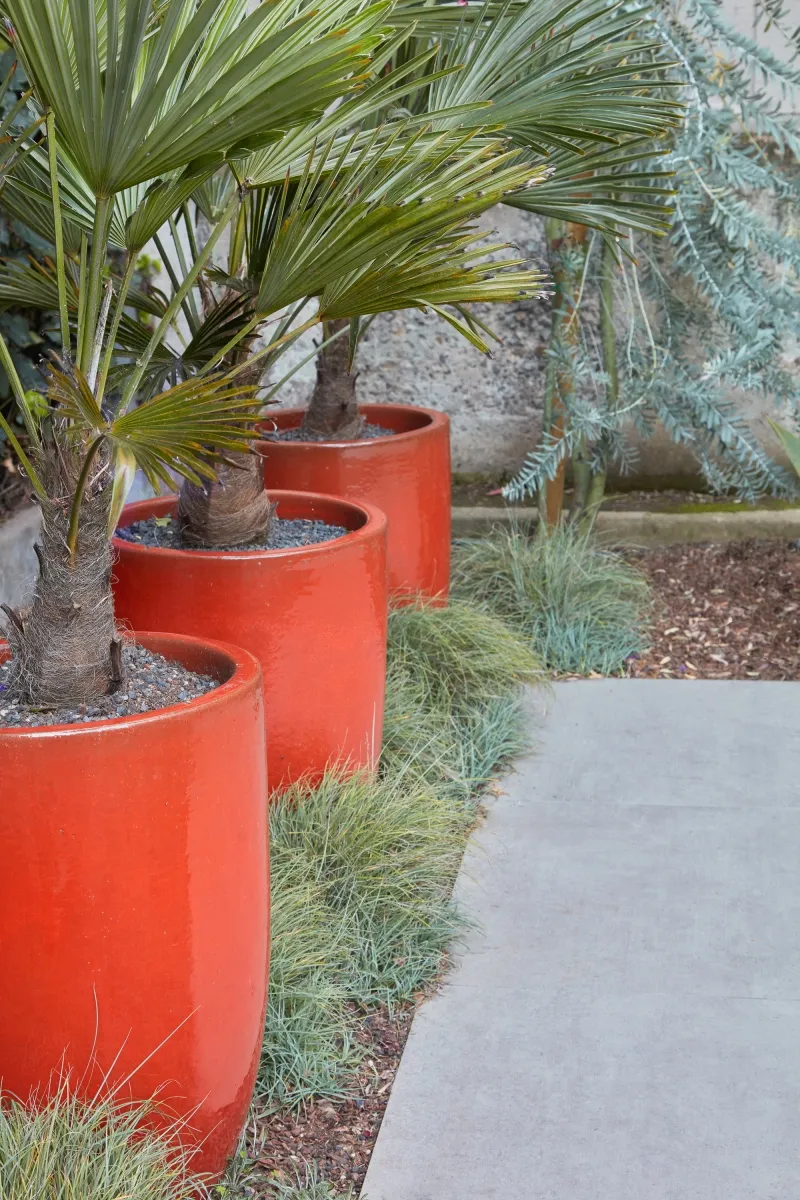
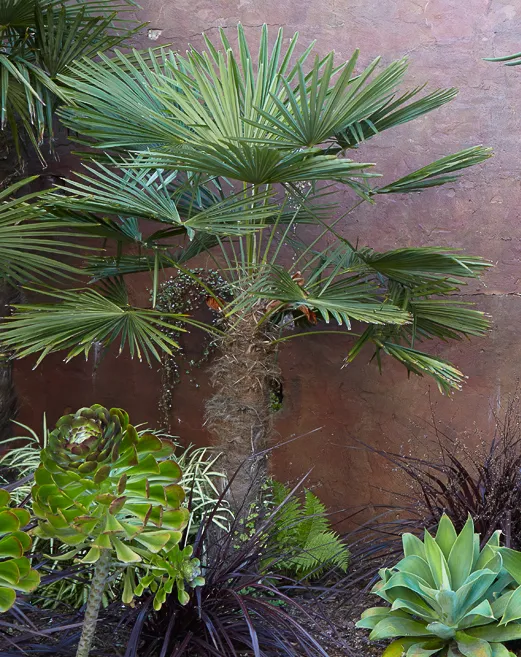
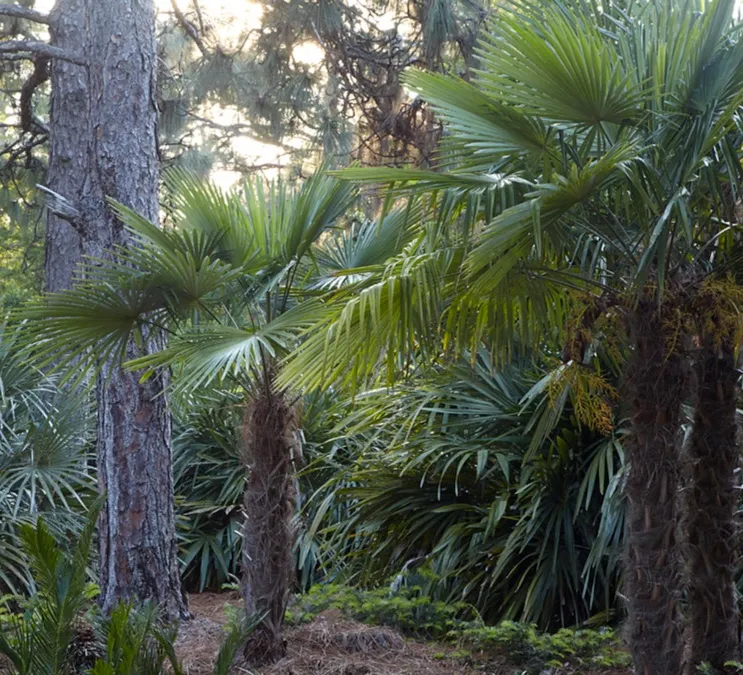
 Height | 20–30ft |
|---|---|
 Width | 3–6ft |
 Tolerates | Cold, Cool Summers, Fog, Wind |
 Water needs | Low – Moderate |
Windmill palms are surprisingly drought tolerant once established, even inland where it can be quite hot, and for this reason they are sometimes planted as street trees. They can look a little sad during the dry season if water is withheld completely, so they should be watered deeply every couple of weeks to keep them looking fresh. They also thrive with regular water, provided drainage is adequate. Trachycarpus prefer well drained soil, but are quite adaptable. If planted in loamy or clay soil watering should be less frequent. | |
 Hardy to | 10°F |
 Exposure | Full Shade – Full Sun |
 Plant traits | Palm, Solitary, Tropical |
 Indoor / outdoor | Outdoor |
 Drainage | In Ground: Cactus Mix, In Pots: Cactus Mix, Tolerates Sandy Soil |
 Fertilizing | Palm Fertilizer |
 Origin | SC China |
 California native | No |
 Sunset zones | 4–11, 14–24 |
Growing Notes
This palm is from the Himalayas and has adapted to have a furry trunk that insulates the palm from extreme cold. It's the most cold hardy of the upright trunking palms. The furry trunks are great for mounting epiphytes, but Trachycarpus can also be "skinned" by removing the lingering furry leaf bases. This transforms the palm, giving it a slender, beautifully ringed trunk. The trunk will be light green at first, fading to black and then gray over time. To skin your palm start with the lowest leaf and use a serrated knife or hori hori to cut around the base of the old leaf where it connects to the trunk. Cut from one side to the other, pulling on the leaf and cutting through the leaf base, but not into the trunk. Getting started is a little tricky, but once you have part of the trunk skinned it's easy going. If you live in a hot humid climate the fuzzy trunk will shed naturally, leaving a clean ringed trunk.
These palms grow well in the sun or shade, but present in shade with long bouncy leaves. In sun the leaves are stiffer with shorter petioles (leaf stems).
If planted at an angle, trachycarpus develop a pleasing upward bend as they grow towards the light.
Avoid planting in a high wind area; they'll grow fine in the wind but won't look as lush, with brown tipped leaves.
Special Interest
You might think of palms as warm-weather plants, but many trachycarpus are from the Himalayas, making them some of the most cold-hardy palms, thriving in areas as cold as -4F. So much for that tropical stereotype!
Stories featuring this plant
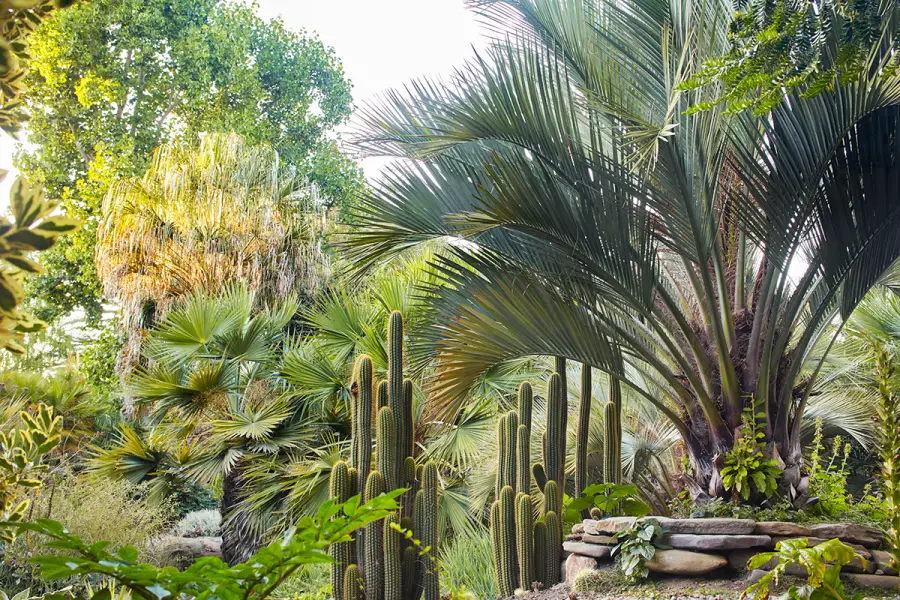 Garden storyPalms for the Dry GardenThe dry garden is a place we cultivate for harvest and beauty and life outdoors without overdoing the water in our summer-dry climate. With all their beauty and versatility, palms can play an important in the dry garden.
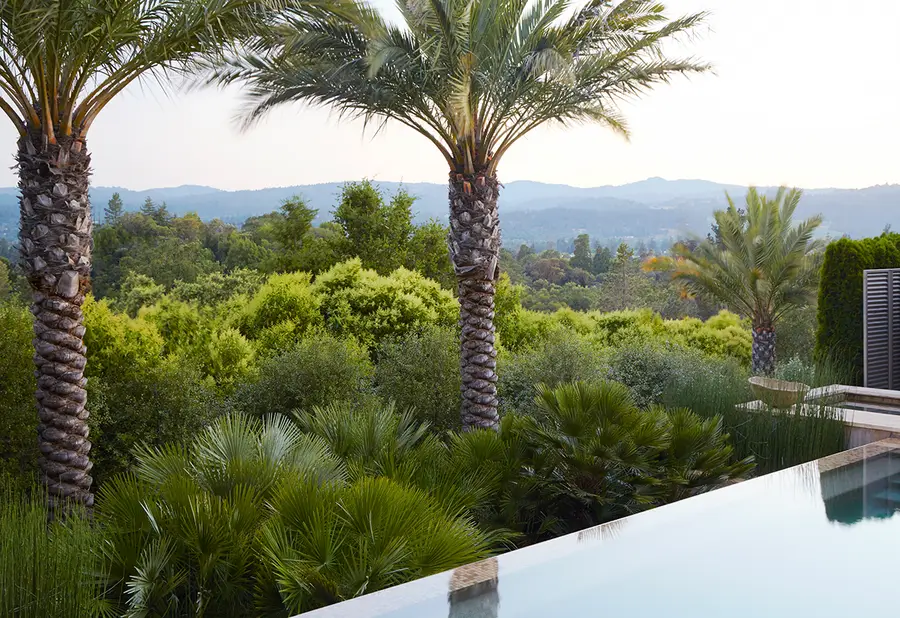 Garden storyThe Ultimate Guide to Growing Palm Trees in Coastal CaliforniaWe can grow many kinds of palms in our coastal California gardens — palm trees, shrubby palms, bamboo palms, little foliage palms — lucky us! Our guide to everything palm has all the info you need to make the best selections for your garden.
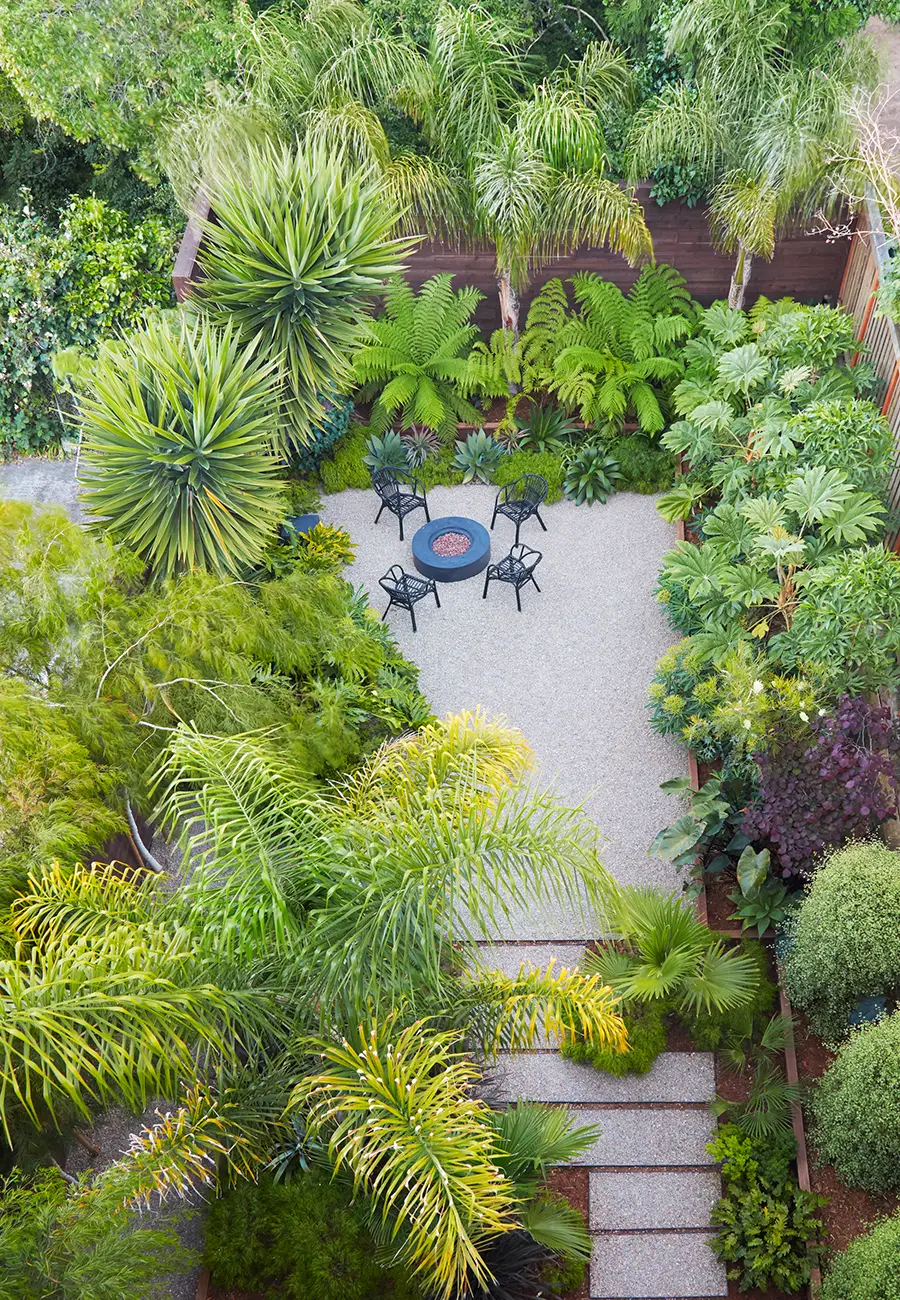 Garden storyUnderstanding Your Climate: Here's Why Coastal California is Paradise for Plant LoversWe all know San Francisco has lots of fabulous quirks, and the climate is one of the weirdest. For visitors and newcomers, our weather can be a puzzle, but for plant nerds (like all of us here at Flora Grubb Gardens), this particular puzzle is what makes San Francisco a gardening paradise.
Links
Which store do you shop at?
The above information reflects the observations of Grubb and Nadler and our extended plant community. We always consider input from fellow horticulturists and welcome feedback from those with additional information on the culture of this plant.
© 2020–2026 Grubb and Nadler. All rights reserved.