
Tradescantia pallida ‘Purpurea’
purple heart
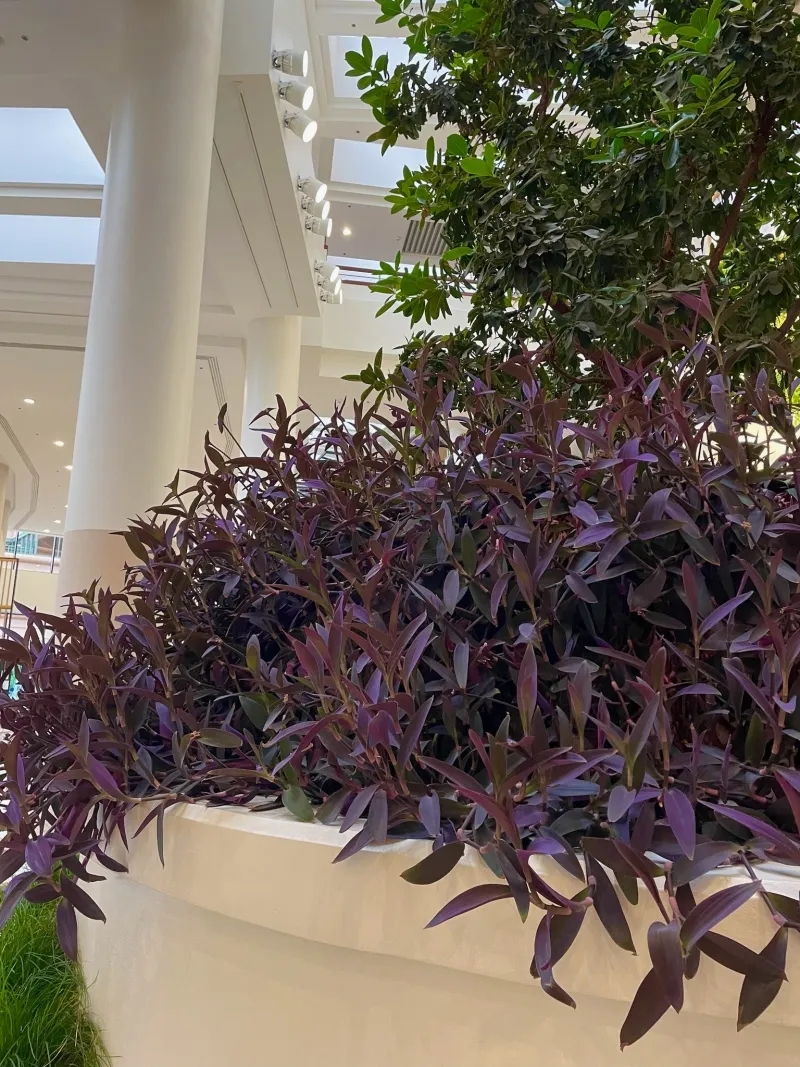
Unique foliage is a striking pure purple, with small pink flowers. Color more dramatic with sun. Cascading, ground cover. Spreads quickly with warmth and water. Pots.
 Synonyms | Setcreasea pallida |
|---|---|
 Height | 6–12in |
 Width | 1–2ft |
 Tolerates | Drought, Deer, Heat, Pots |
 Water needs | Low – Moderate |
This plant tolerates drying out completely, and certainly won't wilt or die, but prefers to be watered when the soil is mostly dry and this will give the fasted most vibrant growth. Typically this will be every one to three weeks depending on the location. | |
 Hardy to | 30°F |
 Exposure | Part Sun – Full Sun |
 Plant traits | Foliage Feature, Ground Cover, Hanging, Succulent, Tropical |
 Indoor / outdoor | Outdoor |
 Drainage | In Ground: Cactus Mix, In Pots: Cactus Mix, Tolerates Sandy Soil |
 Fertilizing | All Purpose |
 Origin | Mexico |
 California native | No |
 Sunset zones | 12–24 |
Growing Notes
Takes well to pruning, which will make a more dense and compact plant. Cuttings are easily propagated directly into cactus mix.
Will freeze back if exposed to a hard frost outdoors, but survive down to 10F and return when weather warms.
This plant is fairly delicate, easily taking aesthetic damage when near pathways, but recovers quickly.
More Info
Isn't this really a houseplant? Well that's a tricky question. In general this type of plant makes a great houseplant, but this specific plant hasn't been grown to be a houseplant. Houseplants are grown under regulated conditions and with sterile soil, setting them up to thrive in your home. When outdoor-grown plants are taken indoors, they tend to transition poorly, often becoming magnets for pests. That said, if you decide to live dangerously and bring this plant indoors, here's some advice to help you out. Start by unpotting the plant and removing any loose soil. Next, preemptively treat the entire plant, including the roots, with an insecticidal soap. Be sure to treat the roots gently throughout this process. Use a new nursery can or sterilize the previous one with bleach. Repot the plant in a fresh mix and then water deeply with the insecticidal soap mix. Be sure to keep an extra close eye out for any pests that might pop up. Always consider the risk of introducing pests to your other houseplants.
Links
In stock today in Los Angeles
| 4 inch | 15 available | $5.95 |
| 6 inch | 12 available | $12.95 |
The above information reflects the observations of Grubb and Nadler and our extended plant community. We always consider input from fellow horticulturists and welcome feedback from those with additional information on the culture of this plant.
© 2020–2026 Grubb and Nadler. All rights reserved.