
Chamaedorea microspadix
hardy bamboo palm
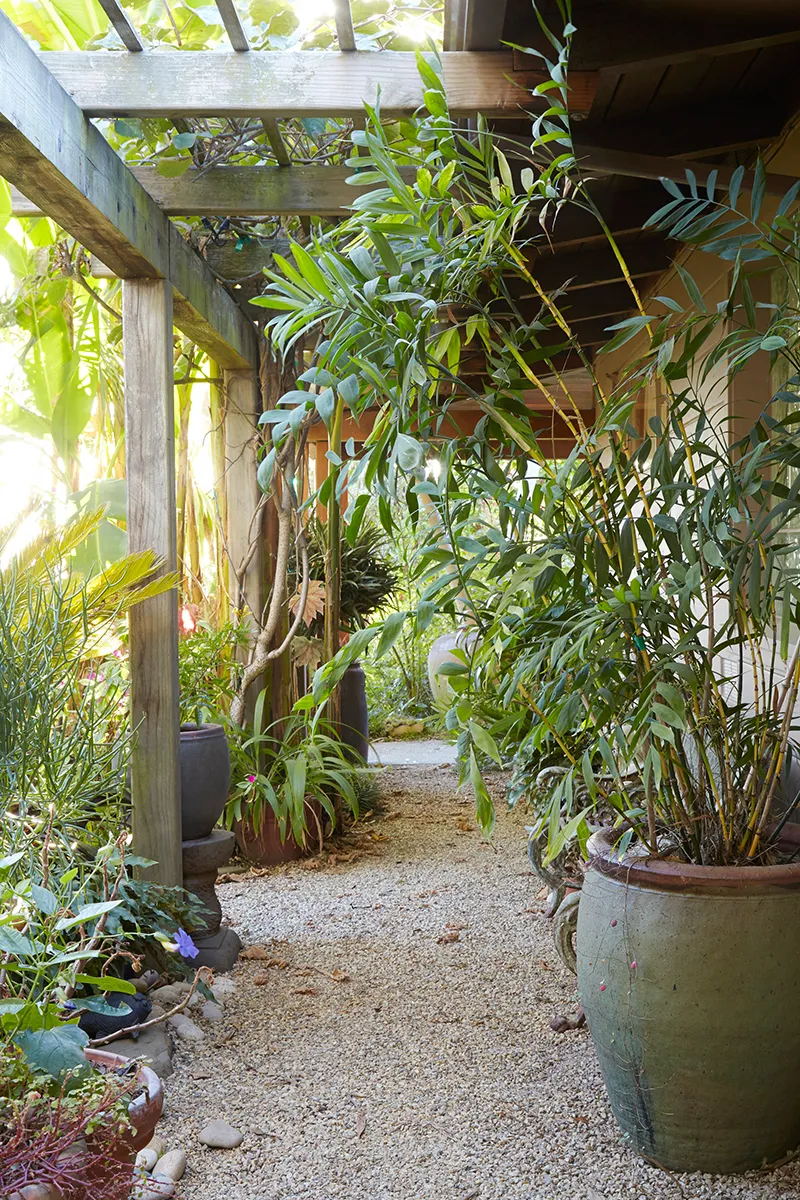
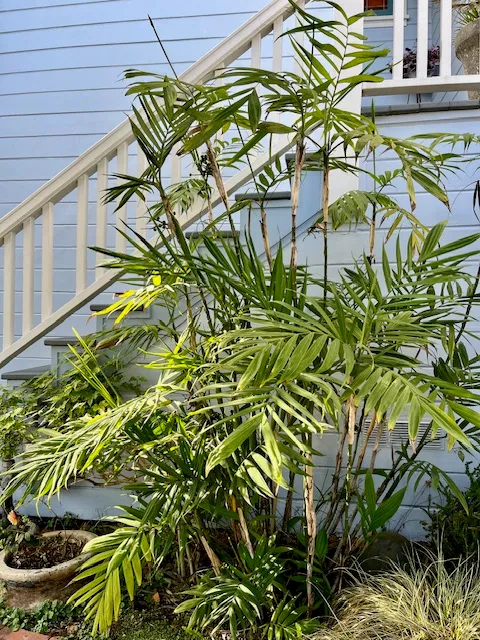
Hardy bamboo palm makes open, leaning clumps & showy orange fruit. Best away from foggiest zones. Excellent in containers.
 Mature size | 4–10ft tall 3–6ft wide |
|---|---|
 Exposure | Full Shade – Part Sun |
 Hardy to | 18°F |
 Sunset zones | 8, 9, 11–23, H1, H2 |
 Water needs | Moderate This palm should be watered deeply every week or two once it's established. It doesn't want to ever dry out completely. Dull looking leaves are a sign of underwatering. |
 Tolerates | Cold, Pots |
 Plant traits | Palm, Screen, Suckering, Tropical |
 Drainage | In Ground: Cactus Mix, In Pots: Cactus Mix, Tolerates Sandy Soil |
 Fertilizing | Palm Fertilizer |
 Origin | Mexico |
Growing Notes
Chamaedorea microspadix is the hardiest of the bamboo palms, the ones that sucker. It's just a titch less hardy than C. radicalis, to which it's closely related. It grows as an open, delicate clump, rarely reaching more than eight or 10 feet tall. Our 'Narrow Leaf' also appears to be a form of this variable plant from northeast Mexico, adaptable wherever winter mornings stay above around 22F—inland, too—and in Northern California's fog belt it performs better where summer days reach 65F or warmer. It's fairly tolerant of morning sun.
Palms are generally heavy feeders, so if you want them growing quickly and looking their best, they should be fertilized at least three times a year. Fertilizing at spring equinox, summer solstice and fall equinox will allow for a winter rest. Be sure to feed your palm with a fertilizer that contains micronutrients, especially if you see yellowing leaves or yellow spots on the leaves. Be sure your palm fertilizer contains micronutrients, particularly magnesium.
Suckering palms like this one send out additional palm trunks from the base of the palm over time, so that you'll end up with multiple trunks on one palm. If you want fewer trunks, go ahead and thin out the suckers; just be sure to do it when they are young to avoid unsightly scarring later on.
You can prune off older chamaedorea leaves when they start to look ratty, or wait until they are completely dried up. Either way, once the leaf sheath (the part of the leaf that wraps around the trunk of the palm) dries up, you pull it right off, exposing the green trunk. C. microspadix leaf sheaths tend to resist being pulled cleanly from the trunk more than other chamaedorea, and often need additional time to soften up before they are removed. Once this is done, your palm trunks will resemble bamboo canes, which is what gives this palm one of its common names: the bamboo palm.
This palm's juicy lush look is an absolute must-have when creating a tropical garden in a temperate climate. Mix it with other broad-leafed flowering plants like cannas, hedychiums, philodendrons, or monsteras.
Special Interest
Generally C. microspadix is sparse to sucker, unlike many other bamboo palms. To achieve a think clump we multiple plant C. microspadix. This helps to ensure a fuller clump and also helps with setting seed.
Stories featuring this plant
Links
Which store do you shop at?
What we've learned from growing this plant ourselves and in our customers' gardens. We always love to hear more. Tell us
© 2020–2026 Grubb and Nadler. All rights reserved.