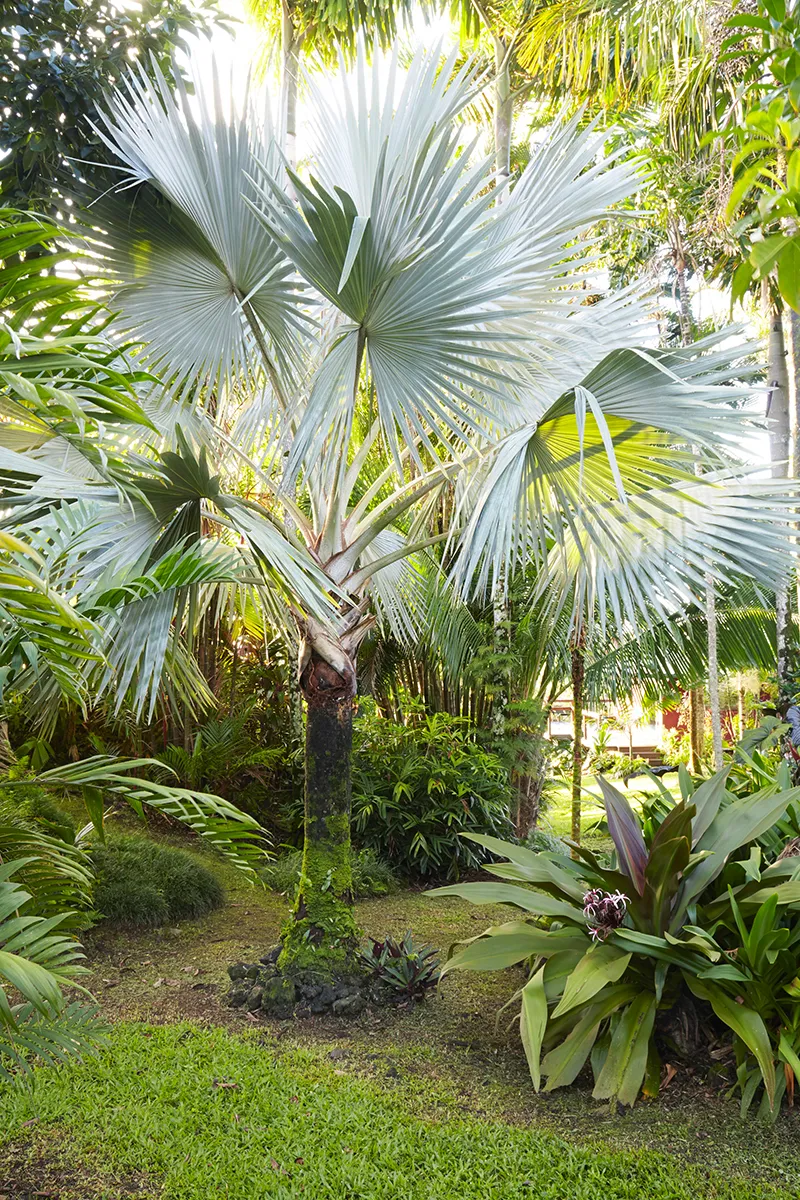
Bismarckia nobilis
Bismarck palm
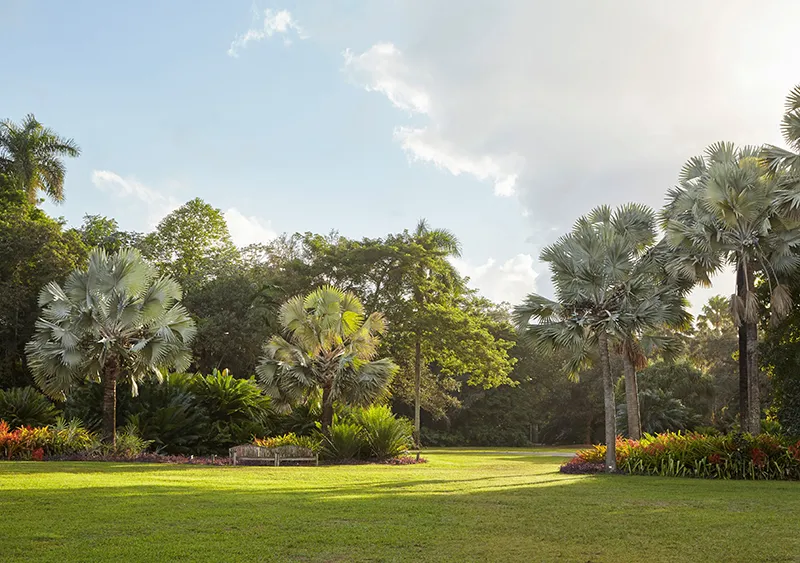
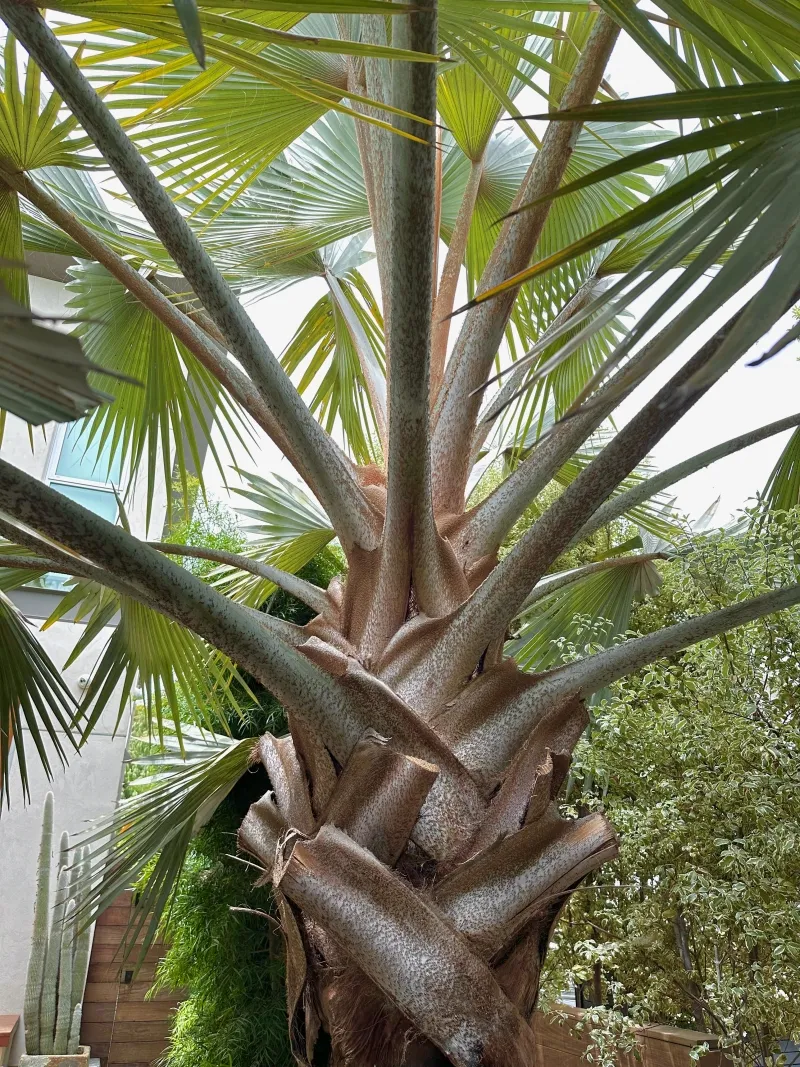
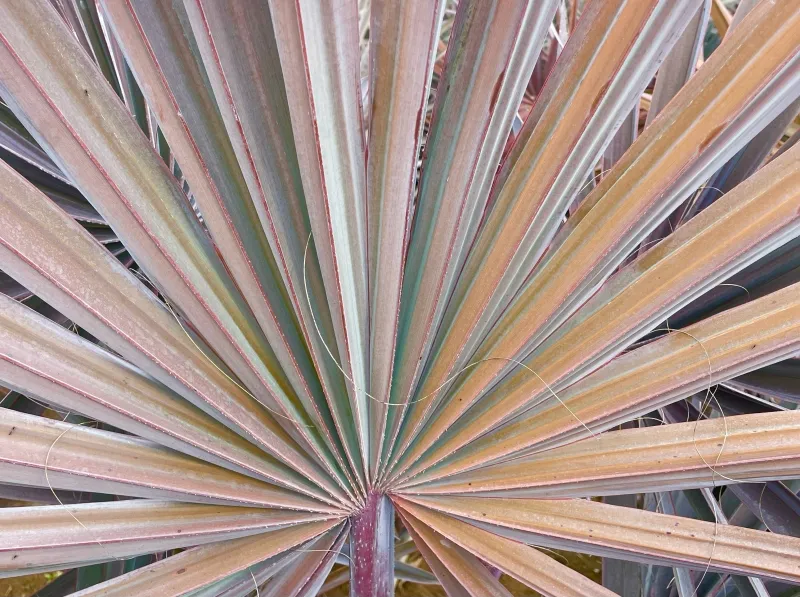
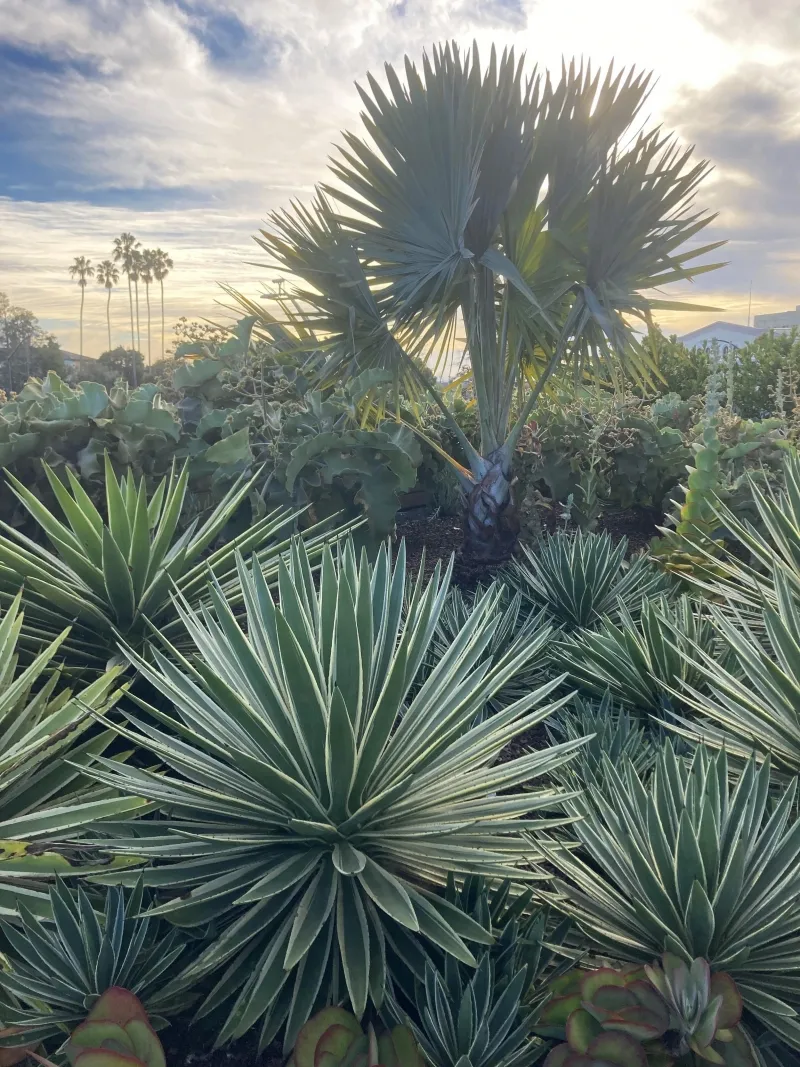
Large silvery leaves make this palm a showstopper. Plant in well-drained soil. Happy in the Los Angeles area and low desert; tolerates only the warmest parts of the San Francisco Bay Area.
 Mature size | 20–30ft tall 15–20ft wide |
|---|---|
 Exposure | Part Shade – Full Sun |
 Hardy to | 22°F |
 Sunset zones | 13, 16, 18–24, H2 |
 Water needs | Low – Moderate Not all palms love water! This one is actually drought-tolerant and can live on little water once it's established, though it'll grow more slowly and may not look as lush. To keep your palm looking its best, be sure to water it consistently and deeply while it's getting established, then after a few years give it a good deep soaking every couple of weeks. It will also be happy to have more water, provided the soil drainage is adequate. Will appreciate more water during the warm season. |
 Tolerates | Drought, Heat, Pots |
 Plant traits | Palm, Solitary, Trunking |
 Drainage | In Ground: Cactus Mix, In Pots: Cactus Mix, Requires Perfect Drainage |
 Fertilizing | Palm Fertilizer |
 Origin | Madagascar |
Growing Notes
You'll see examples of this palm thriving in Southern California. In Northern California there are a few examples of this plant thriving in warm places with great drainage. If you have a warm spot in the East Bay, South Bay or North Bay, give it a go! Worth a gamble in warmer, drier Central Valley locations, too.
Bismarckia esponds poorly to cold, heavy, wet soil. This palm is unlikely to thrive in the city of San Francisco unless you have a very warm protected spot with reflected heat and perfect drainage.
If growing in a marginal zone, plant in pots, add drainage to the ground or choose a good microclimate to help establish your palm for long-term success.
Special Interest
Grows in seasonally (winter-)dry savanna of Isalo National Park in Madagascar.
More Info
Note that some of the bismarckia shown here are growing in Hawaii, providing a great example of how bismarckia can thrive with a lot of year-round water, given warm temperatures and good drainage.
We have seen bismarckias growing in warm spots in the San Joaquin Valley and in favored microclimates outside recommended zones in the Bay Area, so it's worth experimenting in drier-winter parts of Sunset zones 14, 15, 9, and warm-summer parts of zone 17. We offer the silver selection. The green selection has proven less cold-hardy. Spectacular in the low desert if given sufficient irrigation.
In stock today in Los Angeles
| 3 gallon | 6 available | $89 |
| 20 gallon | 5 available | $349 |
| 36 inch | 1 available | $1,199 |
| 45 gallon | 4 available | $599 |
What we've learned from growing this plant ourselves and in our customers' gardens. We always love to hear more. Tell us
© 2020–2026 Grubb and Nadler. All rights reserved.