
Butia x Jubaea
pindo-wine palm hybrid
A vigorous, stately, versatile palm tree, also good in a pot. Equally happy by the sea and in the hottest inland valleys. Hybrid vigor means speedier growth than both parent species.
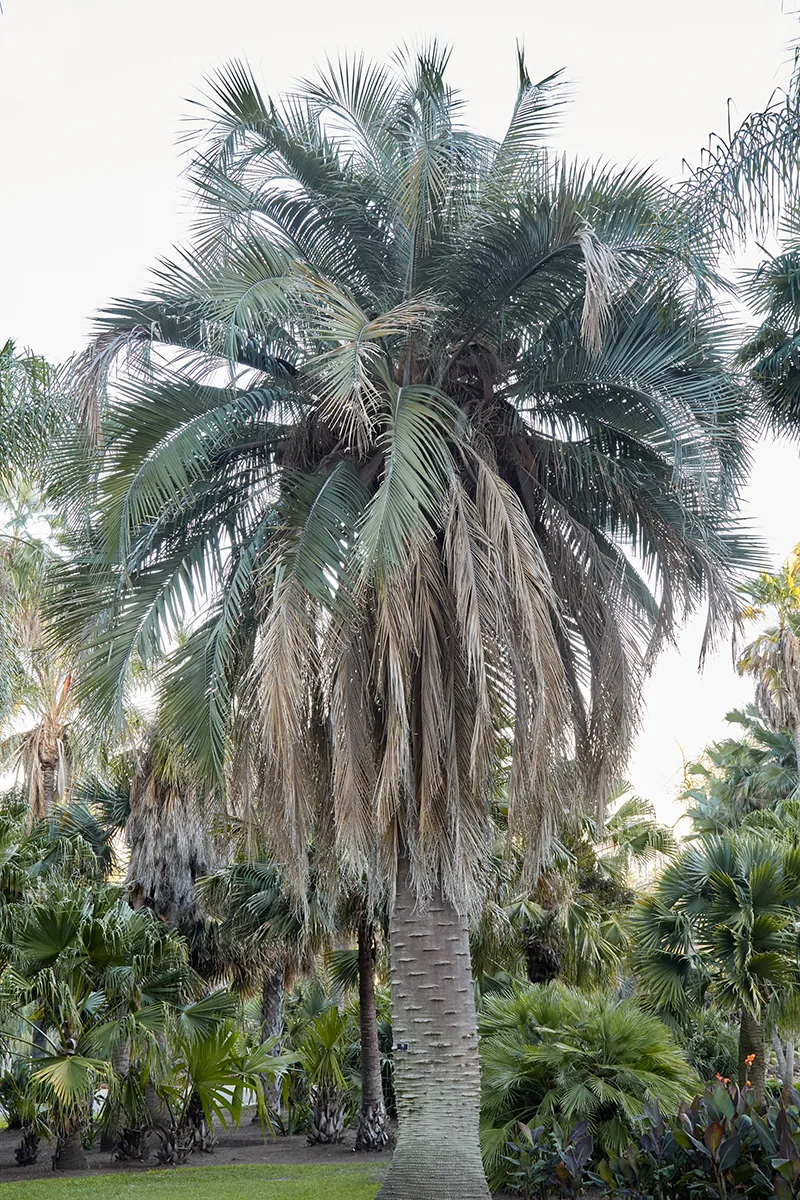
Seen in Palms for the Dry Garden →
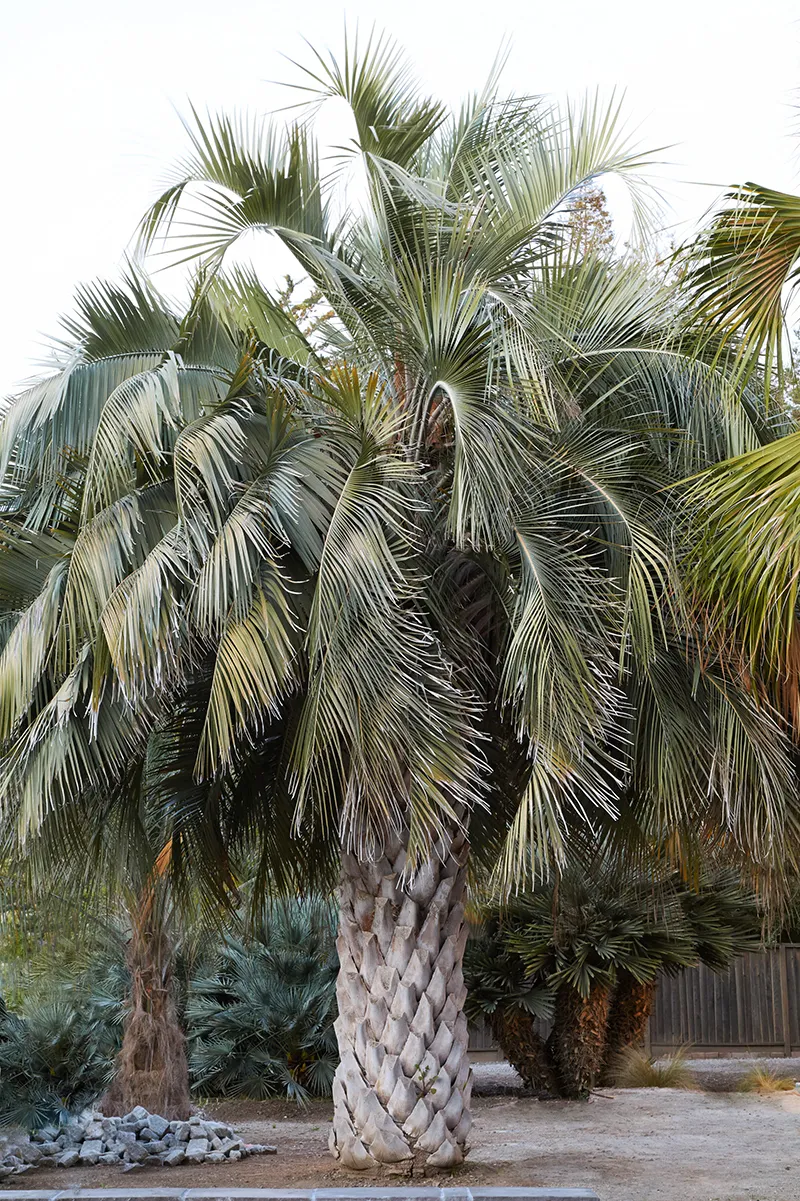
 Mature size | 20–30ft tall 15–20ft wide |
|---|---|
 Exposure | Part Shade – Full Sun |
 Hardy to | 13°F |
 Sunset zones | 5–12, 14–24, H1 |
 Water needs | Low – Moderate Not all palms love water! This one is actually drought-tolerant and can live quite happily on little or no water once it's established, though it'll grow more slowly and may not look as lush. To keep your palm looking its best, be sure to water it consistently and deeply while it's getting established, then after a few years give it a good deep soaking every couple of weeks. It will also be happy to have more water, provided the soil drainage is adequate. |
 Tolerates | Coast, Cold, Cool Summers, Drought, Deer, Fog, Heat, Pots, Rooftops, Neglect, Salt, Wind |
 Plant traits | Foliage Feature, Palm, Solitary, Trunking |
 Drainage | In Ground: Cactus Mix, In Pots: Cactus Mix, Tolerates Sandy Soil |
 Fertilizing | Palm Fertilizer |
 Origin | Hybrid, South America |
Growing Notes
This solitary palm will grow only one trunk during its lifetime. If you have a pot with multiple trunks in it, that's because multiple separate palm trees were germinated in the pot. The good news is that you won't need to thin out suckers over time to maintain the number of trunks you started out with.
With leaves growing in a single plane along most of the rachis, the feather palm has an elegant look to it.
Palms are generally heavy feeders, so if you want them growing quickly and looking their best, they should be fertilized at least three times a year. Fertilizing at spring equinox, summer solstice and fall equinox will allow for a winter rest. Be sure to feed your palm with a fertilizer that contains micronutrients, especially if you see yellowing leaves or yellow spots on the leaves.
Special Interest
One parent (Jubaea chilensis) makes edible nuts and the other parent (Butia odorata) makes edible fruit. It's unknown if their hybrid will have one, both, or neither characteristic.
Stories featuring this plant
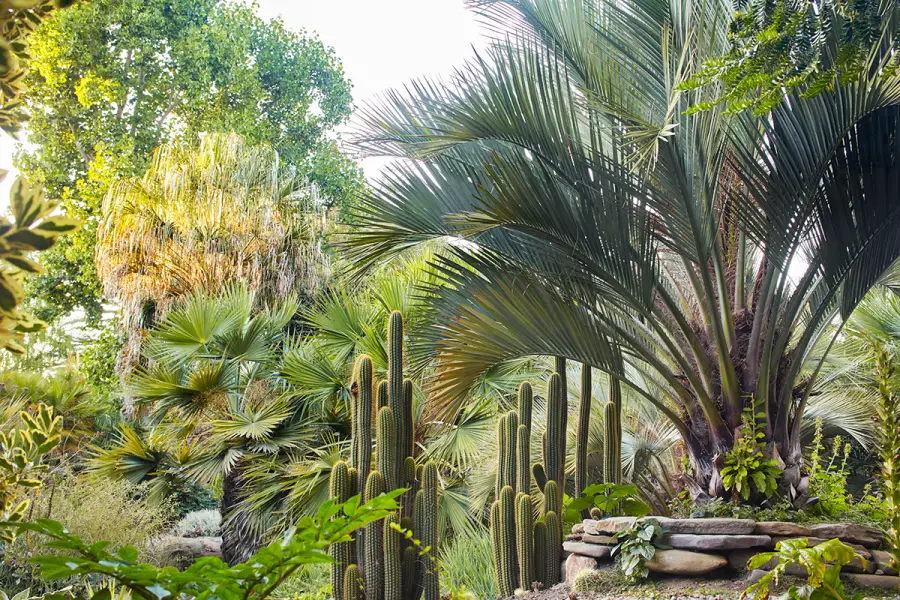 Garden storyPalms for the Dry GardenThe dry garden is a place we cultivate for harvest and beauty and life outdoors without overdoing the water in our summer-dry climate. With all their beauty and versatility, palms can play an important in the dry garden.
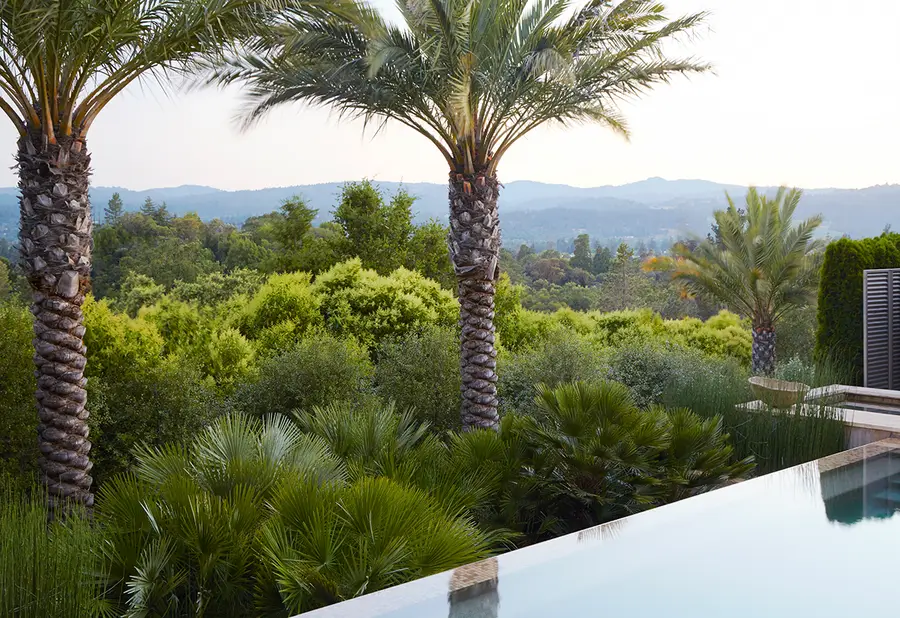 Garden storyThe Ultimate Guide to Growing Palm Trees in Coastal CaliforniaWe can grow many kinds of palms in our coastal California gardens — palm trees, shrubby palms, bamboo palms, little foliage palms — lucky us! Our guide to everything palm has all the info you need to make the best selections for your garden.
More Info
Our smaller plants (1-gallon and 3-gallon as of this writing in August, 2026) are seedlings of our own specimens at our growing grounds in Rainbow Valley, California. In horticulture and biology, these are known as F2 hybrids, the progeny of the first-generation hybrid. (F = "filial" and the number is the generation count.) These seedlings will express a range of characteristics from both species. Some individuals will look more like the Jubaea parent, and others will more closely resemble the Butia odorata parent, while most will look to be somewhere in the middle of the spectrum. This would also apply to the fruits: Some individuals will have tasty flesh like the Butia odorata, others will have tasty nuts like the Jubaea.
Links
Which store do you shop at?
What we've learned from growing this plant ourselves and in our customers' gardens. We always love to hear more. Tell us
© 2020–2026 Grubb and Nadler. All rights reserved.